It Used to be a Game

“Loyalty to any one sports team is pretty hard to justify. Because the players are always changing, the team could move to another city…you’re actually rooting for the clothes, when you get right down to it. You’re standing and cheering and yelling for your clothes to beat the clothes from another city. Fans will be so in love with a player, but if he goes to another team, they’ll boo him. This is the same human being in a different shirt, they hate him now! Boo! Different shirt!” –Jerry Seinfeld

I have irrationally followed several New York area sports teams for my entire life. My father enjoyed watching these teams (Mets, mostly, but also the Giants, Islanders, and Knicks), so that meant I watched it. In the days when every household had a single TV, you either watched the news or sports or whatever else your parents had on, or you found something else to do.

For nearly fifty years, I have followed these teams in good and bad years. Mostly bad, though the Mets won it all in ’86, the Giants have won it four times, and when I was very young the Islanders had their dynasty. It’s fun to debate the failures and successes of these teams with friends and family, not to mention the pure enjoyment we get when we watch athletes performing at a high level.

Since I was a boy back in the 1980s, there have always been rumblings that all was not right with these sports. There were occasional strikes, which my father held a dim view of. He earned barely enough to keep us afloat and was uninterested in hearing about millionaire players and their grievances against management, though as a union man he sided with the players.

There were corrupt owners moving their teams in the middle of the night to some new city. Luckily, New York is big enough that this didn’t apply to me, though perhaps we would have been better off if they’d abandoned us. My dad still recalled with bitterness the Dodgers leaving for LA but embraced the Mets when they arrived. He wasn’t a bettor, but legend has it that at his wedding he and his groomsmen stopped by the bar to find out the score of the Met game on June 2, 1962.

Like most, my sports interest is completely tied into these kinds of family stories. I spent countless hours watching these things with my dad and the rest of my family. It was always a special day when he brought home tickets so we could see a game in person. He’s been gone for more than a decade, but whenever I watch the Mets or any other sporting event, I think of him.

I stopped following sports for a bit in college and shortly thereafter. The baseball and hockey strikes of the early 90s disgusted me, and I lost all interest. But by the late 90s I was cheering for these teams once again. After my children were born, I had less time to watch such things, but I made sure to bring them to see the good guys in person once in a while. Today, in 2025, such excursions to see the big league teams are nonexistent for us, since prices are astronomical.

There have been some very disturbing events in every major sport over the past decade or so. Aside from strikes and lockouts, there have been plenty of allegations of game fixing in every major sport. The tarnish of the 2017 world series has still not worn off for me, nor has the scandal involving baseball’s biggest star who, he and MLB claim, was scammed by his interpreter, who stole millions from him to bet on games. No one bothered to look too hard into that one. As Pete Rose said at the time, what he didn’t realize back when he was banned for life in the 1980s was that he’d just needed an interpreter to take the fall. Baseball is big business, after all, run by billionaires who don’t want their authority, or their integrity, to be challenged. Having the biggest star on the planet banned would be bad for business. There are stadiums to build at taxpayer expense, after all.

This offseason, two pitchers have been banned and may go to jail for fixing games. The story is that they merely threw certain pitches badly to win small bets. Could be true. Might also be much more widespread than baseball admits. We know that at least two guys did this. How many more are out there? And how can a sport that did absolutely nothing to an entire team that was found to have cheated their way to a championship convince us that they are willing or able to police the cheating in their sport?

A generation ago, there was a lot of hand wringing over steroids, but the game fixing issue seems far worse to me. In my view, MLB cannot even ensure the integrity of their own game. It’s a dismal situation. Virtually every team has an agreement with a sports gambling company, a mind-boggling arrangement that was correctly shunned in past years. But now every ad for a baseball broadcast is urging you to bet on your favorite team. Not really a way to inspire confidence that we’re watching something legitimate. Perhaps MLB ought to become a league like the Savannah Bananas have, a humorous spectacle complete with players dancing and doing flips in the field.

And then there is Seinfeld’s quote, which I found enormously funny when he delivered it, but as time goes by it seems less so. He was joking, but not really. This week a fan favorite who Met fans watched grow up was sent packing to Texas, in the name of something called ‘run prevention,’ which normal humans used to call pitching and defense.

My children barely care about any of this, since it is far too expensive for us to go to any games or to even subscribe to the channels on which these games appear. My oldest son, at 13, expressed disappointment, since he loved the way Brandon Nimmo was always smiling.

Once or twice a year we go to the local single a team, which charges around $8 for a bleacher seat. My family has fun for an afternoon, and I  can pretend for a few hours that it is still just a game.

Halloween Reading List

Starting Octber 1, I wrote short reviews and thoughts about 31 different Gothic tales that I have enjoyed through the years. I did this in no particular order, choosing a new one every day from my bookshelf. My reading is skewed heavily toward things published decades ago; the most recent one here is Roger Zelazny’s A Night in the Lonesome October, from 1993, with the oldest being Anne’s Radcliffe’s The Mysteries of Udolpho from 1794. Thirteen of these were written before 1900. The breakdown, when I looked at it, went like this:

1700s: 1 1800s: 12 (1890s: 5, 1810s, 2, 1830s, 2 1840s 1 1860s 2) 1930s: 1 1940s: 1 1950s: 4

1960s: 2 1970s: 4 1980s: 5 1990s: 1

The entire list, with links, is below, for anyone interested. My reading habits in general skew this way, as well. For whatever reason I am not usually in the habit of reading contemporary things or bestsellers, with some exceptions, which you can see on the list. I recall many years ago a creative writing professor damning me with faint praise by saying my writing style was ‘old fashioned,’ which I took as a badge of honor.

This was a fun project, and I may do a more limited one of holiday tales in December.

  1. The October Country by Ray Bradbury, 1955
  2. Young Goodman Brown by Nathaniel Hawthorne, 1835
  3. The Sketch-book of Geoffrey Crayon by Washington Irving, 1819
  4. A Night in the Lonesome October by Roger Zelazny, 1993
  5. The Case Against Satan by Ray Russell, 1962
  6. The Exorcist by William Peter Blatty, 1971
  7. The Haunting of Hill House by Shirley Jackson, 1959
  8. Fevre Dream by George RR Martin, 1982
  9. The Body by Stephen King, 1982
  10. I Am Legend by Richard Matheson, 1954
  11. Frankenstein by Mary Shelley, 1818
  12. The Turn of the Screw by Henry James, 1898
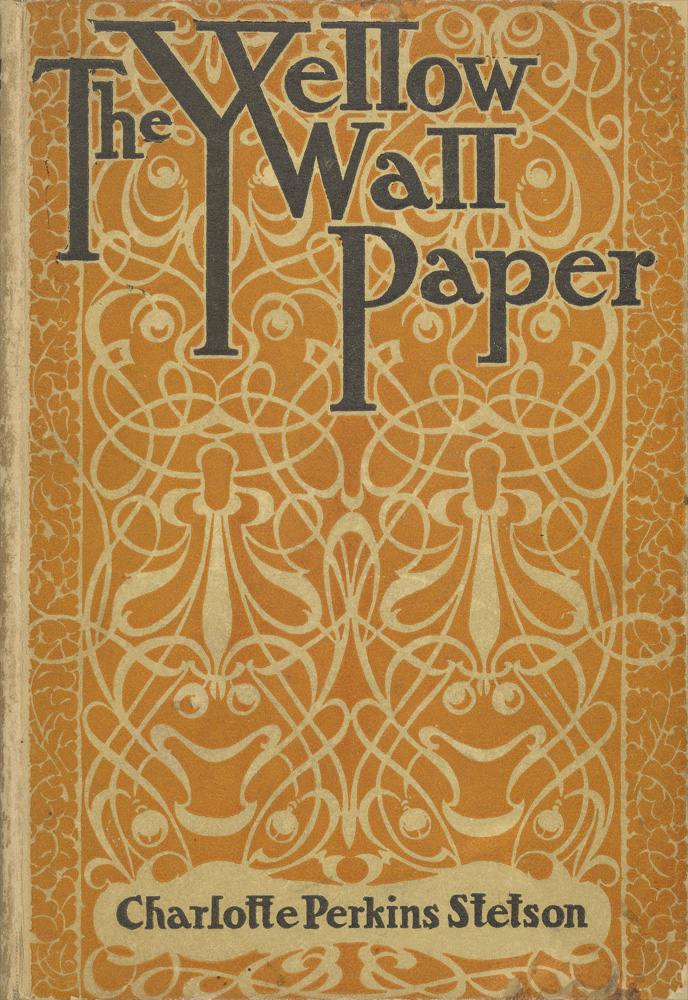
  13. The Yellow Wallpaper by Charlotte Perkins Gilman, 1892
  14. A Good Man is Hard to Find by Flannery O’Connor, 1953
  15. Interview With the Vampire by Anne Rice, 1976
  16. In Dark New England Days by Sarah Orne Jewett, 1890
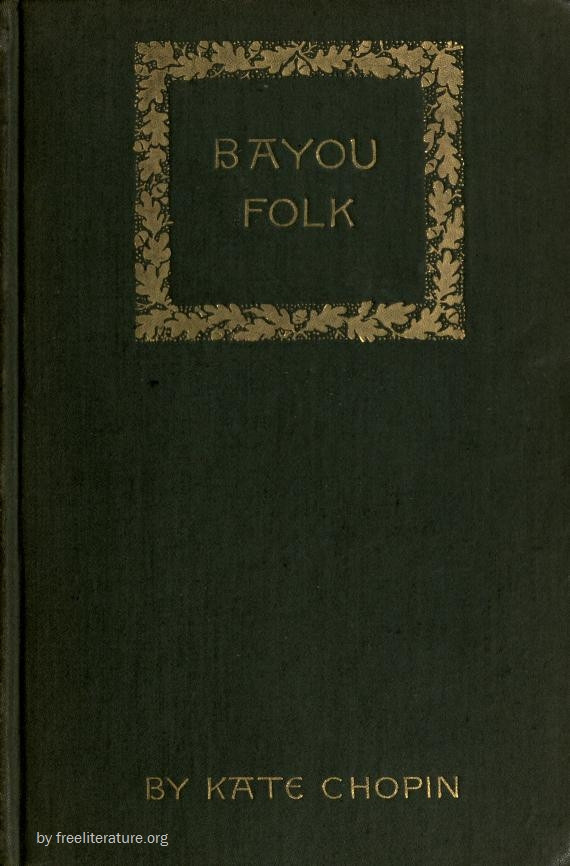
  17. Ma’ame Pelagie by Kate Chopin, 1894
  18. The Moonstone Mass by Harriet Prescott Spofford, 1868
  19. The Phantom Coach by Amelia Edwards, 1864
  20. The Refugee by Jane Rice, 1943
  21. Ghost Story by Peter Straub, 1979
  22. Mort by Terry Pratchett, 1987
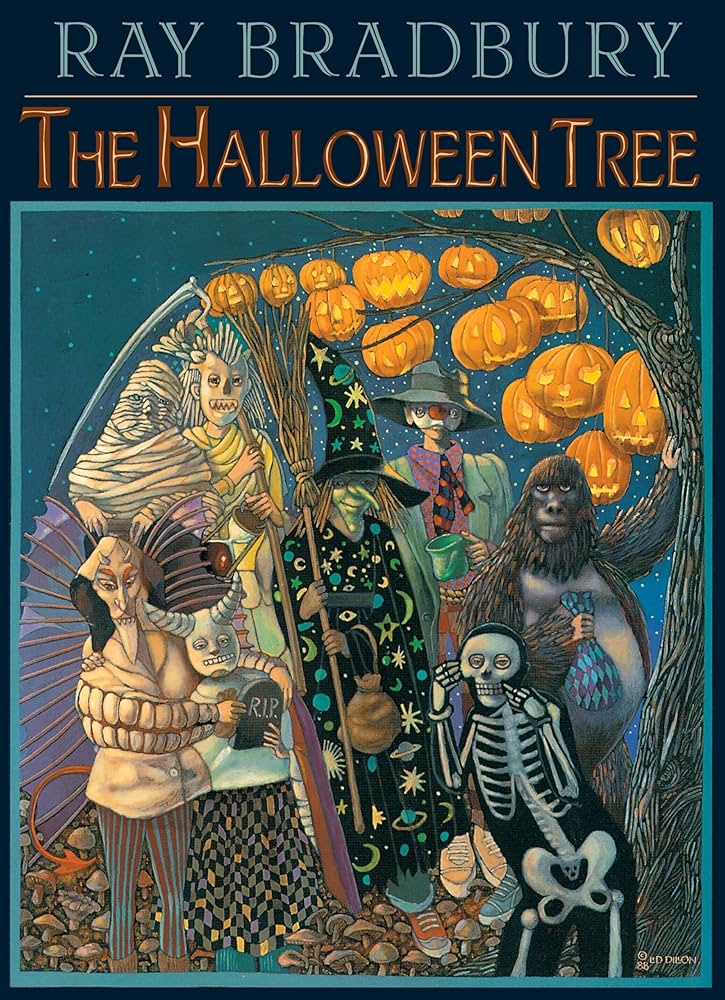
  23. The Halloween Tree by Ray Bradbury, 1972
  24. Something Wicked This Way Comes, by Ray Bradbury, 1962
  25. The Witches of Eastwick by John Updike, 1984
  26. The Fall of the House of Usher by Edgar Allan Poe, 1839
  27. The Cask of Amontillado by Poe, 1846
  28. Dracula by Bram Stoker, 1897
  29. The Mysteries of Udolpho by Anne Radcliffe, 1794
  30. The Stress of Her Regard by Tim Powers, 1989
  31. At the Mountains of Madness by H.P. Lovecraft, 1936

Ma’ame Pelagie by Kate Chopin (1894)

“Ma’ame Pelagie,” they called her, though she was unmarried, as was her sister Pauline, a child in Ma’ame Pelagie’s eyes; a child of thirty-five.

Kate Chopin is well known for her novel The Awakening, but she was also a prolific writer of short stories, including this gem, Ma’ame Pelagie. Pelagie and her sister live in Louisiana in a three-room cabin beside their formerly grand ancestral home. For decades, we learn, they have lived this way, hoping to save enough to restore the mansion ‘shaped like the Pantheon,’ but now fallen into ruin. The sisters are visited by a niece who comes to live with them—her father, their brother, will soon be joining her. But the young girl cannot stand the sadness of the place and wants to leave.

“It was not the first time she had stolen away to the ruin at night-time, when the whole plantation slept; but she never before had been there with a heart so nearly broken. She was going there for the last time to dream her dreams; to see the visions that hitherto had crowded her days and nights, and to bid farewell to them.” Pelagie recalls these past grand days in a dreamlike reverie, the grand parties held there, and her lover, who went off to fight in ‘le guerre,’ as did so many others. And now we have the central problem on which this tale rests—the war, which eventually comes to the plantation. It is the tragedy of her life, to see her dreams ruined along with the grand house.

A year later, her brother Leandre builds a new, beautiful brick house where the old one stood. The house bustles with activity and music and the laughter of young people, the friends of ‘La Petite,’ her niece. However, Pelagie’s “soul had stayed in the shadow of the ruin.”

This is a great short gothic tale that works very well not only in the tragedy of these two women who live in the ruins of a once grand life, but also in the shadow of the civil war. The stain of slavery and the shadow of war haunts everything in this story of the south. The writing is quite elegant, as is much of the best writing of this period, and does much to transport us to these bygone days.

To learn more about Kate Chopin and her life, you can view this excellent PBS documentary on her.

A Good Man is Hard to Find by Flannery O’Connor (1953)

“You can do one thing or you can do another, kill a man or take a tire off his car, because sooner or later you’re going to forget what it was you done and just be punished for it.”

One of the most anthologized and well-regarded short stories of the last century, A Good Man is Hard to Find, like some of the other stories on this list, deserves its towering reputation. O’Connor was a master of the short story, and this tale is one of the most shocking gothic stories I’ve ever read. I can still recall the palpable dread I felt as I first read it many years ago in a college class on the short story.

This tale involves a family that is out for a drive when unspeakable violence occurs, but there is plenty of foreshadowing, with the grandmother mentioning the ‘loss of values’ in the modern world; she also points out a graveyard filled with slaves from a bygone era. She remembers that there was a plantation in the area, and convinces her son, Bailey, to take a turn onto a deserted road, where the family has a sudden accident, flipping their car, and are met by the “Misfit,” a terrifying killer.

This tale is suffused with the south, and with notions of God and the possibilities of salvation and grace. The grandmother attempts to placate the Misfit, who clearly means the family harm, saying he is one of her ‘babies,’ and touches his shoulder. But there’s no salvation here for anyone, it seems.

I think it is best to read something like this, with such a well-known reputation, with an open mind. It’s better not to seek out or think too much about any of the criticism of it at first, just read it. It will probably leave you feeling desolate, as some of the very best horror stories tend to do.

Flannery O’Connor wrote two novels and thirty-one short stories and is considered one of the great American writers of the 20th century. Sadly, she was ill with Lupus and died at just 39. Who knows what she may have achieved had she lived longer; as it is, she left behind an amazing legacy.

The Yellow Wallpaper by Charlotte Perkins Gilman (1892)

“I really have discovered something at last. Through watching so much at night, when it changes so, I have finally found out. The front pattern does move – and no wonder! The woman behind shakes it! Sometimes I think there are a great many women behind, and sometimes only one, and she crawls around fast, and her crawling shakes it all over. Then in the very bright spots she keeps still, and in the very shady spots she just takes hold of the bars and shakes them hard. And she is all the time trying to climb through. But nobody could climb through that pattern – it strangles so; I think that is why it has so many heads.”

This story has been analyzed in myriad ways and is considered an important work of feminist literature. It’s a chronicle of a mental breakdown; a woman is suffering from ‘a slight hysterical tendency’ according to her physician husband, following the birth of her child. She spends the story confined to an upstairs room at a country estate and comes to believe that a woman is trapped behind the yellow wallpaper in the room.

On reading the story, you end up infuriated by the woman’s husband, and sympathetic toward her plight, but the way Gilman describes her experience through a series of journal entries also makes the story quite memorable. Her slow descent into madness is told with convincing, disturbing detail.

Gilman suffered from postpartum depression, so this story has been read with this in mind. At the time, a ‘rest cure’ was administered for treatment, which only made things worse for her, so she stopped the treatment and resumed writing, later saying that she feared a mental breakdown had she continued to follow the doctor’s cure. Gilman instead followed the advice of a female doctor, Mary Putnam Jacobi, who argued against such rest. Much has been written about Gilman and her pioneering story, for those interested, your local library will have plenty of information about her life.

Young Goodman Brown, by Nathaniel Hawthorne (1835)

I first read Young Goodman Brown in high school and recall being puzzled by it. Hawthorne’s prose was perhaps a bit too dense for me, as I suspect it was for most of my ninth grade English class. But there was something unsettling about it, and I returned to it again and again through the years. Eventually, Hawthorne became one of my favorite writers, but it was an acquired taste.

We’re in the Puritan village of Salem; the tale was written in 1835 but Hawthorne is reaching back to the witch trials of 1692-93. The story seems straightforward. Young Goodman Brown leaves his wife, Faith, to go out on some ‘evil purpose,’ against her wishes. He travels past the town meeting house in Salem Village, and Hawthorne sets a foreboding tone:

“It was all as lonely as could be; and there is this peculiarity in such a solitude, that the traveller knows not who may be concealed by the innumerable trunks and the thick boughs overhead; so that, with lonely footsteps, he may yet be passing through an unseen multitude.”

“What if the devil himself should be at my very elbow!” Brown remarks, as he continues on his way. He meets others from the village on his path, including a man who is older than him, around age fifty, but who looks just like him, and remarks in a very matter of fact way that he had done terrible things with Young Goodman Brown’s grandfather:

“I helped your grandfather, the constable, when he lashed the Quaker woman so smartly through the streets of Salem. And it was I that brought your father a pitch-pine knot, kindled at my own hearth, to set fire to an Indian village, in King Philip’s War. They were my good friends, both; and many a pleasant walk have we had along this path, and returned merrily after midnight. I would fain be friends with you, for their sake.” The stranger goes on to say that he is acquainted will the deacon, the governor, and other elders of the town. This shakes Brown’s understanding of his own family and village, leaving him quite unsettled.

This stunning section ramps up the tension until Brown hears the voice of his wife, Faith, and is distraught that she is in the woods. He arrives at a clearing where all the village is assembled; he and Faith are to be initiated in a ceremony, binding them to the devil. He calls out to Faith that she must resist and “look up to heaven,” at which point the villagers disappear.

Brown is unsure whether the entire story was a dream, but it bewilders him to the point that “A stern, a sad, a darkly meditative, a distrustful, if not a desperate man, did he become, from the night of that fearful dream.” Hawthorne’s final sentence is: “And when he had lived long, and was borne to his grave, a hoary corpse, followed by Faith, an aged woman, and children and grand-children, a goodly procession, besides neighbors, not a few, they carved no hopeful verse upon his tombstone; for his dying hour was gloom.”

It may not be entirely fashionable today to believe in good and evil or supernatural powers, but this story still leaves me unsettled. The idea that your friends and neighbors, or your entire conception of the world, may be totally wrong, is something no one wants to admit. But the devil is right there in the story, cheerfully informing Brown that his father committed atrocities, that his grandfather enthusiastically persecuted his neighbors, and that Brown himself is on friendly terms with evil. Everyone in Salem is implicated; the story takes place during the Witch trials, at which Hawthorne’s own grandfather was a judge, making this tale even more grim.

There are no easy interpretations or answers in this tale. Brown lives the rest of his days haunted by his knowledge. There’s no redemption for him from God, or from anyone else, even his beloved Faith.

Hawthorne wrote plenty more in this vein: A Scarlet Letter, The House of Seven Gables, and numerous stories, and all of them leave me with this same feeling of helplessness in the face of evil. They’re also incredible to read, with the stylized, romantic prose adding to the sense of gloom and mystery.

I am not sure of Hawthorne is still taught in high schools, but he ought to be. This is one of the best short stories you’ll ever read, one that has stayed with me in the three and a half decades since I first encountered it.

The October Country, by Ray Bradbury (1955)

We start the month with one of the finest collections of seasonal stories ever, by the great Ray Bradbury. Released in 1955, its significance in the genre can’t really be overstated, nor can Ray’s role in shaping Halloween as we know it today. Just leafing through this one is enough to give you a warm feeling of nostalgia and creepiness, to know that autumn is at hand. You start reading and immediately know you’re in the hands of a master.

I first encountered this one many years ago, and I make a point to re-read it nearly every October. The beautiful cover by Joseph Mugniani (with whom Bradbury often collaborated) sets the tone, and it keeps getting better as you read each tale. There are so many memorable stories here that it’s a bit like listening to the Beatles’ greatest hits: The Small Assassin, The Dwarf, Jack in the Box, on and on they go, each one weirder and more wonderful than the last. I love The Dwarf, the tale of a short man who visits a carnival fun house each night to see himself taller and more handsome, only to be cruelly abused by the fun house proprietor. For me, the centerpiece here is “The Homecoming,” which along with “Uncle Einar” are the strangest and most jaw-dropping of these stories. They’re so good that later in his career they became the backbone of another collection, ‘From the Dust Returned,’ which explores the Elliott family in all their glory.

Bradbury wrote so much over his long and storied career that it’s hard to pick just one novel or collection of his, but I think this one is most emblematic of all his best elements. Good-hearted, small-town people meet fantastic beings. Helpless loners and outsiders are treated cruelly by life but keep their souls intact through art and kindness. The wonder and mystery and imagination of the dark side of the world, all told with Bradbury’s poetic prose, heartfelt emotion, and wild imagination. It just doesn’t get any better than The October Country. We were so lucky to have had Ray.

Bradbury often wrote of the importance of feeding one’s imagination. Zen and the Art of Writing is a wonderful book for any writer, with lots of great observations on how to work at your craft. Mostly, he wants writers to stop thinking and just write. The ideas poured forth from his mind when he did this. One oft quoted passage from the book is: “If you did not write every day, the poisons would accumulate and you would begin to die, or act crazy, or both. You must stay drunk on writing so reality cannot destroy you.”

I think there’s a real lesson in this. Overanalyzing things, thinking too much, and soaking up too much information, which is very easy to do in our hyper-connected world, is the enemy of good writing. In my view, Bradbury’s method works. He was drunk on life and ideas and let them spill out in beautiful ways that have resonated with millions of readers for generations. May he keep finding new audiences forever. Thanks for all the stories, Ray.

Short Story, ‘Chess Match’

A new story of mine, Chess Match, was just published in the October issue of Black Sheep: Unique Tales of Terror and Wonder. It’s a tale of an ancient being living in our world, who must face down an old adversary. Check it out, and let me know what you think.

31 Tales of Halloween

‘The Halloween Tree,’ by Ray Bradbury, 1964

October has long been my favorite month. I love Christmas, too, as well as every other holiday that affords me time to spend with my children. But there’s always been something special about October 31. As a child, I knew Halloween was a night devoted to kids, where magical things happened, where you had a bit of independence to go out with friends and have a grand time. The costumes, the folklore, the changing of the seasons, all add warmth and wonder to this grand day. My own children have enabled me to experience these feelings again. It is so fun enjoying the fall with them: decorating the house, creating costumes, getting ready. The anticipation of it, the colors and sounds and stories, are almost better than the day itself.

The stories are the things that really animate it for me. The list of writers I admire in this season is almost endless, but it begins somewhere around Shakespeare and continues into the present. Shelley, Poe, Hawthorne, Stoker, Lovecraft, Jackson, Bradbury—my list goes on and on. The only thing that stops me from reading all these authors constantly is lack of time.

This October, time permitting, I intend to have a project on this blog, where I write some thoughts about some of my very favorite tales in the genre. I can’t promise I’ll do so every day, though that is the goal. Certainly, I’ll do a post weekly, or every couple of days. These posts aren’t meant to be comprehensive, scholarly, or to offer some kind of profound critique. It’s mostly just for me, to write up thoughts and impressions and appreciation of these tales that affected me: why I like them so much, how they work, why I have such affection for them, in that vein. Hopefully I’ll add to the catalog throughout the year, with other seasonal tales. Maybe some readers out there feel the same way about some of these stories. My hope is to document some of my very favorite books and stories, and perhaps turn some readers out there onto some tales they may have overlooked, or never heard of. There are a great number of unappreciated stories out there that ought to have more attention, in my view.

So, I’ll see how it goes. If you’re a like minded reader, I hope you join in the fun by commenting or offering your own thoughts.

I’ll probably begin early, before October 1, with some other seasonal type stories to get started. I’ll throw in some children’s stories that I’ve been reading with my family as well.

I’ll post more soon. I hope those reading this enjoy the season. I plan to be outside as much as possible in the next six weeks, to enjoy the beauty of fall, before it gets too cold and the leaves are gone.

Happy Autumnal equinox. Enjoy your fall!

Meta’s Theft and AI

Over the past few years, there’s been no shortage of folks breathlessly telling us that AI is our new tech to be worshiped, that it is a wonderful and amazing tool that we all must rush to use. It will make life better, and everything will be easier and more effortless. Besides, there is the whole inevitability thing, an argument which tech bros love to shove down our throats, the same way they do with every other technology on which their fortunes depend.

I’d like to offer a different view. AI is a soulless source of junk information, bad writing, and bad ideas. On a personal note, the creators of Meta’s AI program stole my novel, without asking, to ‘train’ their stupid tool. They’ve illegally done this with millions of works, but when called out on this lawless behavior, the companies merely shrug and inform us that there would be no way to train their tools if they had to deal with pesky copyright laws. Authors are powerless in the face of these tech forces, it seems. It’s all inevitable: the bright, shiny future.

Forgive me for a moment if I seem emotional here. My humble novel, The Osprey Man, was a labor of love. I spent years writing it, and years beyond that marketing it, and it finally found a home at a tiny, independent publisher. I made very little money from it, but of course, as any decent writer will tell you, that was never the point. I had a story I wanted and needed to get out there. It may not have sold many copies, but I didn’t care.

My story of publication isn’t unique. There are plenty of writers out there who have done and continue to do the same, despite the odds. Zuckerberg and his lackeys, no matter how rich and powerful, have no right to churn up our work like it’s fertilizer. Yet that’s exactly how Meta and every other purveyor of AI treat the copyrighted works of millions of writers. It’s revolting, undemocratic, downright vile behavior, yet it’s exactly the sort of thing we’ve come to expect from our tech overlords, and no one even bats an eye. In fact, the story barely seemed to make news and disappeared rather quickly.

Aside from the outrageous way Meta has treated authors, there is a much larger issue with AI, and how it’s bound to affect us all. In 1985, Neil Postman, in his seminal work Amusing Ourselves to Death, argued convincingly about the death of our reading culture, and how television had dumbed us down so much that it had reduced our once coherent public debate to mere sound-byte and spectacle. In Postman’s view, things had gotten so bad that Americans elected a nincompoop in Ronald Reagan. I’m sure he’d not be the least bit surprised by America in 2025, where, after a generation of hyper-connectivity and bad information, there seem to be few who believe in facts at all anymore, and we elected a far more ignorant, dangerous man than Reagan as president.

Give AI some time, and we will no doubt have an even dumber public life, one in which no one is able to read or understand anything more complicated than a meme. Where no one knows what reality is, and no one really cares anyway, since it’s AI’s job to figure out the issues and tell us what to think.