Featured

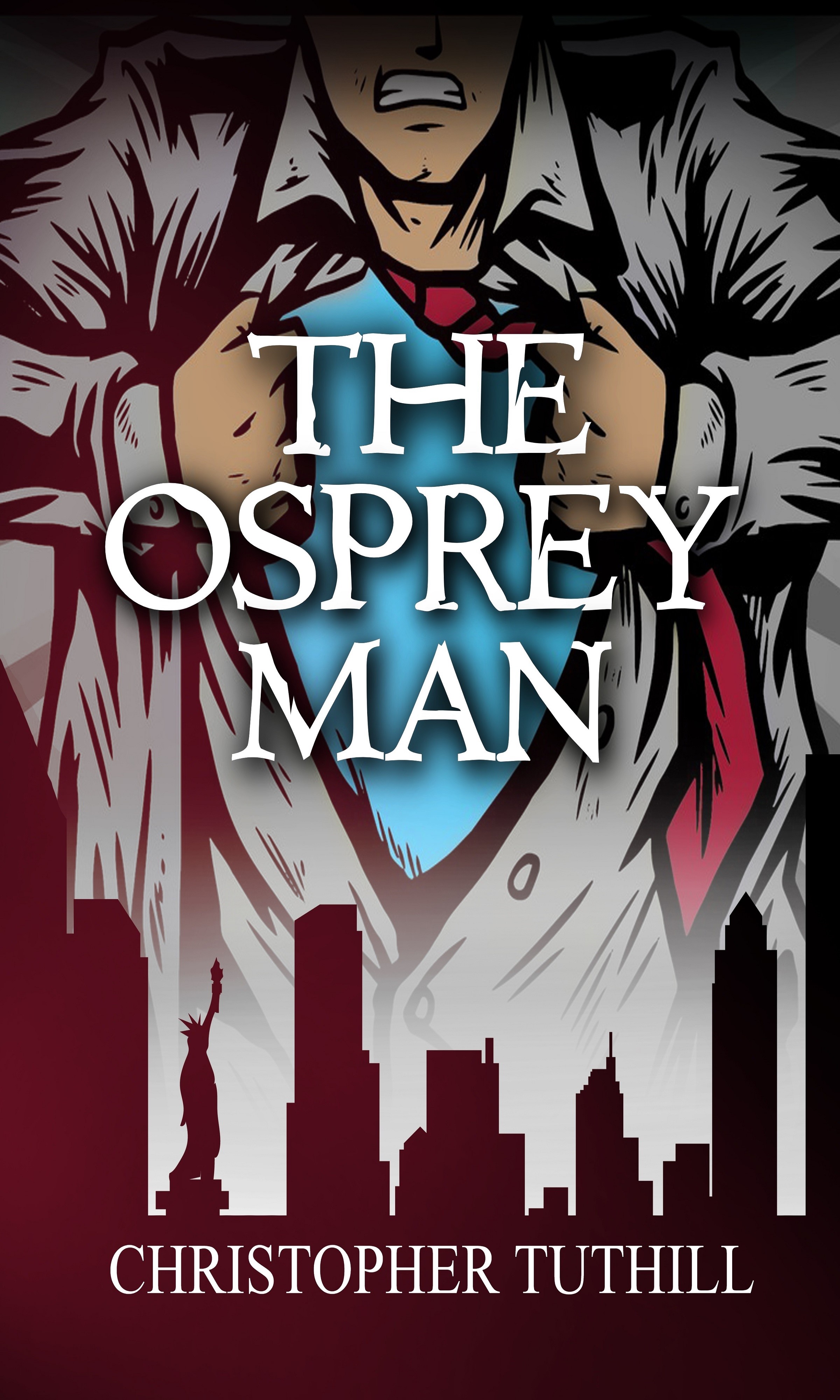
THE OSPREY MAN, available now

THE OSPREY MAN

Christopher Tuthill

Jacob is at that most magical time between childhood and adolescence. As the end of the school year approaches, he is dreaming of baseball and the beach, but most of all, about working on the comic book he and his best friend Jonathan have created, The Osprey Man. Then tragedy strikes and Jacob has to find an inner strength he is not sure he has.

This beautifully written tale of youth, coping, and working through grief is ideal for readers of all ages.

Purchase a signed copy from the author

The Reviews of THE OSPREY MAN are coming in:

Read the review from D. Donovan, Midwest Book Review: “
“Osprey Man reveals its surprises, unwrapping them through the course of the story like birthday gifts.”

Teddy Rose Book Reviews:

“‘The Osprey Man,’ was a highly enjoyable novel, and a wonderfully nostalgic look back at the eighties. Tuthill’s writing was genuine, heartfelt and skilled. I really felt for Jacob and his loss and I wanted him to succeed from the get-go. This is a five-star book that can be enjoyed by any and all readers!”

“A great read, with well-drawn characters. Chronicles that first, elusive love and all its insecurities as well as the tangled webs of friendships and devotion to the causes that inform who we become later in life. Harkens back to an innocence that many of us can relate to. I can’t wait to see what Chris is up to next!”–Glenn Jochum, singer and songwriter

Goodreads reviews:

“I found this book to be a really beautiful piece on grief and moving on. Jacob’s point of view was very poignant and touching and I found it really similar to how I have felt after losing someone close to me.
Five stars for this stunning tale!”

“This YA coming-of-age novel is a heartwarming tale of grief, friendship and perseverance told through the age of a young boy on the verge of becoming a teenager, and Tuthill portrays this perfectly.”–Laura Lee

“This is the first novel by Christopher Tuthill that I have read, but I would gladly read more! The atmosphere in this novel was perfect. The nostalgia of the 1980’s and the beginning of summer after school lets out, created a pitch perfect setting that made the background of the novel almost feel like a character in it’s own right.”

“Tuthill has created a beautiful and moving novel, with all of the panache of a great YA story. It’s obvious from his writing that he understands how kids talk and act and this glimpse back into the 1980’s seems as fresh and timely as ever.”

Adaptations AI Boardgames book-review Books Carl Sagan Christmas Comedy Comic Books Comics Coming of Age Fantasy fiction film Games George RR Martin Halloween HIstory Horror Ian Anderson Jethro Tull Labor Day Libraries Movies music Poetry Poughkeepsie Book Festival Progressive Rock Reading Reviews Roger Zelazny Science Fiction Short Stories Stephen King Summer Tad Williams The Chronicles of Amber The Osprey Man Tolkien Unions Winter Solstice writing YA Young Adult zombies

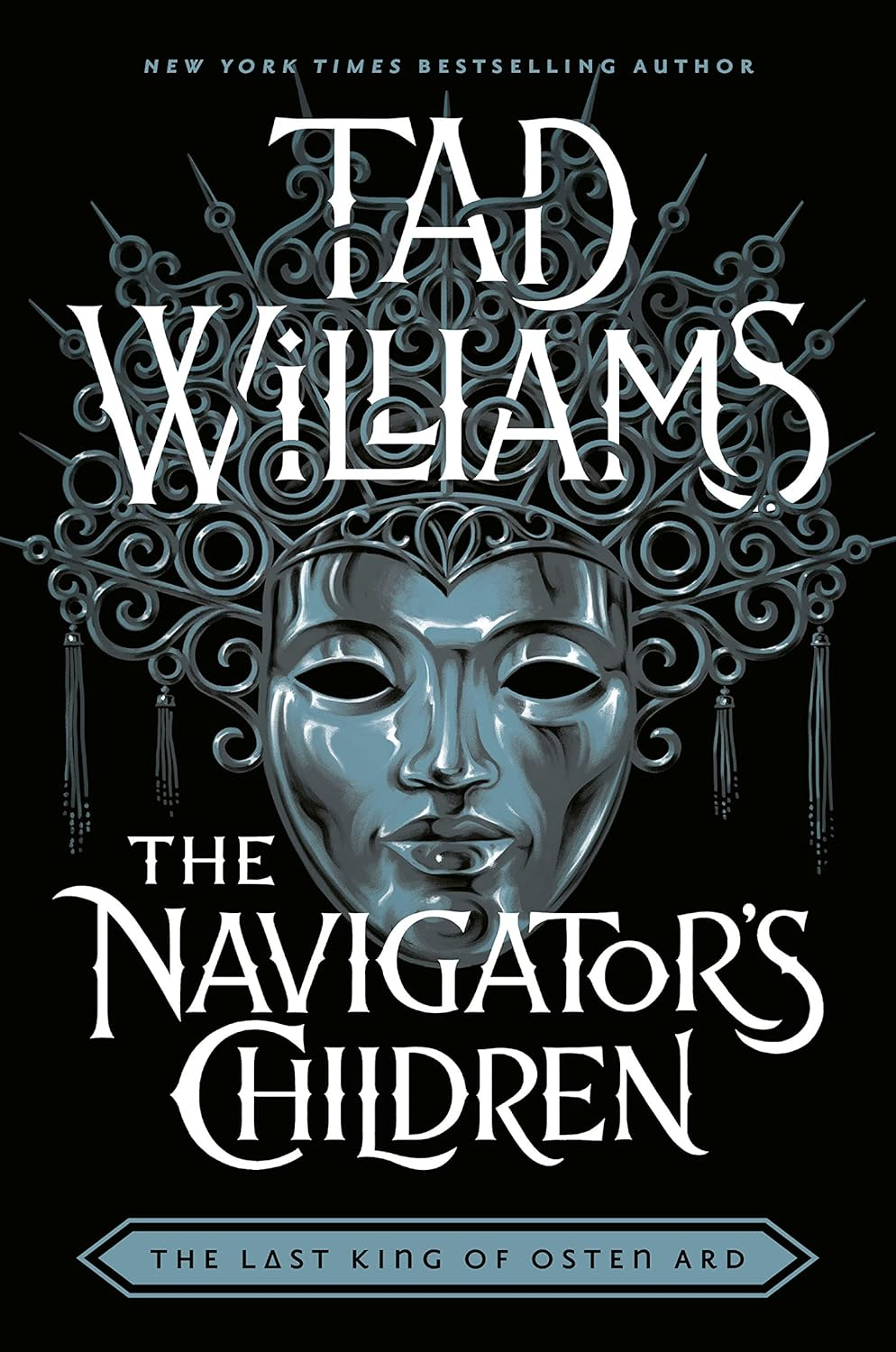
The Navigator’s Children, by Tad Williams (2024)

There are a lot of fantasy series out there, but in my view, Tad Williams’ Osten Ard novels are some of the very best. I was a huge fan of his epic Memory, Sorrow, and Thorn trilogy back when it came out; I was in high school when the first volume arrived, and I was hungry for more fantasy adventures after reading Tolkien. I found Williams to be great in his own right, very different, much darker. I loved the series and read some of his other books over the years.

A few years ago, when I learned he was going to write a sequel series set in Osten Ard, I was overjoyed. The Last King of Osten Ard has been a fun and engaging trip for me, and for many of us who love epic fantasy. These four volumes exceeded my expectations. There were also two shorter, superb prequel novels for the series that I highly recommend.

I finally read The Navigator’s Children over the holidays–it deftly ties the series up in a satisfying conclusion. There is a war to be fought, backstabbing villains, heroic deeds, and endless intrigue. There are also no easy answers or morality here. I really am in awe of how Williams finished this series, after so many years away from these characters. The story is dense, the world is staggeringly vast, and it is hard sometimes to keep track of all the interweaving story lines. I think Williams deserves so much credit for doing justice to all these characters and this story. It is no easy task. Most writers struggle to write convincing prose for much simpler kinds of tales, but he has again managed to do it in a lengthy, sweeping narrative.

I was happy to adventure again with Simon, Miriamele, and their many friends. In my view, what Williams really excels at is keeping the fates of all these characters in doubt right until the very end. They face such impossible odds that you think there must be no way out, again and again. I don’t wish to spoil anything for those of you who haven’t yet read the books, but I want to encourage those of you who have enjoyed books like Game of Thrones, Lord of the Rings, or other epic fantasy, to read these as well. If you’ve not read the original trilogy, start there, with The Dragonbone Chair. It may be an investment of time, but it’s well worth it; if you love epic fantasy novels, and haven’t read these, you are missing out. I was sad when it all ended, but pleased to see that Williams has a new Osten Ard book planned for later this year, which I will happily devour.

One observation about marketing from me, a guy who is an avid reader but who is not a businessperson or bookseller: I think bookstores could have made a better effort to promote this excellent novel. Maybe it’s just me, but my local Barnes and Noble didn’t have it when it came out, which I found shocking. I would think there would have been a major effort to promote it, with its own table, quotes from admiring authors like George RR Martin, and so on. I guess people who know and like Williams’ work were going to buy it, but it was surprising to me that there wasn’t more publicity. My local bookstore also didn’t have the latest Philip Pullman novel when I was last there, which seems very odd. Perhaps those of us who read these kinds of novels are getting older, but in my opinion it’s a missed opportunity on the part of booksellers when they don’t make a bigger deal out of new releases from major authors.

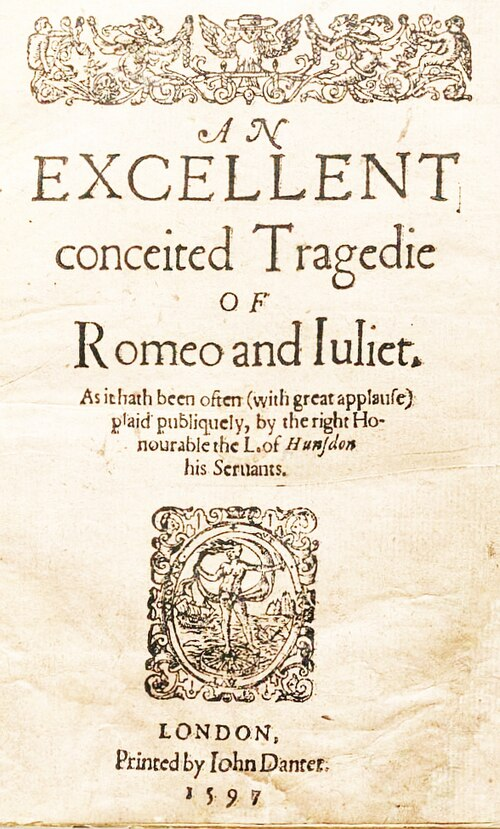
Romeo and Juliet (1968)

I just watched Franco Zeffirelli’s Romeo and Juliet with my thirteen year old son, and we both enjoyed it so much. I last viewed it when I was a Freshman in high school, nearly forty years ago. I recall being very moved by it, but doing my best to keep my enthusiasm for it hidden from my classmates. I still have many lines from it committed to memory thanks to my ninth grade English teacher.

In viewing it now: my goodness what an amazing production. The costumes, the sets, the locations, the cast are all superb. This has got to be one of the best film versions of a Shakespeare play ever made. One of the things I found quite arresting was the duel scene; the sweat and dirt and grit and athleticism of the cast made it feel startlingly real. The same is true of the passionate desperation with which Romeo and Juliet fall for each other. Completely reckless and irresponsible, as the young so often can be.

There’s the beauty of the language, of course–my son remarked with surprise at several points in the play, when he realized where some famous quote came from: “A plague on both your houses!” “A rose by any other name would smell as sweet.” “Parting is such sweet sorrow.” On and on it went. Only in reading and seeing these plays performed do you get a true appreciation of how magnificent they are, and how much of our culture owes a great debt to Shakespeare.

I found this tragedy terribly sad as a fourteen year old, so upsetting that I didn’t much want to watch it or read it again. I have read it a few times since then over the years, but now that I have children of my own, the story was far more wrenching to me. When you’re young I don’t think you really know just how inexperienced and innocent you are. The passage of time and a different perspective have made this play much greater in my eyes.

The Perennial Philosophy, by Aldous Huxley (1945)

I’ve been reading Aldous Huxley’s Perennial Philosophy, which I have found to be a gem of a book. It’s an overview of different mystical and religious traditions through history, in which Huxley takes short passages from various religious texts, selected by theme, and offers short commentaries on each. In this way he shows many of the similarities that bind them together. I highly recommend it, no matter what your beliefs are. For agnostics or atheists, it is still a perceptive book from which you can learn much about religion and its motivations. For the religious, it will show how much you share in common with believers of different faiths.

I came across the following passage as I was reading and felt it was incredibly prescient, given the constant barrage of bad information with which most of us are constantly deluged today.

“Agitation over happenings which we are powerless to modify, either because they have not yet occurred, or else are occurring at an inaccessible distance from us, achieves nothing beyond the inoculation of here and now with the remote or anticipated evil that is the object of our distress. Listening four or five times a day to newscasters and commentators, reading the morning papers and all the weeklies and monthlies nowadays, this is described as ‘taking an intelligent interest in politics.’ St. John of the Cross would have called it indulgence in idle curiosity and the cultivation of disquietude for disquietude’s sake.”


It Used to be a Game

“Loyalty to any one sports team is pretty hard to justify. Because the players are always changing, the team could move to another city…you’re actually rooting for the clothes, when you get right down to it. You’re standing and cheering and yelling for your clothes to beat the clothes from another city. Fans will be so in love with a player, but if he goes to another team, they’ll boo him. This is the same human being in a different shirt, they hate him now! Boo! Different shirt!” –Jerry Seinfeld

I have irrationally followed several New York area sports teams for my entire life. My father enjoyed watching these teams (Mets, mostly, but also the Giants, Islanders, and Knicks), so that meant I watched it. In the days when every household had a single TV, you either watched the news or sports or whatever else your parents had on, or you found something else to do.

For nearly fifty years, I have followed these teams in good and bad years. Mostly bad, though the Mets won it all in ’86, the Giants have won it four times, and when I was very young the Islanders had their dynasty. It’s fun to debate the failures and successes of these teams with friends and family, not to mention the pure enjoyment we get when we watch athletes performing at a high level.

Since I was a boy back in the 1980s, there have always been rumblings that all was not right with these sports. There were occasional strikes, which my father held a dim view of. He earned barely enough to keep us afloat and was uninterested in hearing about millionaire players and their grievances against management, though as a union man he sided with the players.

There were corrupt owners moving their teams in the middle of the night to some new city. Luckily, New York is big enough that this didn’t apply to me, though perhaps we would have been better off if they’d abandoned us. My dad still recalled with bitterness the Dodgers leaving for LA but embraced the Mets when they arrived. He wasn’t a bettor, but legend has it that at his wedding he and his groomsmen stopped by the bar to find out the score of the Met game on June 2, 1962.

Like most, my sports interest is completely tied into these kinds of family stories. I spent countless hours watching these things with my dad and the rest of my family. It was always a special day when he brought home tickets so we could see a game in person. He’s been gone for more than a decade, but whenever I watch the Mets or any other sporting event, I think of him.

I stopped following sports for a bit in college and shortly thereafter. The baseball and hockey strikes of the early 90s disgusted me, and I lost all interest. But by the late 90s I was cheering for these teams once again. After my children were born, I had less time to watch such things, but I made sure to bring them to see the good guys in person once in a while. Today, in 2025, such excursions to see the big league teams are nonexistent for us, since prices are astronomical.

There have been some very disturbing events in every major sport over the past decade or so. Aside from strikes and lockouts, there have been plenty of allegations of game fixing in every major sport. The tarnish of the 2017 world series has still not worn off for me, nor has the scandal involving baseball’s biggest star who, he and MLB claim, was scammed by his interpreter, who stole millions from him to bet on games. No one bothered to look too hard into that one. As Pete Rose said at the time, what he didn’t realize back when he was banned for life in the 1980s was that he’d just needed an interpreter to take the fall. Baseball is big business, after all, run by billionaires who don’t want their authority, or their integrity, to be challenged. Having the biggest star on the planet banned would be bad for business. There are stadiums to build at taxpayer expense, after all.

This offseason, two pitchers have been banned and may go to jail for fixing games. The story is that they merely threw certain pitches badly to win small bets. Could be true. Might also be much more widespread than baseball admits. We know that at least two guys did this. How many more are out there? And how can a sport that did absolutely nothing to an entire team that was found to have cheated their way to a championship convince us that they are willing or able to police the cheating in their sport?

A generation ago, there was a lot of hand wringing over steroids, but the game fixing issue seems far worse to me. In my view, MLB cannot even ensure the integrity of their own game. It’s a dismal situation. Virtually every team has an agreement with a sports gambling company, a mind-boggling arrangement that was correctly shunned in past years. But now every ad for a baseball broadcast is urging you to bet on your favorite team. Not really a way to inspire confidence that we’re watching something legitimate. Perhaps MLB ought to become a league like the Savannah Bananas have, a humorous spectacle complete with players dancing and doing flips in the field.

And then there is Seinfeld’s quote, which I found enormously funny when he delivered it, but as time goes by it seems less so. He was joking, but not really. This week a fan favorite who Met fans watched grow up was sent packing to Texas, in the name of something called ‘run prevention,’ which normal humans used to call pitching and defense.

My children barely care about any of this, since it is far too expensive for us to go to any games or to even subscribe to the channels on which these games appear. My oldest son, at 13, expressed disappointment, since he loved the way Brandon Nimmo was always smiling.

Once or twice a year we go to the local single a team, which charges around $8 for a bleacher seat. My family has fun for an afternoon, and I  can pretend for a few hours that it is still just a game.

Friendship and The Chair Company

Friendship, with Tim Robinson, was great fun; if you enjoy the over-the-top characters and situations in his sketch comedy, you’ll find plenty of laughs in this tale of a misfit who can’t seem to act normally. The movie reminded me of The Cable Guy, the equally hilarious story of a man who wants so badly to be friends with a customer that he stalks him, committing crimes in the hopes of forging a connection.

This story was a bit more dramatic than that, as Robinson’s character, Craig, desperately craves the approval of his new neighbor, Austin (Paul Rudd), an incredibly cool dude and local weatherman who at first takes an interest in Craig, before finding out how unhinged he is. When Craig acts like a lunatic at Austin’s party, Austin politely suggests they go their separate ways. But Craig, who has no other friends, and seemingly no other hobbies aside from buying clothes and obsessing over them, feels totally betrayed by this rejection. He has bought a drum kit, lost his phone, and started acting like the carefree spirit he believes Austin to be, and won’t let this bromance die without a fight.

What follows is the relentless destruction of Craig’s life—he loses everything—his wife, his job, and what little dignity he once possessed, as he pursues his lost friend, only to find that Austin isn’t who he seems. At one point, in total despair, he screams at Austin “You all accepted me way too fast! You can’t do that! You made me feel too free! People need rules!”

These lines, delivered with Robinson’s trademark, bug-eyed wildness, had me dying with laughter and encapsulated this poor man’s dilemma. He’s an awkward psychopath who holds a good job, with nice clothes, a nice house and family, but he is emotionally stunted, living through his phone, spending his days wishing he could fit in and be a normal guy, something he enviously watches his colleagues and coworkers do with seemingly effortless ease. For work he creates an addictive app, when not making up ad campaigns for local politicians. His wife, who has recently beaten cancer, cannot stand him, nor can his teenage son.

If there was a flaw in the movie, I thought it was in this home life. It seemed beyond belief that Craig would have married so highly above himself and had such a good job. But then again, most sitcoms have this same exact setup: an oaf with a beautiful wife and family who barely tolerate him. And there are lots of weirdos walking among us, doing all sorts of crazy things under the veneer of normality. I really enjoyed this movie, even if I am more partial to Robinson’s more light spirited anarchic stuff.

Speaking of which, I found the first episodes of his new HBO show, The Chair Company, to be totally hilarious and loved everything about it. In this one, Robinson again plays a suffering everyman, this time seeking justice against an office furniture business after enduring a hysterically funny mishap in front of his entire workplace. Robinson is so good at these kinds of characters, barely holding his life together, trying to keep a lid on a brimming rage that bursts out over and over, through minor and major inconveniences. After his fall, he is determined to root out the villains who have embarrassed him, no matter the cost. The first two episodes moved him down this dark path in a painfully funny manner, and I can’t wait to see just how outrageous it gets over the course of the story.

Halloween Reading List

Starting Octber 1, I wrote short reviews and thoughts about 31 different Gothic tales that I have enjoyed through the years. I did this in no particular order, choosing a new one every day from my bookshelf. My reading is skewed heavily toward things published decades ago; the most recent one here is Roger Zelazny’s A Night in the Lonesome October, from 1993, with the oldest being Anne’s Radcliffe’s The Mysteries of Udolpho from 1794. Thirteen of these were written before 1900. The breakdown, when I looked at it, went like this:

1700s: 1 1800s: 12 (1890s: 5, 1810s, 2, 1830s, 2 1840s 1 1860s 2) 1930s: 1 1940s: 1 1950s: 4

1960s: 2 1970s: 4 1980s: 5 1990s: 1

The entire list, with links, is below, for anyone interested. My reading habits in general skew this way, as well. For whatever reason I am not usually in the habit of reading contemporary things or bestsellers, with some exceptions, which you can see on the list. I recall many years ago a creative writing professor damning me with faint praise by saying my writing style was ‘old fashioned,’ which I took as a badge of honor.

This was a fun project, and I may do a more limited one of holiday tales in December.

  1. The October Country by Ray Bradbury, 1955
  2. Young Goodman Brown by Nathaniel Hawthorne, 1835
  3. The Sketch-book of Geoffrey Crayon by Washington Irving, 1819
  4. A Night in the Lonesome October by Roger Zelazny, 1993
  5. The Case Against Satan by Ray Russell, 1962
  6. The Exorcist by William Peter Blatty, 1971
  7. The Haunting of Hill House by Shirley Jackson, 1959
  8. Fevre Dream by George RR Martin, 1982
  9. The Body by Stephen King, 1982
  10. I Am Legend by Richard Matheson, 1954
  11. Frankenstein by Mary Shelley, 1818
  12. The Turn of the Screw by Henry James, 1898
  13. The Yellow Wallpaper by Charlotte Perkins Gilman, 1892
  14. A Good Man is Hard to Find by Flannery O’Connor, 1953
  15. Interview With the Vampire by Anne Rice, 1976
  16. In Dark New England Days by Sarah Orne Jewett, 1890
  17. Ma’ame Pelagie by Kate Chopin, 1894
  18. The Moonstone Mass by Harriet Prescott Spofford, 1868
  19. The Phantom Coach by Amelia Edwards, 1864
  20. The Refugee by Jane Rice, 1943
  21. Ghost Story by Peter Straub, 1979
  22. Mort by Terry Pratchett, 1987
  23. The Halloween Tree by Ray Bradbury, 1972
  24. Something Wicked This Way Comes, by Ray Bradbury, 1962
  25. The Witches of Eastwick by John Updike, 1984
  26. The Fall of the House of Usher by Edgar Allan Poe, 1839
  27. The Cask of Amontillado by Poe, 1846
  28. Dracula by Bram Stoker, 1897
  29. The Mysteries of Udolpho by Anne Radcliffe, 1794
  30. The Stress of Her Regard by Tim Powers, 1989
  31. At the Mountains of Madness by H.P. Lovecraft, 1936

At the Mountains of Madness by H.P. Lovecraft (1936)

“It is absolutely necessary, for the peace and safety of mankind, that some of earth’s dark, dead corners and unplumbed depths be let alone; lest sleeping abnormalities wake to resurgent life, and blasphemously surviving nightmares squirm and splash out of their black lairs to newer and wider conquests.”

Lovecraft is another of those giants of horror who could fill this list all on his own, but I had to pick just one story, and this is one I really enjoy. A group of ill-fated scientists from Miskatonic University make the terrible mistake of going to Antarctica where they find evidence of a race of beings far older than anything known to humans before, beyond a range of mountains larger than any that have ever been recorded. They explore buildings left behind by this civilization, which have been devised through ‘non-Euclidean geometry,’ and find hieroglyphs that help them learn about Elder-things and shoggoths, monsters that populated the place and whom they have foolishly awakened. They escape, but not before losing several members of the party. The novella serves as a warning to others who might want to return to study the antarctic.

Lovecraft has of course been highly influential and much has been written about him and his work. “Who Goes There?”, John Campbell’s horror tale set in the arctic with a group of explorers, immediately comes to mind, as do the films based upon it, including the 1951 version “The Thing From Another World,” as well as John Carpenter’s excellent “The Thing” from 1982.

I think it’s best to learn about Lovecraft straight from the source. There are many entry points for his mythos, but I think this is a great place to start. You could also read the Call of Cthulhu, The Case of Charles Dexter Ward, Dagon, or any number of others. The Library of America has a wonderful collection of his tales that I highly recommend.

So there you have it. Thirty-one tales of gothic terror and wonder over the month of October. I think it’s a pretty good list of some of the gems I’ve read over the years; I chose them in no particular order as the month went by, but I stand by each of them as tales that are either unique, or influential, or just plain scary enough to keep you up at night. Perhaps I’ll choose another 31 next October. For now, I hope you’ve enjoyed perusing this list, and that you’ve been inspired to read something you haven’t before. If you have your own favorites, or if you like what you’ve read, be sure to let me know in the comments.

Happy Halloween!

The Stress of Her Regard by Tim Powers (1989)

“Crawford felt drops of sweat run down his ribs under his shirt as he slowly forced the muscles of his neck to tilt his head up; he saw the upper slope, bristling with trees that obstructed a view of the road, and then he saw the outer branches of the tree he was braced against, and finally he gathered his tattered courage and looked straight up.

And it took all of his self-control not to recoil or scream, and he was distantly resentful that he couldn’t just die in this instant.”

Tim Powers has had a long and illustrious career writing historical fantasy, and he ought to be a household name. You can read any of his books and be transported to a different world, but for this time of year I think Stress of Her Regard is a great place to begin. It’s a wonderful tale about Michael Crawford, who accidentally finds himself the object of a nephilim, a sort of succubi that he has unwittingly courted. His bride to be is found dead, and he’s the main suspect. He travels around Europe trying to rid himself of the creature, and meets up with Shelley, Byron, Keats, Dr. Polidori, and others, all of whom are trying to avoid these strange, dangerous creatures. It’s great fun to read and gets my highest recommendation-for those who love literary history and fantasy, it doesn’t get much better than this. I’d also recommend Powers’ other books, which are all terrific. I particularly enjoyed On Stranger Tides, a pirate story, and his Last Call series. He’s one of the best fantasy writers we have, and he’s still going, with his latest book due out this fall.

The Cask of Amontillado

Today, I’m again doing some brief thoughts on a few horror stories I’ve enjoyed over the years and which deserved inclusion on this reader’s guide to Halloween. You could probably pick 31 stories by Poe to read this season, but here are two of my very favorites, as well as two highly influential gothic novels.

The Cask of Amontillado by Edgar Allan Poe (1846)

1935 Illustration by Arthur Rackham

“The thousand injuries of Fortunato I had borne as I best could, but when he ventured upon insult, I vowed revenge. You, who so well know the nature of my soul, will not suppose, however, that I gave utterance to a threat. At length I would be avenged; this was a point definitely settled—but the very definitiveness with which it was resolved, precluded the idea of risk. I must not only punish, but punish with impunity. A wrong is unredressed when retribution overtakes its redresser. It is equally unredressed when the avenger fails to make himself felt as such to him who has done the wrong.”

One of the most widely read and anthologized stories of Mr. Poe, who was perhaps the greatest writer of Gothic tales, the Cask of Amontillado has long been a favorite of mine, as I’m sure it has for many others. The first time I read it, I couldn’t quite believe what I was reading. This was supposed to be old, boring literature, and here we were amid one of the most horrible things my young brain had ever contemplated. For the first time, I realized that these old tales were perhaps better than whatever slasher stuff was at my local multiplex.

The Fall of the House of Usher by Edgar Allan Poe (1839)

“DURING the whole of a dull, dark, and soundless day in the autumn of the year, when the clouds hung oppressively low in the heavens, I had been passing alone, on horseback, through a singularly dreary tract of country; and at length found myself, as the shades of the evening drew on, within view of the melancholy House of Usher.”

This tale gave me the chills when I first read it as a lad, and it still has that effect now. It gets weirder and weirder as it progresses; a bizarre, supernatural and disturbing story of a reclusive man, his ghostlike sister, and their creepy ancestral home. One of the greatest horror tales ever written.

I also highly recommend a trip to the Poe Cottage in the Bronx, where he lived for a time. It’s such a neat piece of local history–a lot of places want to claim Poe as their own, but he did live in New York for the last few years of his life, with his ailing wife and her mother, and the small museum there is well worth a visit for New Yorkers.

Dracula by Bram Stoker (1897)

The Mysteries of Udolpho by Anne Radcliffe (1794)

“A well-informed mind is the best security against the contagion of folly and vice. The vacant mind is ever on the watch for relief, and ready to plunge into error, to escape from the languor of idleness. Store it with ideas, teach it the pleasure of thinking; and the temptations of the world without, will be counteracted by the gratifications derived from the world within.”
― The Mysteries of Udolpho by Anne Radcliffe

“How blessed are some people, whose lives have no fears, no dreads; to whom sleep is a blessing that comes nightly, and brings nothing but sweet dreams.” Dracula by Bram Stoker

No list of Halloween reading would be complete without Dracula, one of the first novels of its kind. An epistolary novel that moves much slower than most of the film versions with which people may be more familiar, it inspired many dozens of similar books. Stoker borrowed heavily from folklore to write this tale, which many critics have noted bore similarities to Anne Radcliffe’s The Mysteries of Udolpho, which is also well worth reading. Those interested in literary history and gothic tales should read both of these. Udolpho was published in 1794 and is considered by many to be the first gothic novel. The tragic story of a young woman’s misfortunes and strange occurrences at a castle where she lives, Udolpho has been praised by literary critics who have written on how this groundbreaking work influenced many later writers, including Poe, Stoker, Henry James, and Jane Austen, to name just a few.

Mookie

Mouser, keeper of the hearth

Mighty warrior, terror of birds, snakes, squirrels,

Eyeing the insolent groundhog with fury.

Purring loudly to wake your ancestral lions,

Filled with pride, yet thankfully

Kindhearted toward babies, even when they pulled your tail.

Thanks for sleeping at the edge of the bed for nearly twenty years.

Happy hunting.

“Mookie” 2007-2025

Beloved friend, fierce hunter, always in our hearts.