
I purchased a Dell laptop in December. Three months later, it won’t boot up. I called Dell support and they tell me the fact that it won’t boot up is my problem, not theirs, not covered by warranty. Incredible. Dell used to make serviceable machines, but no longer. Avoid them and get a Lenovo or macbook.
Category: Uncategorized
Fail Better
Many years ago, when I was taking a graduate creative writing workshop, a well-known novelist instructor of mine commented that my story, set on a college campus, did not compare well with similar books by Philip Roth, Jane Smiley, Richard Russo, and other exemplars of the genre. She was correct. My story was in no way up to that lofty standard. But perhaps, since I was an earnest young student, she might have been kinder, instead of comparing me to some of the most famous writers of the day. This particular instructor had a reputation of being this way with everyone. In fact, most creative writing professors I encountered had this same reputation, causing me to stop taking such workshops after awhile. Even so, I took these sorts of criticisms personally. I should not have done that, but I think most young writers do.
I recently saw the obituary for this person and thought it was sad. She may have been a terrible teacher, but maybe she was a good person. Then I thought that her passing really didn’t rate up there with the deaths of the true, all-time literary greats, if that’s what we are to measure lives by.
I’ve been writing and submitting for decades now. I’ve had some modest success. To be blunt, in my experience, most of the writers and creative writing professors I’ve met have been ungenerous, competitive, petty, and small minded. If and when you meet a mentor or friend in the field, you should consider this very lucky indeed. It’s everyone for themselves.
The creative writing workshop at the MFA level was a particularly odd experience. The idea, I was told again and again, was to ‘respect the work,’ yet in my classes there was little respect or support given by instructors or other students, all of whom were usually desperate to impress the professor, a person who had met with some sort of literary success at some point in their career.
What no class or instructor can do is give you the drive to write better stories. This motivation has to come from within. And in my experience, creative writing programs do almost nothing to help you navigate getting an agent or making any commercial sales, mostly because the professors have no idea how to accomplish this.
So, you write stories because you want to do it–you enjoy it and it brings you satisfaction. For most of us, we may meet with some success, or maybe not, but that becomes almost beside the point. If you meet a generous writer who wants to help you along in writing endeavors, be thankful. To quote E.B. White at the end of Charlotte’s Web: “It is not often that someone comes along who is a true friend and a good writer. Charlotte was both.”
The Perennial Philosophy, by Aldous Huxley (1945)
I’ve been reading Aldous Huxley’s Perennial Philosophy, which I have found to be a gem of a book. It’s an overview of different mystical and religious traditions through history, in which Huxley takes short passages from various religious texts, selected by theme, and offers short commentaries on each. In this way he shows many of the similarities that bind them together. I highly recommend it, no matter what your beliefs are. For agnostics or atheists, it is still a perceptive book from which you can learn much about religion and its motivations. For the religious, it will show how much you share in common with believers of different faiths.
I came across the following passage as I was reading and felt it was incredibly prescient, given the constant barrage of bad information with which most of us are constantly deluged today.
“Agitation over happenings which we are powerless to modify, either because they have not yet occurred, or else are occurring at an inaccessible distance from us, achieves nothing beyond the inoculation of here and now with the remote or anticipated evil that is the object of our distress. Listening four or five times a day to newscasters and commentators, reading the morning papers and all the weeklies and monthlies nowadays, this is described as ‘taking an intelligent interest in politics.’ St. John of the Cross would have called it indulgence in idle curiosity and the cultivation of disquietude for disquietude’s sake.”

Mookie
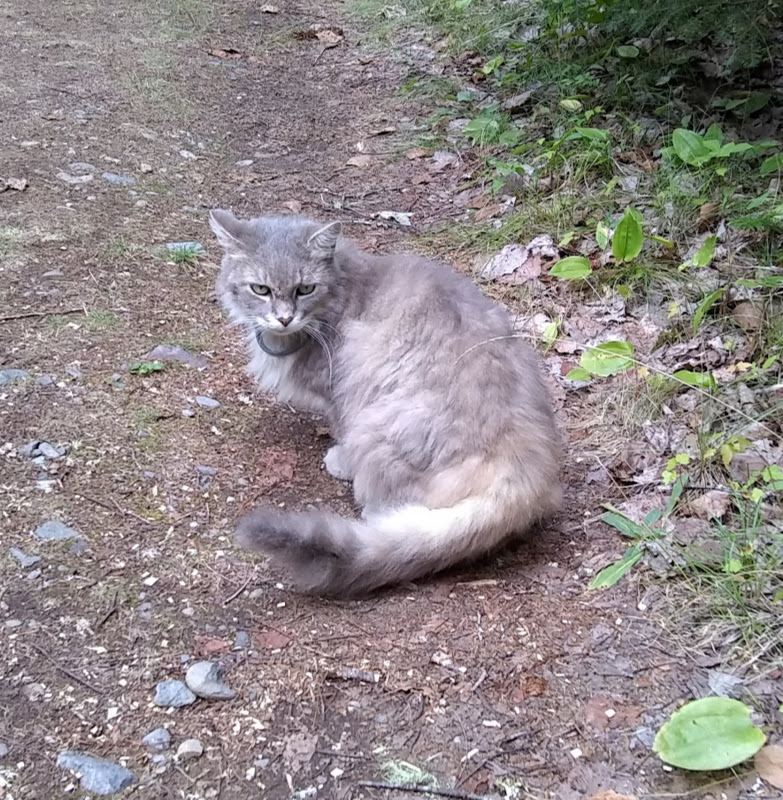
Mouser, keeper of the hearth
Mighty warrior, terror of birds, snakes, squirrels,
Eyeing the insolent groundhog with fury.
Purring loudly to wake your ancestral lions,
Filled with pride, yet thankfully
Kindhearted toward babies, even when they pulled your tail.
Thanks for sleeping at the edge of the bed for nearly twenty years.
Happy hunting.
“Mookie” 2007-2025
Beloved friend, fierce hunter, always in our hearts.
In Praise of Preschool Teachers
Today I met with my four-year-old’s teachers to discuss his progress this year. He is a wonderful boy (yes, I’m biased), and they were happy to tell me all about how he’s been doing. I thanked them for creating such a warm and welcoming environment for all their students. My son talks about them daily and clearly loves and respects them. That is the highest praise I can imagine.
I told these teachers how highly he esteems them, and how his feelings for them made me feel they were great people. It takes a really special person to be a preschool teacher. Of course I think my son is amazing, but I’m not so sure how I would handle SIXTEEN four-year-olds in a classroom all day. I, like most of us, would be out of my depth and unable to cope with their needs.
There are a great many overpaid people in this world doing work that has little meaning in the grand scheme of things. Just look at the tech bros actively making everything worse for everyone. Politicians. Dishonest investors. The current thugs in charge of our government is a tale I don’t wish to get into here, but they are destroying everything around them and are paid handsomely to do it. The list of highly paid humans doing lousy things is almost endless.
What all these jobs have in common is that not one of them can hold a candle to a good preschool teacher, not in terms of what they give to society, nor in the difficulty of their jobs. Preschool teachers are caregivers, educators–they nurture the most vulnerable population in the country. They deserve our praise and respect, and they’re severely underpaid.
If you’re reading this, be sure to thank an educator. Right now, they are under assault in this country. I have absolutely no respect for people who think teaching is easy, or that teachers get summers off, or that they have easy hours. Such talking points show a vast, dangerous ignorance as to what teachers do. There is no more important job anywhere. Without good teachers, this country would be in even worse shape than it is. When I drop my son off, I am entrusting his teachers with the most valuable thing in the world. Surely they deserve better than the way we treat them in the US.
Dark Times
“We are what we pretend to be, so we must be careful about what we pretend to be.”
–Kurt Vonnegut, Mother Night
Today I saw a wild-eyed fellow with a t-shirt that said “Russian Asset” and I immediately looked away from him, since in my experience the sort of nutbag who would wear such a shirt usually wants more than anything to get some kind of reaction from you. I saw him again a few minutes later and he had a hat on that looked just like Elon Musk’s MAGA hats, but instead read “Make America Get Apartheid.”
I was enraged and wanted to knock it from his head. How could someone walk around with this kind of message? What is going on in this country when someone can proudly wear this? In the most generous reading of it, is it possible he was, I don’t know, being ironic? Was this his idea of satire? It really doesn’t matter what his intent was, because YOU CANNOT IRONICALLY WEAR A NAZI SYMBOL. It’s hard to believe this even needs to be said.
Yesterday, the vice president of the United States went to Greenland and said “We must have it” and that “We can’t ignore the president’s desires.” Most Trump supporters I know would probably say he is exaggerating, that it’s all a joke. We have heard this refrain over and over, every time the administration, or Trump, does something outrageous or cruel or warmongering. But they mean everything they say. JD Vance definitely looks on Trump as some kind of God-Emperor, like we’re in DUNE, which is why he speaks of his ‘desires’ as if they’re the immutable will of some divine presence. And all Trump’s followers know this isn’t a joke, even if they say it is. We’re teetering on the abyss, and there’s nothing funny about it.
Jethro Tull: Curious Ruminant
My opinion of the new Jethro Tull album doesn’t make much difference, but here it is anyway: it’s a total joy to even have one. Since I was a teenager, this has been my favorite band, and there will come a day that I won’t get any more new ones, so I’m enjoying the hell out of it.
We’ve been lucky enough to have three new Jethro Tull albums since 2022, and all of them have been fantastic. The Zealot Gene was a tour-de-force of biblical proportions, mingling sacred text and modern life, while 2023’s RokFlote was an epic exploration of Norse myths. Curious Ruminant is perhaps more down to earth, more contemplative, but no less searching–it’s a truly impressive artistic journey that gets better with repeated listenings.

The album should be listened to straight through, in one sitting, if you can manage it. As with all of Ian Anderson’s best records, this one ebbs and flows and gives the listener the feeling they’re looking at a giant canvas, revealed bit by bit, or reading a complex book and learning more in each chapter.
The opening song is the high-energy ‘Puppet and Puppet-Master,’ a reflection on the songster and his audience. We know we’re in capable hands as the band shows its chops with some fine electric guitar, organ and flute solos as Anderson delivers his tongue in cheek dramatization of what it’s like to get up there every night and play. “Holding court on a black box stage, dangling from the strings, I twirl and face the music,” he sings; the subject matter reminds me of ‘A Raft of Penguins,’ from his excellent 2003 album, Rupi’s Dance, which was a song about his nervousness in playing with an orchestra.
“Dunsinane Hill” is a real treat if you’re a Tull fanatic who also loves Shakespeare, like me. Having grown up in Scotland, one can only imagine how much MacBeth must have inspired Ian over the years. I absolutely love this song and it’s conceit: intrigue between two politicians discussing betrayal. Here the flute plays a merry folk tune even as the narrator says “I look over my shoulder/To see my brother warrior, damned spot to wash away.” I give this reimagining of the bard ten out of ten stars.
“Stygian Hand” is a sort of companion to Dunsinane thematically. Have you ever been nervous walking down a dark street alone? Here’s a song to help you. Bring a symbol of faith to ward off the devil and hope for the best. The accordian features prominently on this one. It’s a fun song and gives bit of levity to the otherwise fairly serious proceedings on this album.
“The Tipu House” is another up-tempo number, and here Anderson is singing of ‘All God’s children’; the subject is a tenement Anderson saw in Barcelona, and the residents, including young kids playing in less than ideal conditions. The flute is as manic as on any Tull track, the melody will leave you humming. It’s neat trick, to get an audience feeling empathy for their fellow man even while tapping their feet and singing along.
Other songs in this collection continue to encourage us to recognize our shared humanity, including the nearly 17 minute “Drink from the Same Well,” a fantastic piece of music that’s a meditation on differences that drive people apart. It seems a plea to remember that we’re all human and are worthy of respect, much as Aqualung was. The music is eastern-influenced, and Anderson said the bulk of the instrumental work dates from 2007, which explains why it would not sound out of place on his albums of that era.
“Over Jerusalem” is a song of lament for Israel that sounds like it could have been the twin of ‘Swing it Far’ from Thick as a Brick 2. You get the sense that Anderson, who has played in Israel many times over the years, donating all the money to charity, is as deeply saddened by the current situation as anyone.
“Savannah of Paddington Green” is a song about ecology, a subject Anderson has written of before, most famously in “Skating Away,” way back in 1973. “Threatening species, we turned on ourselves, like others before us, now left on the shelves,” he sings, wondering what the future may hold for our planet.
The final track on this one is a sort of goodbye, called “Interim Sleep,” a meditation on one’s final act. Most of us don’t want to think of the end, but I suppose Mr. A feels the weight of time.
“When interim sleep takes me
I want you close beside
No tears, no sad goodbye
I am calm and still as a fallen autumn leaf”
This is really quite sweet, and moving, as well as very unlike most Jethro Tull songs in that it’s personal and straightforward. Anderson has always preferred things that are more abstract, but that isn’t to say he lacks emotion. After all, his most famous song is a searing heavy rock number about a homeless vagrant, featuring a face melting guitar solo that Jimmy Page himself approved of as it was played. The best Tull songs are like this, melding high and low, profane and holy, mundane and beautiful.
The title track has the classic sound of this band–heavy guitar, flute, coupled with philosophical lyrics. Anderson is pondering life, ‘asking why am I here, answering, why am I anywhere,’ and ending with ‘cogito ergo sum.’ At 77, he’s as much a seeker as he ever was. I’m glad he’s taken us all along for the ride, and I sure hope it doesn’t end anytime soon.
Welcome to Freak Show II
I’d been hesitant to post anything since election day. What can anyone say about this situation that hasn’t already been said? In my opinion, all you need to do is look at the decline of reading and critical thinking skills to understand the second rise of the sexual assaulting felon. When an entire electorate stares at screens 80 hours a week, don’t or can’t read anything challenging, and believe all kinds of disinformation and nonsense, guess what happens?
During his last term, I read more American history than is usual for me, hoping to see some similarities to our current times in our past. We have seen much worse days than this, and survived as a nation. In some of our most tumultuous eras, it was never certain that we would make it through, but somehow, we did.
I don’t know what the next few years will bring, exactly, but I will be surprised if the great dictator doesn’t try to suspend elections. He’s already talked about doing that, as well as rounding up millions of immigrants. His proposed cabinet members are a farce and a disgrace, unqualified people who hate the government agencies they’ll be running, just like last time. His voters wanted this, and we’re all about to get it.
One thing I heard a lot of from 2016-2020 are variations of ‘this is not who we are—we’re better than this.” No, we aren’t. This is exactly who America is and what we want. We can take a little solace in the millions who voted against him, but that’s cold comfort. A man as mendacious and vile as this should have been thoroughly repudiated.
My job is to just try and make sure my children are safe and happy. There is little else we can do. Locally, you can try and make your community better. You can volunteer and try and make your corner of the world a little more humane. Make your voice heard to your elected representatives. Beyond that, we can just hope for the best.
My wife and I don’t talk politics around our children, since that would be a crazy thing to do, and we want to let them enjoy their childhoods. We did look at an electoral map together, and they are aware who won. My nine-year-old daughter, who is a brilliant artist and incredibly smart and perceptive in ways that I was not at her age, summed things up perfectly afterward. “Bruh—it was a girl’s turn after all this time. And that guy is so dumb, and such a mean bully. Just look at him.”
Children intuitively understand things, no matter what adults might say. She knows a lying creep when she sees one. I have never seen a picture of this man where he is smiling and it looks natural, because he is a deeply miserable human being who hates himself and continues to take it out on the entire world. As soon as he starts talking, this is self-evident.
The religious people who voted for him could be the topic for an entire book. All I can say about them is that they ought to be deeply ashamed of themselves, but I’m sure they are not. He’s an imperfect vessel on a mission from Jesus, after all.
And that’s enough about elections. I refuse to follow news cycles for years on end. I’m turning it all off. It will be hard to miss the worst of what he’ll do, but there is little point in following it week after week with every new outrage.
In other news, I have a few writing projects I’m working on, and a deadline I have to meet in a few weeks. I’ll have plenty to keep me busy through the end of the year and the start of next.
One day at a time, as the saying goes.
Happy Labor Day
The Labor Day holiday invariably reminds me of my father, a shop steward and union rep for many years, who worked many long hours at a job he wasn’t crazy about to support his family. He always told me how important his union was, how lucky he was to have it at New York Telephone for forty years–his job supported us all (six kids) on one salary. This song reminds me a lot of him. He was a tireless man who still had time for kid activities, coaching, volunteering at the church and scouts, and too many other things to name. He was a great guy and I miss him.
Happy labor day to everyone, especially those of us working at jobs where we are perhaps underpaid or unappreciated. Your families understand–you’re what makes our country work.
 Christopher Tuthill