The Navigator’s Children, by Tad Williams (2024)

There are a lot of fantasy series out there, but in my view, Tad Williams’ Osten Ard novels are some of the very best. I was a huge fan of his epic Memory, Sorrow, and Thorn trilogy back when it came out; I was in high school when the first volume arrived, and I was hungry for more fantasy adventures after reading Tolkien. I found Williams to be great in his own right, very different, much darker. I loved the series and read some of his other books over the years.

A few years ago, when I learned he was going to write a sequel series set in Osten Ard, I was overjoyed. The Last King of Osten Ard has been a fun and engaging trip for me, and for many of us who love epic fantasy. These four volumes exceeded my expectations. There were also two shorter, superb prequel novels for the series that I highly recommend.
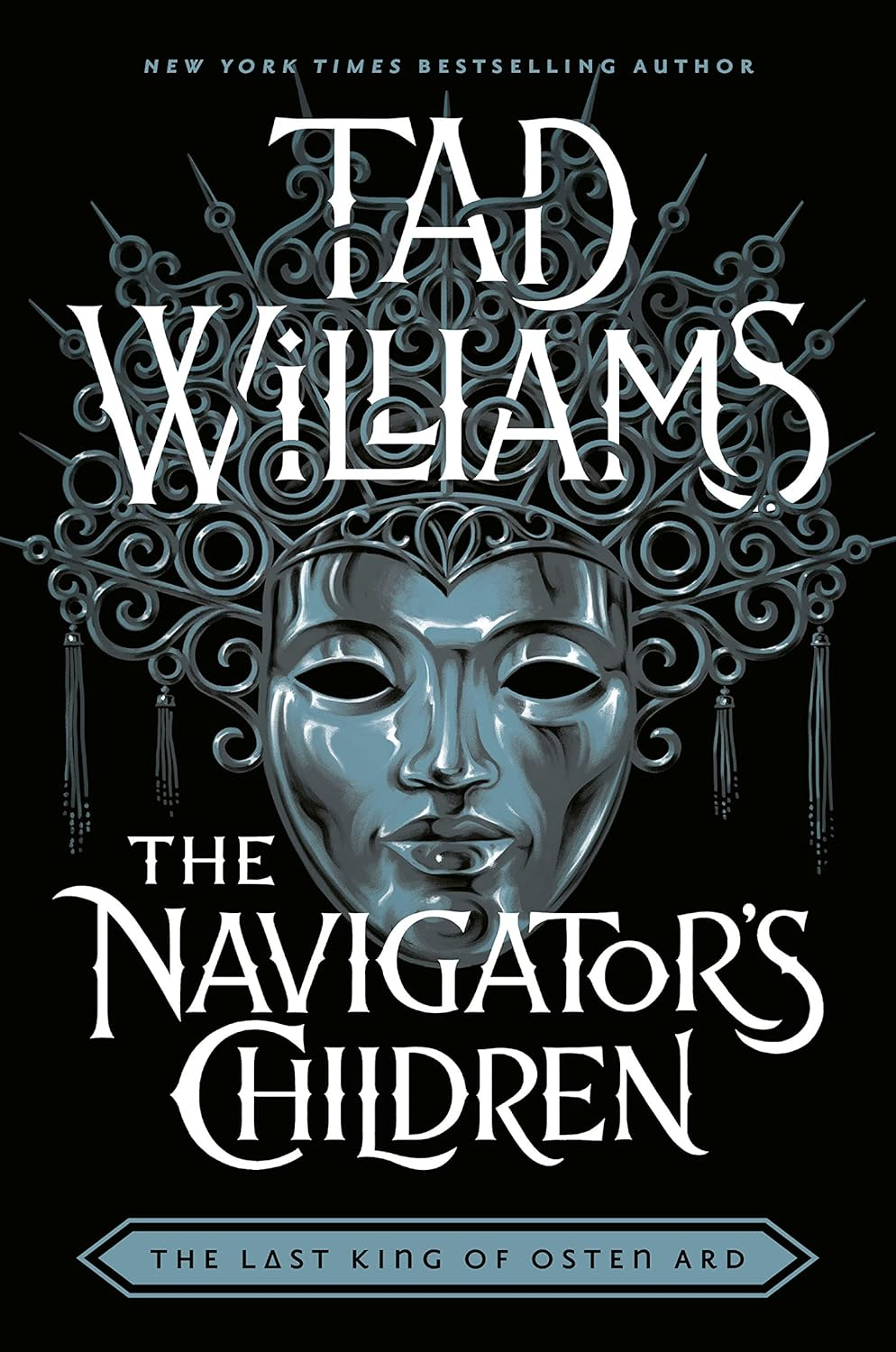
I finally read The Navigator’s Children over the holidays–it deftly ties the series up in a satisfying conclusion. There is a war to be fought, backstabbing villains, heroic deeds, and endless intrigue. There are also no easy answers or morality here. I really am in awe of how Williams finished this series, after so many years away from these characters. The story is dense, the world is staggeringly vast, and it is hard sometimes to keep track of all the interweaving story lines. I think Williams deserves so much credit for doing justice to all these characters and this story. It is no easy task. Most writers struggle to write convincing prose for much simpler kinds of tales, but he has again managed to do it in a lengthy, sweeping narrative.

I was happy to adventure again with Simon, Miriamele, and their many friends. In my view, what Williams really excels at is keeping the fates of all these characters in doubt right until the very end. They face such impossible odds that you think there must be no way out, again and again. I don’t wish to spoil anything for those of you who haven’t yet read the books, but I want to encourage those of you who have enjoyed books like Game of Thrones, Lord of the Rings, or other epic fantasy, to read these as well. If you’ve not read the original trilogy, start there, with The Dragonbone Chair. It may be an investment of time, but it’s well worth it; if you love epic fantasy novels, and haven’t read these, you are missing out. I was sad when it all ended, but pleased to see that Williams has a new Osten Ard book planned for later this year, which I will happily devour.

One observation about marketing from me, a guy who is an avid reader but who is not a businessperson or bookseller: I think bookstores could have made a better effort to promote this excellent novel. Maybe it’s just me, but my local Barnes and Noble didn’t have it when it came out, which I found shocking. I would think there would have been a major effort to promote it, with its own table, quotes from admiring authors like George RR Martin, and so on. I guess people who know and like Williams’ work were going to buy it, but it was surprising to me that there wasn’t more publicity. My local bookstore also didn’t have the latest Philip Pullman novel when I was last there, which seems very odd. Perhaps those of us who read these kinds of novels are getting older, but in my opinion it’s a missed opportunity on the part of booksellers when they don’t make a bigger deal out of new releases from major authors.

The Last King of Osten Ard

Those of you waiting for Winds of Winter ought to read Tad Williams, if you haven’t already; George RR Martin has credited Williams’ landmark Memory, Sorrow and Thorn trilogy of the 80s and 90s with inspiring him to write A Song of Ice and Fire. I read Williams’ original series years ago and enjoyed it, and have been having a grand time reading The Last King of Osten Ard, Williams’ revisiting of the series, begun with 2017’s The Witchwood Crown.

The Last King of Osten Ard is in every way the equal of Williams’ earlier work. When these kinds of stories get revisited, there is often the worry that the newer installments will not do the originals justice (I’m thinking of you, Star Wars and Star Trek), and fans like me often end up wishing the creators would leave such series alone. But I needn’t have worried about Osten Ard, which has always been in good hands—in some ways I think the new series surpasses the earlier one.

I spent the past several days reading both Brothers of the Wind, a prequel novel, set thousands of years before the events of the Osten Ard books, as well as Into the Narrowdark, the third of the Last King series. Williams has crafted a wonderful tale in both of these works. I found Brothers to be breathtaking in its emotional impact, and a truly unique twist on fantasy fiction. It’s the tale of two Sithi brothers: Ineluki, who would become the Storm King, and Hakatri, his less volatile older sibling. The two of them go on a doomed quest to slay a dragon after Ineluki swears an ill fated oath. The story is told from the point of view of Pamon Kes, the servant of Hakatri, who is setting the tale down years after the fateful events that would shape Osten Ard for centuries to come. This vantage point is brilliantly done, as Kes is constantly questioning his worth, feeling that as a Changeling devoted to the prince Hakatri, his entire worth comes from his ability to serve his master. But as he tells the story, he’s awakened to new possibilities for his own life, as well as the reality that his master is not as perfect as he may have thought.

The story of these two ill-fated brothers is masterfully told. Readers of Memory, Sorrow and Thorn will know that Ineluki will end up being the mad Storm King, a spirit who nearly destroys humanity in the original Osten Ard books. Here, he is a lonely, tragic figure, consumed by anger and his own sense of honor, headstrong, brave, and sympathetic. There’s a sense of tragic fate here, as in the best mythological and fantasy stories. Ineluki’s brother, Hakatri does his best to reign him in and try to save him from his half mad quest. I found this to be an gripping story, and was so impressed with the way Williams makes his readers feel great sympathy for two of the biggest villains of his world.

In reading the new Williams series, I’m reminded of the way Ursula LeGuin revisited Earthsea. In coming back to it, she, like Williams, told a more complex tale, one that turned readers’ expectations upside down. Depending on how a story is told, or how history is written, villains can even become heroes, and there is a lot of exploration of that theme here. For example, the Sithi, who were allies of the Erkynlanders in the first war against the Norns, are in these novels mostly indifferent to the plight of their one time allies, having felt mistreated after the end of that conflict. The Norns, meanwhile, have multiplied and want to avenge what they see as the destruction of their ancestral homelands by the humans—events elaborated on a lot in the prequel novel, in which the Sithi know that the humans will eventually outnumber them and take their lands.

There is still plenty of the stuff that fantasy fans know and love so well: double-dealing, perilous and hopeless quests, epic battles, large scale combat, romance, magic and sorcery—you name it, and Tad Williams has mastered it. (I don’t want to spoil any of the plot or the fun, so I’ll just warn you: beware of kallypooks.) But underneath it all is a nagging sense that things are not going to turn out as you might have expected or hoped. That even villains may have some grievances and grudges worth hearing out, and that not all heroes are beyond reproach. The larger question of who has wronged who in colonizing Osten Ard is the complex underpinning of this  whole series, in my opinion. The Norns, led by their sorcerer Queen, Uttuk’ku, seem at first to be evil aggressors, but when you consider what their people have lost, you can understand where their anger comes from. Each chapter is told from the points of view of different characters, which lets you have a lot more sympathy for some of the antagonists.

If these morally grey areas sound somewhat familiar, remember that Williams was doing this in the 80s, as well, with his first series, which inspired great books like A Game of Thrones. Williams has left quite a legacy with these books, and readers who enjoy fantasy are lucky to have him. I read both of these in a week, just couldn’t put them down. Wonderful stuff. Read them, you’ll be enriched for it.