Ma’ame Pelagie by Kate Chopin (1894)

“Ma’ame Pelagie,” they called her, though she was unmarried, as was her sister Pauline, a child in Ma’ame Pelagie’s eyes; a child of thirty-five.
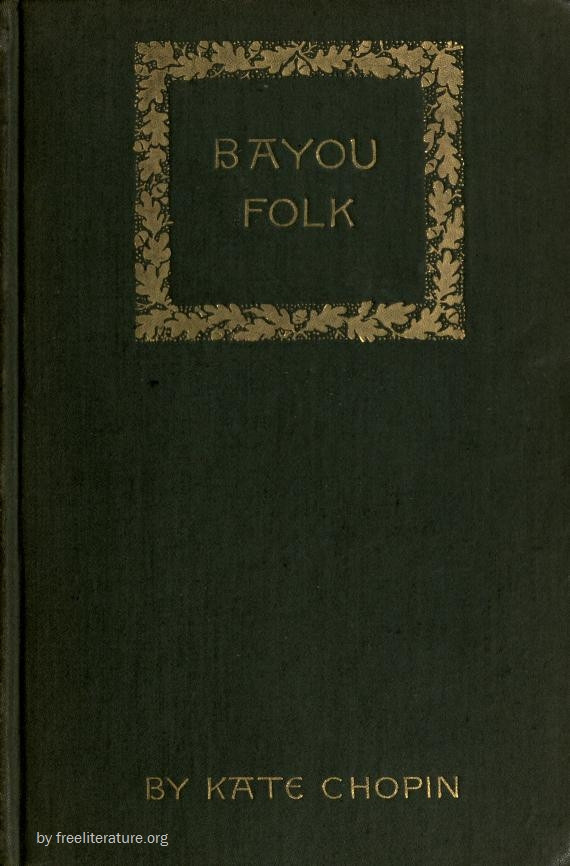
Kate Chopin is well known for her novel The Awakening, but she was also a prolific writer of short stories, including this gem, Ma’ame Pelagie. Pelagie and her sister live in Louisiana in a three-room cabin beside their formerly grand ancestral home. For decades, we learn, they have lived this way, hoping to save enough to restore the mansion ‘shaped like the Pantheon,’ but now fallen into ruin. The sisters are visited by a niece who comes to live with them—her father, their brother, will soon be joining her. But the young girl cannot stand the sadness of the place and wants to leave.

“It was not the first time she had stolen away to the ruin at night-time, when the whole plantation slept; but she never before had been there with a heart so nearly broken. She was going there for the last time to dream her dreams; to see the visions that hitherto had crowded her days and nights, and to bid farewell to them.” Pelagie recalls these past grand days in a dreamlike reverie, the grand parties held there, and her lover, who went off to fight in ‘le guerre,’ as did so many others. And now we have the central problem on which this tale rests—the war, which eventually comes to the plantation. It is the tragedy of her life, to see her dreams ruined along with the grand house.

A year later, her brother Leandre builds a new, beautiful brick house where the old one stood. The house bustles with activity and music and the laughter of young people, the friends of ‘La Petite,’ her niece. However, Pelagie’s “soul had stayed in the shadow of the ruin.”

This is a great short gothic tale that works very well not only in the tragedy of these two women who live in the ruins of a once grand life, but also in the shadow of the civil war. The stain of slavery and the shadow of war haunts everything in this story of the south. The writing is quite elegant, as is much of the best writing of this period, and does much to transport us to these bygone days.

To learn more about Kate Chopin and her life, you can view this excellent PBS documentary on her.
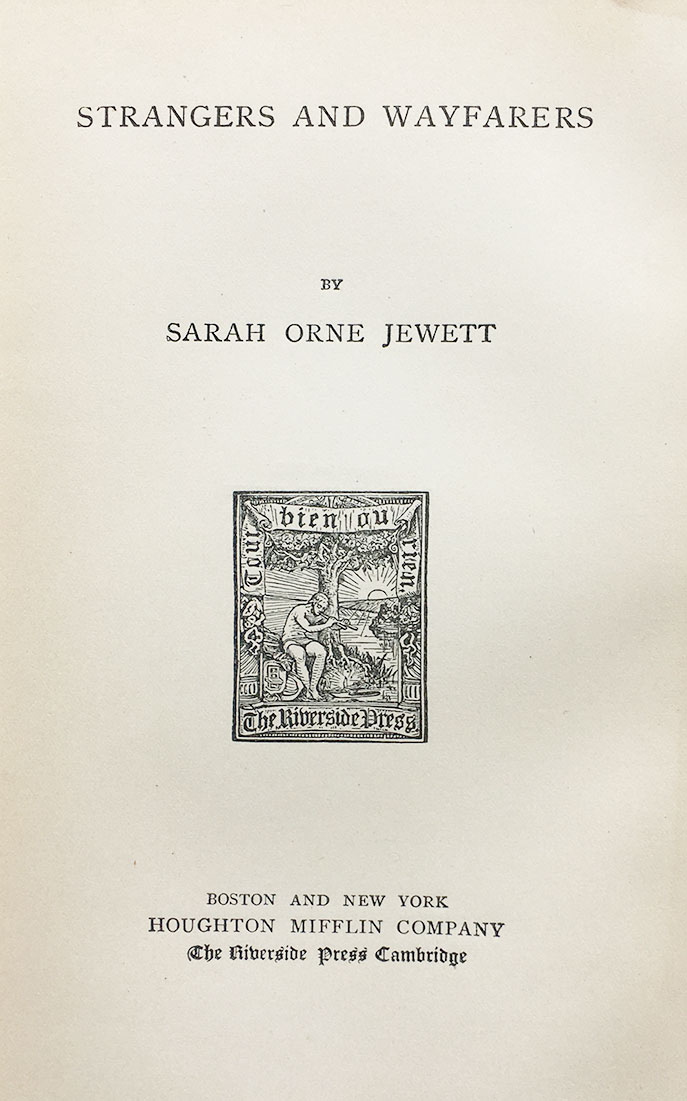
In Dark New England Days by Sarah Orne Jewett (1890)

Sarah Orne Jewett is a Maine writer known for tales like The Country of Pointed Firs, A White Heron, and numerous short stories and poems that bring the region to life. One of the really interesting things about reading her books is that not only do you get a sense of what Maine was like in the late 1800s, you also get to hear the way people spoke, the diction and accent that they had. If you’re traveling in Maine you will still hear an accent that differs from other regions of the country, and even other areas in New England and the northeast. As time goes on and people are more apt to move around, these kinds of accents are being lost, but you can still hear it when you travel off the beaten path.

“In Dark New England Days” is a gothic story with a deep sense of doom and foreboding from the beginning. We are introduced to the sad case of the three Knowles sisters, ‘Closed-mouth old maids’ who spent their lives taking care of their cruel old father who has now died of a stroke. Mercifully, from the sounds of the story, as one character declares: “The old Cap’n kept ’em child’n long as he lived, an’ then they was too old to l’arn different.” His body is on display in their home–quite macabre by today’s standards, but more commonplace when the story was written. Even so, it is enough to give you the creeps from the opening lines of the story.

On the evening he dies, the sisters, Betsy, Hannah, and Susan, pull out an old chest belonging to their dead father, who had been a seafaring man, and learn that he’d been hoarding gold his whole life, though they lived in abject poverty. They are ecstatic with their new wealth and for the first time in many years they seem to have hope. Yet even as they stare at their gold: “He stopped to listen, came nearer, stopped again, and then crept close to the old house. He stepped upon the banking, next the window with the warped shutter; there was a knot-hole in it high above the women’s heads, towards the top. As they leaned over the chest, an eager eye watched them.”

The next morning, the money is gone: “The sisters had been rich for one night; in the morning they waked to find themselves poor with a bitter pang of poverty of which they had never dreamed.” They blame a neighbor with whom their father had a feud: Enoch Holt, and take him to court. He escapes without a guilty verdict, but not before Hannah Knowles stands before the court and declares: “Curse your right hand, then!” cried Hannah Knowles, growing tall and thin like a white flame drawing upward. “Curse your right hand, yours and all your folks’ that follow you! May I live to see the day!”

It is a chilling scene, and an awful declaration. The misery with which the sisters lived under their tyrant of a father is only made worse by the cruelty of the theft. But as in any good gothic tale, there are some fates worse than death, some things worse even than a sad, lonely life of poverty. I don’t wish to give away the ending, so I highly recommend reading this story and some others by Jewett.

Today we are not without plenty of so-called horror movies, gore-fests and plenty of over-the-top films and television to give us superficial scares. In my view, stories like this one do the job in a much more convincing, chilling fashion. The tale sets you up and gets its hooks in and doesn’t let go.

Short Story, ‘Chess Match’

A new story of mine, Chess Match, was just published in the October issue of Black Sheep: Unique Tales of Terror and Wonder. It’s a tale of an ancient being living in our world, who must face down an old adversary. Check it out, and let me know what you think.

Happy Halloween!

It’s my favorite day of the year! Here’s a seasonal story I published a couple of years ago, called “The All Hallows Knight,” in which a young boy tries to revive the spirit of the dead, and gets more than he expected. Happy All Hallows Eve, one and all. https://issuu.com/theparagonjournal/docs/final_version_tales_of_reverie/10

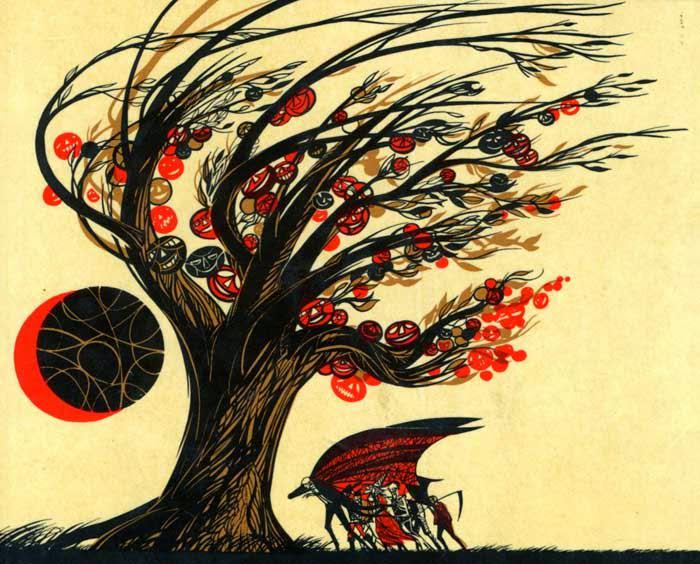
Art is by Joseph Mugnaini, who did many wonderful illustrations for Ray Bradbury’s work. This one is from The Halloween Tree, first published in 1972.

Halloween Stories

I’ve shared these before, but here are a few of my short stories that are right for this time of year.

The Touch is the story of a young girl with strange powers who must stand up to cruelty in the neighborhood, and in her own home.

In The Song of Thetis, a strange apparition absconds with a young boy, tearing a family apart.

The All Hallows Knight is a Halloween story about an unexpected visitor who shows up on October 31.

Joseph Mugnani, Modern Gothic, 1952