We start the month with one of the finest collections of seasonal stories ever, by the great Ray Bradbury. Released in 1955, its significance in the genre can’t really be overstated, nor can Ray’s role in shaping Halloween as we know it today. Just leafing through this one is enough to give you a warm feeling of nostalgia and creepiness, to know that autumn is at hand. You start reading and immediately know you’re in the hands of a master.
I first encountered this one many years ago, and I make a point to re-read it nearly every October. The beautiful cover by Joseph Mugniani (with whom Bradbury often collaborated) sets the tone, and it keeps getting better as you read each tale. There are so many memorable stories here that it’s a bit like listening to the Beatles’ greatest hits: The Small Assassin, The Dwarf, Jack in the Box, on and on they go, each one weirder and more wonderful than the last. I love The Dwarf, the tale of a short man who visits a carnival fun house each night to see himself taller and more handsome, only to be cruelly abused by the fun house proprietor. For me, the centerpiece here is “The Homecoming,” which along with “Uncle Einar” are the strangest and most jaw-dropping of these stories. They’re so good that later in his career they became the backbone of another collection, ‘From the Dust Returned,’ which explores the Elliott family in all their glory.
Bradbury wrote so much over his long and storied career that it’s hard to pick just one novel or collection of his, but I think this one is most emblematic of all his best elements. Good-hearted, small-town people meet fantastic beings. Helpless loners and outsiders are treated cruelly by life but keep their souls intact through art and kindness. The wonder and mystery and imagination of the dark side of the world, all told with Bradbury’s poetic prose, heartfelt emotion, and wild imagination. It just doesn’t get any better than The October Country. We were so lucky to have had Ray.
Bradbury often wrote of the importance of feeding one’s imagination. Zen and the Art of Writing is a wonderful book for any writer, with lots of great observations on how to work at your craft. Mostly, he wants writers to stop thinking and just write. The ideas poured forth from his mind when he did this. One oft quoted passage from the book is: “If you did not write every day, the poisons would accumulate and you would begin to die, or act crazy, or both. You must stay drunk on writing so reality cannot destroy you.”
I think there’s a real lesson in this. Overanalyzing things, thinking too much, and soaking up too much information, which is very easy to do in our hyper-connected world, is the enemy of good writing. In my view, Bradbury’s method works. He was drunk on life and ideas and let them spill out in beautiful ways that have resonated with millions of readers for generations. May he keep finding new audiences forever. Thanks for all the stories, Ray.
A new story of mine, Chess Match, was just published in the October issue of Black Sheep: Unique Tales of Terror and Wonder. It’s a tale of an ancient being living in our world, who must face down an old adversary. Check it out, and let me know what you think.
October has long been my favorite month. I love Christmas, too, as well as every other holiday that affords me time to spend with my children. But there’s always been something special about October 31. As a child, I knew Halloween was a night devoted to kids, where magical things happened, where you had a bit of independence to go out with friends and have a grand time. The costumes, the folklore, the changing of the seasons, all add warmth and wonder to this grand day. My own children have enabled me to experience these feelings again. It is so fun enjoying the fall with them: decorating the house, creating costumes, getting ready. The anticipation of it, the colors and sounds and stories, are almost better than the day itself.
The stories are the things that really animate it for me. The list of writers I admire in this season is almost endless, but it begins somewhere around Shakespeare and continues into the present. Shelley, Poe, Hawthorne, Stoker, Lovecraft, Jackson, Bradbury—my list goes on and on. The only thing that stops me from reading all these authors constantly is lack of time.
This October, time permitting, I intend to have a project on this blog, where I write some thoughts about some of my very favorite tales in the genre. I can’t promise I’ll do so every day, though that is the goal. Certainly, I’ll do a post weekly, or every couple of days. These posts aren’t meant to be comprehensive, scholarly, or to offer some kind of profound critique. It’s mostly just for me, to write up thoughts and impressions and appreciation of these tales that affected me: why I like them so much, how they work, why I have such affection for them, in that vein. Hopefully I’ll add to the catalog throughout the year, with other seasonal tales. Maybe some readers out there feel the same way about some of these stories. My hope is to document some of my very favorite books and stories, and perhaps turn some readers out there onto some tales they may have overlooked, or never heard of. There are a great number of unappreciated stories out there that ought to have more attention, in my view.
So, I’ll see how it goes. If you’re a like minded reader, I hope you join in the fun by commenting or offering your own thoughts.
I’ll probably begin early, before October 1, with some other seasonal type stories to get started. I’ll throw in some children’s stories that I’ve been reading with my family as well.
I’ll post more soon. I hope those reading this enjoy the season. I plan to be outside as much as possible in the next six weeks, to enjoy the beauty of fall, before it gets too cold and the leaves are gone.
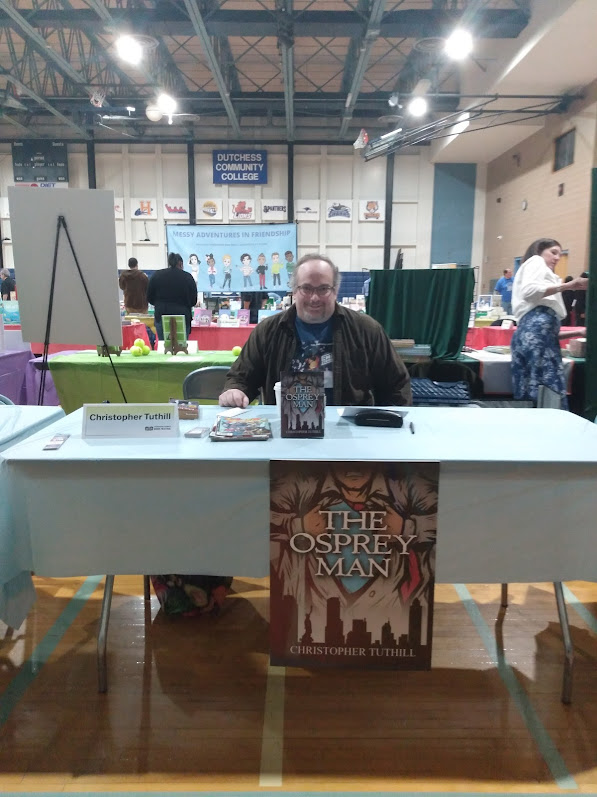
The 2025 Poughkeepsie Children’s Book Festival was a huge success. Many thanks to both the Merritt Bookstore and the Poughkeepsie Public Library, who worked tirelessly to put on a great event. It was really heartening to see so many enthusiastic children and young adults. They’re the next generation of readers and the future of our world, and they need our support.
Many thanks to all the people I met, and to those who bought books from me and the more than 100 authors who were there. My children had a great time, met some authors, and came home with lots of great stuff to read. I hope by next year’s event I’ll have another book to bring with me.
Over the past few years, there’s been no shortage of folks breathlessly telling us that AI is our new tech to be worshiped, that it is a wonderful and amazing tool that we all must rush to use. It will make life better, and everything will be easier and more effortless. Besides, there is the whole inevitability thing, an argument which tech bros love to shove down our throats, the same way they do with every other technology on which their fortunes depend.
I’d like to offer a different view. AI is a soulless source of junk information, bad writing, and bad ideas. On a personal note, the creators of Meta’s AI program stole my novel, without asking, to ‘train’ their stupid tool. They’ve illegally done this with millions of works, but when called out on this lawless behavior, the companies merely shrug and inform us that there would be no way to train their tools if they had to deal with pesky copyright laws. Authors are powerless in the face of these tech forces, it seems. It’s all inevitable: the bright, shiny future.
Forgive me for a moment if I seem emotional here. My humble novel, The Osprey Man, was a labor of love. I spent years writing it, and years beyond that marketing it, and it finally found a home at a tiny, independent publisher. I made very little money from it, but of course, as any decent writer will tell you, that was never the point. I had a story I wanted and needed to get out there. It may not have sold many copies, but I didn’t care.
My story of publication isn’t unique. There are plenty of writers out there who have done and continue to do the same, despite the odds. Zuckerberg and his lackeys, no matter how rich and powerful, have no right to churn up our work like it’s fertilizer. Yet that’s exactly how Meta and every other purveyor of AI treat the copyrighted works of millions of writers. It’s revolting, undemocratic, downright vile behavior, yet it’s exactly the sort of thing we’ve come to expect from our tech overlords, and no one even bats an eye. In fact, the story barely seemed to make news and disappeared rather quickly.
Aside from the outrageous way Meta has treated authors, there is a much larger issue with AI, and how it’s bound to affect us all. In 1985, Neil Postman, in his seminal work Amusing Ourselves to Death, argued convincingly about the death of our reading culture, and how television had dumbed us down so much that it had reduced our once coherent public debate to mere sound-byte and spectacle. In Postman’s view, things had gotten so bad that Americans elected a nincompoop in Ronald Reagan. I’m sure he’d not be the least bit surprised by America in 2025, where, after a generation of hyper-connectivity and bad information, there seem to be few who believe in facts at all anymore, and we elected a far more ignorant, dangerous man than Reagan as president.
Give AI some time, and we will no doubt have an even dumber public life, one in which no one is able to read or understand anything more complicated than a meme. Where no one knows what reality is, and no one really cares anyway, since it’s AI’s job to figure out the issues and tell us what to think.
On the occasion of my birthday, my four year old son brought me a package he’d wrapped himself, and proudly announced: “You got books, dad. They’re your favorite thing.” He dutifully unwrapped them, commenting on how nice they were, and handed them to me one by one. Even better, he gave me a card he’d written himself, his eyes shining with pride, grinning from ear to ear. He wants to read them with me and play the boardgame I got, too. He’s a keeper.
Yesterday I saw an ad for a company that promises to publish eight thousand (yes, you read that right) books next year using the power of AI. I won’t link to their page because if you’re reading this, you have probably seen it, or something about it, and if you have not I don’t wish to give the tech bros behind it any more traffic, slight as it may be from this unseen corner of the internet. Even so, I feel I must write something about this, because it enraged me so much to see it.
This company promises to cut down production times for a book from the usual 12-18 months to a few weeks. How? You might ask. I’ll tell you: they will do a horrible job of it and flood the market with unreadable trash. What truly sets these guys apart is the way they’ll steal from aspiring authors and turn out a lousy product, while happily saying they’re ‘tech disruptors’ without a shred of self-awareness or irony. They’re immensely proud of themselves and their predatory business model.
This brings me to the larger problem of AI in general, which we are constantly told is a wondrous new tool, an inevitability, a technology that will transform everything.
Why is this tech inevitable? Well, our tech overlords say so. They are never wrong, of course, and all their innovations have done nothing but improve our lives. Just look around—isn’t everything great? We have access to more information than at any point in human history, and the world is a veritable paradise, with only the wisest, kindest, most learned people in charge everywhere.
In my view, AI writing tools produce junk. If you want to use it to produce your own special brand of garbage, have at it. “But it’s a tool!” you protest. “Same as a wrench or a bicycle! It will make everything better.” Yes, everything will improve, except your ability to write and think clearly, your ability to read and understand information. It will not help this at all. In fact, it will likely do immense harm to these skills. It’s a plagiarism machine, trained unethically to churn out generic awfulness. But hey, it does it very quickly, and with minimal effort. Just dump in a few prompts, and call it a day.
Right now, higher education is in a race to see who can adapt to these AI machines quickest. Never mind the effect it may have on learning, they’ll just use it. We’re about to turn universities over to tech companies. And why shouldn’t we? What does it matter if people are educated and humane, so long as profits are healthy?
And in another generation, some other whiz bang tech developer will come along peddling some other kind of junk, and once again every education administrator in the land will get in the marching band and beat the drum for it, no matter what it may be.
Who cares what students are learning, anyway, except a few oddball humanities people who still actually read books, which are obsolete, dusty artifacts that any machine can produce in just a few minutes.
One of my fondest, most primal memories of childhood is being up late in the summertime, reading a good book, while everyone else in our busy house was asleep. There were so many novels I enjoyed back then, and I read indiscriminately, for the pure joy of being lost in a fantastic new world.
There were many great series for young people back in the early 1980s, and I read many of them. The Hardy Boys, The Black Stallion, Matt Christopher’s sports stories, Encyclopedia Brown the boy detective, Danny Dunn, a boy wonder who created all kinds of machines with his pals, and on and on. There were some great works of literature too, like Madeline L’Engle’s A Wind in the Door, Mark Twain’s Tom Sawyer Detective, Ray Bradbury and The Martian Chronicles, and others. Today I can see how much more sophisticated these last three are, but as a young boy I didn’t care about their literary merit, I just wanted to read.
To read as a nine year old meant getting lost in another world that seemed so real I became irritated when my mundane surroundings intruded. It meant an escape into magic and mystery and wonder, into past eras that seemed completely real, as if I were suddenly in a time machine, transported to colonial era America, or King Arthur’s Court. Perhaps I’d go to a distant strange planet, or an isolated pacific island, or any other a million different times and places. There was nothing so wonderful in the world as being lost in those pages, many millions of miles away from wherever I was and whatever was happening around me in my little corner of the world.
I’m now fifty, and very occasionally this magnificent feeling will come over me again when I’m reading a truly great, original book. It seems to happen less and less these days; perhaps that is a failure of imagination on my part, or perhaps it just happens with age. After you’ve read so many books, they cannot all have that glorious impact, and many of them will seem merely adequate. I’ll say that in the past few months, Ron Chernow’s Hamilton was a biography that transported me to the early days of America in a way that was quite breathtaking; I don’t normally read a lot of history, but he is such a fine writer, telling the story of the founder in such an empathetic way, that I was swept up in the drama of it and couldn’t wait to read more.
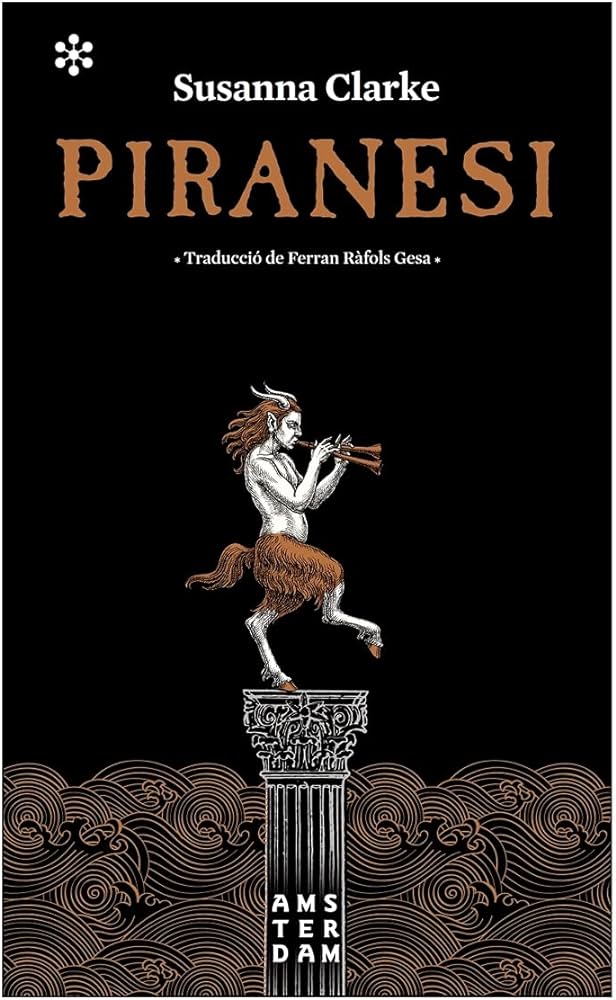
Novels are a different matter, and as I’ve read so many of them, it has become harder for me to find ones I truly love, that affect my outlook so dramatically, that can transport me in that same primal way. Susanna Clarke’s writing does that for me, and I recall a well-spent winter evening not long ago, when I was up through the night, finding revelations on every page of her incredible book, Piranesi, which I finished in one sitting. I can’t recommend her work highly enough, and I was ecstatic to learn she has a new novel arriving this fall.
In this hyper-connected age, it is increasingly difficult to shut out the outside world and enter the fortress of mystery and imagination that is a great reading experience. I read whenever I can, as much as I can, but with the demands of a job and a family it’s not always easy. I’ll stay up late at night when I’m not too tired, or read when I have downtime on the train or before the rest of my family is up. I guard my reading time jealously, just like when I was a boy, and get frustrated sometimes when there isn’t enough time or quiet for me to read every novel or work of history or criticism on my shelves. My collection is wide and varied–I have books on a great many topics, because I am never sure which one I will need at any given moment. This is one of the great things about being a librarian, as well: if I don’t have it on my shelves at home, I can almost certainly find what I need in the library.
I enjoy movies, though I’m not exactly a movie critic. I have found that films, television and video games don’t transport me the way a good book does. Maybe some people find the same elation and deep mystery watching things or playing video games, but it doesn’t happen for me. I can enjoy such media, but it won’t impact me in the same way, and while I don’t know for certain, I suspect that the effort required of a careful, thoughtful reader will always make the reward of reading that much greater. To me, it’s a bit like the difference between hiking to the top of a mountain and taking in the view, as opposed to having someone drive you up there on a paved road. (The same can be said for writing vs. AI-assisted writing, but that is the topic for some other post.)
One of the essential things about reading is the way it can change your perceptions, your outlook, your knowledge of the world, and perhaps even knowledge of yourself. The greatest works help us do this and will enrich your life in ways like nothing else. For me, reading a great book is one of the last bulwarks I have in guarding my mind from a ceaseless stream of meaningless junk that increasingly defines modern life.
The other night my young daughter, who is brilliant and perfect, happened upon the Twilight Zone episode, “Time Enough at Last,” with the great Burgess Meredith. I hesitated to show it to her, but she was eager to see it and I relented. At the end, she was in tears for Henry Bemis, the tortured man who lives through an atomic war only to be left utterly alone, despondent, bereft of all hope, sans spectacles. “I hate this,” she said. “He was finally able to read and now he can’t.” I felt like an awful father for having shown her the episode. We talked a bit about the message of the show but she was inconsolable, much like I was decades ago when I first saw it.
In these waning days of summer, I admit I feel some pressure to read what I haven’t from my list so far, but my task shall be Herculean. I have a copy of Thomas Pynchon’s Against the Day, which I have never read and will likely not get to before the end of August. I have works by Saul Bellow, Robert Caro, Don DeLillo, Tim Powers, Toni Morrison, Barbara Tuchman, Octavia Butler, and too many others to list sitting on my shelves, waiting to be opened, calling to me, but time is running out. I’ll get to a few of them, and the rest will likely need to wait for winter break, or next summer, when I will have time enough at last.
There has been so much written on Hamilton that I can’t add a whole lot here, except to say that I would not delay on reading Ron Chernow’s masterful biography of the man. Just a brilliant book, combining voluminous research with engaging, lively writing. Hamilton’s life story lends itself to such an epic scope, and I can see why it has captivated so many. It’s not often someone rises from absolutely nothing to the highest levels of fame and power.
Whatever your thoughts on Hamilton, whatever you already know about him, I would give my highest recommendation to Chernow’s book. A few years back I read his Grant biography, which was a similar tour-de-force, and kept me so eager to read more, despite its massive size.
I’m looking for other summer things to read, and am eyeing Chernow’s Washington, which won the Pultizer in 2011. I may have to dive into that next. Such a fine writer, really doing a great public service by helping us better understand these early years of our country.
My summer reading list is large and always too ambitious. I have a few other big ones I might read, will have to see what strikes my fancy. But I was considering Pynchon’s Against the Day, which I’ve never read, as well as some other history books (I recently got Bruce Catton’s civil war trilogy) and a few fantasy novels. As always, there are so many great things to read, and so little time!




 Christopher Tuthill