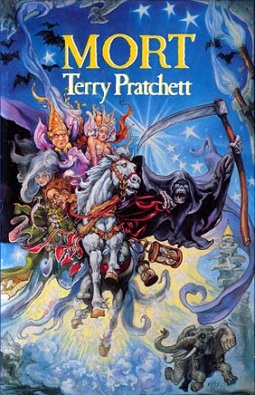
Mort by Terry Pratchett, 1987

“There should be a word for that brief period just after waking when the mind is full of warm pink nothing. You lie there entirely empty of thought, except for a growing suspicion that heading towards you, like a sockful of damp sand in a nocturnal alleyway, are all the recollections you’d really rather do without, and which amount to the fact that the only mitigating factor in your horrible future is the certainty that it will be quite short.”

Today’s post is brief, as I’m heading out for the weekend, but I wanted to keep adding to my Halloween list of capsule reviews. I’ve been doing short reviews of some pretty heavy and disturbing horror fiction this month, and I thought I’d lighten things up and add the great Terry Pratchett to this reader’s guide to Halloween. There are a great many places you can start with the wonderful Discworld series, but Mort is as good as any of them. The fourth in the saga, published in 1987, this is the first in his ‘Death’ sequence. Mort is Death’s apprentice and he’s pretty unsuited for the job. He falls in love with death’s daughter, believe it or not, which leads to plenty of magic, slapstick and other hijinks as always in Ank-Morpork. If you like this kind of humor, it doesn’t get much better than Pratchett, and this book will give you lots of laughs, which we can all use right about now.

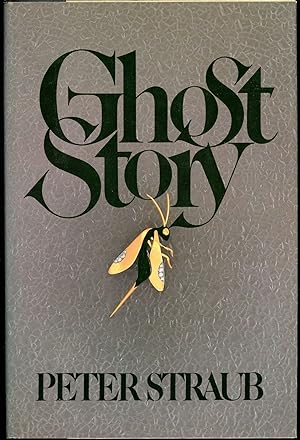
Ghost Story by Peter Straub (1979)

Ghost Story was a great success for Peter Straub when it was published in 1979, and it’s easy to see why. The novel has all kinds of unsettling stories within, enough to keep any reader up late at night. It’s written in the form of ghost stories told by four old men who suffer from terrible nightmares. Their stories from their own youth seem frighteningly believable and really captured my interest as I read. Since the men are elderly, we are reaching back in time many years, learning of strange happenings in rural upstate New York. I happen to live up here, and I felt Straub did a great job in that vein, carrying on the tradition of Washington Irving. The ghost tales become increasingly elaborate, with supernatural events in the present time overwhelming the characters.

I really enjoyed reading this book, which received high praise from Stephen King and others. (King would also collaborate with Straub on two different novels, The Talisman and Black House.) Straub wrote many successful novels and in addition to editing the Library of America’s Fantastic Tales set, which I’ve raved about a few times, he also edited their excellent H.P. Lovecraft volume. He was one of the greats of horror fiction, and this is a perfect starting point for his work.

The Refugee by Jane Rice (1943)

Jane Rice wrote many science fiction and horror tales during the Golden Age of science fiction; The Refugee is one of them, first published in Unknown Worlds, a magazine edited by the legendary John Campbell, in October 1943.

Unknown Worlds, October 1943

This story has a real pulp feel to it—the heroine, Milli, is in some meager circumstances in wartime France, dreaming of better days, when a naked young man appears in her garden. She is intrigued by him, and befriends him when he reappears the next day, even after we learn that a mysterious and brutal murder of a neighbor has happened the night before. Sounds like a bad idea, but Milli is undeterred. The young man eyes her hungrily and Milli finds him quite appealing, leading to some sensual dialogue and imagery. Milli leads him inside and they have an encounter that is not what you might expect; the twist ending is comical and left me wanting to read more by Rice.

This is another one that I found in American Fantastic, the Library of America collection. Editor Peter Straub really outdid himself with this two volume set, it belongs in the library of every horror/fantasy reader. He brings together a real treasury of gothic tales, some quite well known, and others that deserve a wide audience.

The Moonstone Mass by Harriet Prescott Spofford (1868)

Harriet Prescott Spofford was a prolific writer of short stories—this gothic tale, The Moonstone Mass, predates HP Lovecraft’s tales of madness in the arctic by a good half century or more, but would feel right at home in one of his books. The narrator is told by his uncle that he will receive a large inheritance if he seeks the Northwest passage, and he decides to try, on a ship called the Albatross, a bad idea if I ever heard one. He must delay his marriage to Eleanor, his beloved, but apparently considers this worth the risk.

Once on his voyage, things start to get weird. After an uneventful summer, the ship becomes encased in ice, and eventually the narrator leaves it with a team of dogs to try and find some passage to the west where the stranded crew might escape to safety. Instead, he finds himself in a world of cosmic horrors. He loses all track of time, his dogs die of fear as they are surrounded by cold light. He seems to either hallucinate or have a strange otherworldly experience:

“These enormous days and nights, swinging in their arc six months long, were the pendulum that dealt time in another measure than that dealt by the sunlight of lower zones; they told the time of what interminable years, the years of what vast generations far beyond the span that covered the age of the primeval men of Scripture— they measured time on this gigantic and enduring scale for what wonderful and mighty beings, old as the everlasting hills, as destitute as they of mortal sympathy, cold and inscrutable, handling the two-edged javelins of frost and magnetism, and served by all the unknown polar agencies. I fancied that I saw their far-reaching cohorts, marshaling and maneuvering at times in the field of an horizon that was boundless, the glitter of their spears and casques, the sheen of their white banners; and again, sitting in fearful circle with their phantasmagoria they shut and hemmed me in and watched me writhe like a worm before them.”

Amidst this, he sees a brilliant moonstone, “a thing so real, so genuine, my breath became suspended; my heart ceased to beat; my brain, that had been a lump of ice, seemed to move in its skull.” He is on a moving ice floe and attempts to climb toward the mass but is caught in an avalanche. When he recovers, he is back in an arctic fishing village. The Albatross is never found. No one believes his story, least of all his uncle. Eleanor believes him, but wishes to hear nothing about it, yet the narrator ends his tale saying he will someday recover the precious stone.

This reminded me of Lovercraft in several ways, not least because it is set in the arctic, and the narrator is up against unknowable, ancient beings that seem to bend space and time. The narrator also seems intent on his own destruction even in the face of all this—he’s drawn by the lure of this talisman. This is an interesting tale since it predates Lovecraft, and polar exploration, by decades. It’s an excellent precursor to Lovecraft, who is much better known to horror readers, and a fine story.

I’d not encountered Spofford’s work before reading this tale, but I’ll be sure to fix that. It was included in the Library of America’s wonderful collection, American Fantastic Tales. I’ve taken a few stories on this list from that excellent two volume set, which I give my highest recommendation.

Ma’ame Pelagie by Kate Chopin (1894)

“Ma’ame Pelagie,” they called her, though she was unmarried, as was her sister Pauline, a child in Ma’ame Pelagie’s eyes; a child of thirty-five.

Kate Chopin is well known for her novel The Awakening, but she was also a prolific writer of short stories, including this gem, Ma’ame Pelagie. Pelagie and her sister live in Louisiana in a three-room cabin beside their formerly grand ancestral home. For decades, we learn, they have lived this way, hoping to save enough to restore the mansion ‘shaped like the Pantheon,’ but now fallen into ruin. The sisters are visited by a niece who comes to live with them—her father, their brother, will soon be joining her. But the young girl cannot stand the sadness of the place and wants to leave.

“It was not the first time she had stolen away to the ruin at night-time, when the whole plantation slept; but she never before had been there with a heart so nearly broken. She was going there for the last time to dream her dreams; to see the visions that hitherto had crowded her days and nights, and to bid farewell to them.” Pelagie recalls these past grand days in a dreamlike reverie, the grand parties held there, and her lover, who went off to fight in ‘le guerre,’ as did so many others. And now we have the central problem on which this tale rests—the war, which eventually comes to the plantation. It is the tragedy of her life, to see her dreams ruined along with the grand house.

A year later, her brother Leandre builds a new, beautiful brick house where the old one stood. The house bustles with activity and music and the laughter of young people, the friends of ‘La Petite,’ her niece. However, Pelagie’s “soul had stayed in the shadow of the ruin.”

This is a great short gothic tale that works very well not only in the tragedy of these two women who live in the ruins of a once grand life, but also in the shadow of the civil war. The stain of slavery and the shadow of war haunts everything in this story of the south. The writing is quite elegant, as is much of the best writing of this period, and does much to transport us to these bygone days.

To learn more about Kate Chopin and her life, you can view this excellent PBS documentary on her.

In Dark New England Days by Sarah Orne Jewett (1890)

Sarah Orne Jewett is a Maine writer known for tales like The Country of Pointed Firs, A White Heron, and numerous short stories and poems that bring the region to life. One of the really interesting things about reading her books is that not only do you get a sense of what Maine was like in the late 1800s, you also get to hear the way people spoke, the diction and accent that they had. If you’re traveling in Maine you will still hear an accent that differs from other regions of the country, and even other areas in New England and the northeast. As time goes on and people are more apt to move around, these kinds of accents are being lost, but you can still hear it when you travel off the beaten path.

“In Dark New England Days” is a gothic story with a deep sense of doom and foreboding from the beginning. We are introduced to the sad case of the three Knowles sisters, ‘Closed-mouth old maids’ who spent their lives taking care of their cruel old father who has now died of a stroke. Mercifully, from the sounds of the story, as one character declares: “The old Cap’n kept ’em child’n long as he lived, an’ then they was too old to l’arn different.” His body is on display in their home–quite macabre by today’s standards, but more commonplace when the story was written. Even so, it is enough to give you the creeps from the opening lines of the story.

On the evening he dies, the sisters, Betsy, Hannah, and Susan, pull out an old chest belonging to their dead father, who had been a seafaring man, and learn that he’d been hoarding gold his whole life, though they lived in abject poverty. They are ecstatic with their new wealth and for the first time in many years they seem to have hope. Yet even as they stare at their gold: “He stopped to listen, came nearer, stopped again, and then crept close to the old house. He stepped upon the banking, next the window with the warped shutter; there was a knot-hole in it high above the women’s heads, towards the top. As they leaned over the chest, an eager eye watched them.”

The next morning, the money is gone: “The sisters had been rich for one night; in the morning they waked to find themselves poor with a bitter pang of poverty of which they had never dreamed.” They blame a neighbor with whom their father had a feud: Enoch Holt, and take him to court. He escapes without a guilty verdict, but not before Hannah Knowles stands before the court and declares: “Curse your right hand, then!” cried Hannah Knowles, growing tall and thin like a white flame drawing upward. “Curse your right hand, yours and all your folks’ that follow you! May I live to see the day!”

It is a chilling scene, and an awful declaration. The misery with which the sisters lived under their tyrant of a father is only made worse by the cruelty of the theft. But as in any good gothic tale, there are some fates worse than death, some things worse even than a sad, lonely life of poverty. I don’t wish to give away the ending, so I highly recommend reading this story and some others by Jewett.

Today we are not without plenty of so-called horror movies, gore-fests and plenty of over-the-top films and television to give us superficial scares. In my view, stories like this one do the job in a much more convincing, chilling fashion. The tale sets you up and gets its hooks in and doesn’t let go.

A Good Man is Hard to Find by Flannery O’Connor (1953)

“You can do one thing or you can do another, kill a man or take a tire off his car, because sooner or later you’re going to forget what it was you done and just be punished for it.”

One of the most anthologized and well-regarded short stories of the last century, A Good Man is Hard to Find, like some of the other stories on this list, deserves its towering reputation. O’Connor was a master of the short story, and this tale is one of the most shocking gothic stories I’ve ever read. I can still recall the palpable dread I felt as I first read it many years ago in a college class on the short story.

This tale involves a family that is out for a drive when unspeakable violence occurs, but there is plenty of foreshadowing, with the grandmother mentioning the ‘loss of values’ in the modern world; she also points out a graveyard filled with slaves from a bygone era. She remembers that there was a plantation in the area, and convinces her son, Bailey, to take a turn onto a deserted road, where the family has a sudden accident, flipping their car, and are met by the “Misfit,” a terrifying killer.

This tale is suffused with the south, and with notions of God and the possibilities of salvation and grace. The grandmother attempts to placate the Misfit, who clearly means the family harm, saying he is one of her ‘babies,’ and touches his shoulder. But there’s no salvation here for anyone, it seems.

I think it is best to read something like this, with such a well-known reputation, with an open mind. It’s better not to seek out or think too much about any of the criticism of it at first, just read it. It will probably leave you feeling desolate, as some of the very best horror stories tend to do.

Flannery O’Connor wrote two novels and thirty-one short stories and is considered one of the great American writers of the 20th century. Sadly, she was ill with Lupus and died at just 39. Who knows what she may have achieved had she lived longer; as it is, she left behind an amazing legacy.

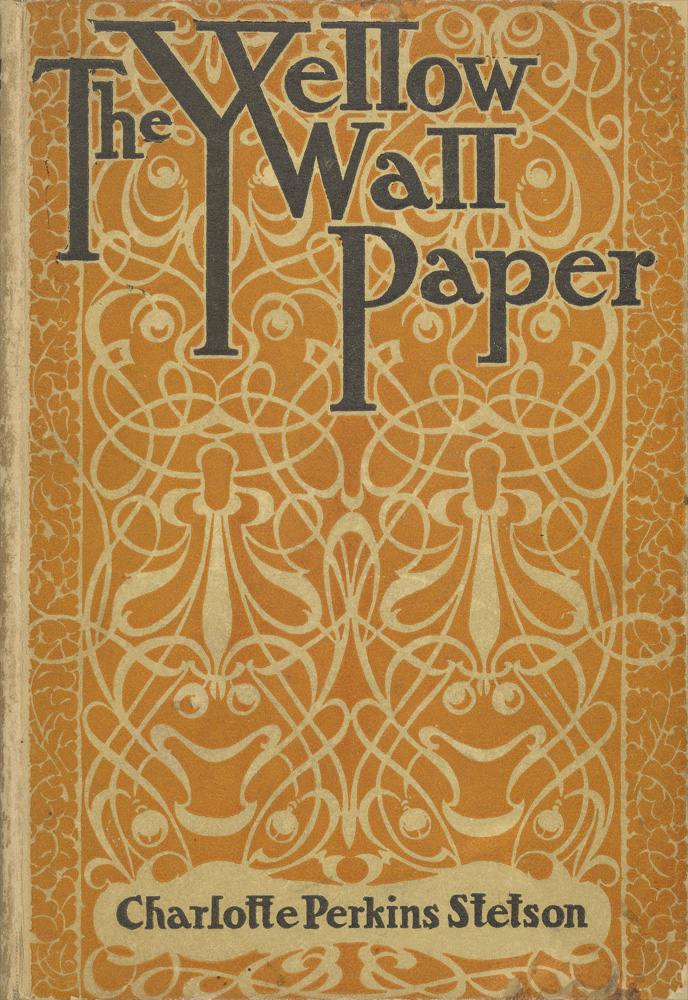
The Yellow Wallpaper by Charlotte Perkins Gilman (1892)

“I really have discovered something at last. Through watching so much at night, when it changes so, I have finally found out. The front pattern does move – and no wonder! The woman behind shakes it! Sometimes I think there are a great many women behind, and sometimes only one, and she crawls around fast, and her crawling shakes it all over. Then in the very bright spots she keeps still, and in the very shady spots she just takes hold of the bars and shakes them hard. And she is all the time trying to climb through. But nobody could climb through that pattern – it strangles so; I think that is why it has so many heads.”

This story has been analyzed in myriad ways and is considered an important work of feminist literature. It’s a chronicle of a mental breakdown; a woman is suffering from ‘a slight hysterical tendency’ according to her physician husband, following the birth of her child. She spends the story confined to an upstairs room at a country estate and comes to believe that a woman is trapped behind the yellow wallpaper in the room.

On reading the story, you end up infuriated by the woman’s husband, and sympathetic toward her plight, but the way Gilman describes her experience through a series of journal entries also makes the story quite memorable. Her slow descent into madness is told with convincing, disturbing detail.

Gilman suffered from postpartum depression, so this story has been read with this in mind. At the time, a ‘rest cure’ was administered for treatment, which only made things worse for her, so she stopped the treatment and resumed writing, later saying that she feared a mental breakdown had she continued to follow the doctor’s cure. Gilman instead followed the advice of a female doctor, Mary Putnam Jacobi, who argued against such rest. Much has been written about Gilman and her pioneering story, for those interested, your local library will have plenty of information about her life.

The Haunting of Hill House, by Shirley Jackson (1959)

“It was a house without kindness, never meant to be lived in, not a fit place for people or for love or for hope. Exorcism cannot alter the countenance of a house; Hill House would stay as it was until it was destroyed.”

I’ve been writing about a number of unnerving books this month, but The Haunting of Hill House might be the finest of them all. You can read it as a haunted house story, which it is, but I can only think of a handful of books that truly scared me, made me feel so unsettled that I couldn’t stop thinking about the book, or that kept me up at night. Shirley Jackson was such a fine writer that I can’t recommend this book, or her other works, highly enough. The trials of Eleanor Vance in Hill House are some of the most upsetting things any horror character has ever had to endure, and I found myself terrified for her as I read this book. Without giving anything away, there is a scene involving the possible presence of a supernatural entity that is one of the most the most disturbing passages I have ever read.

What makes The Haunting of Hill House work so well is that Jackson doesn’t rely on cheap scares or obvious explanations; you go along with the story without thinking. You sympathize with Eleanor and the other characters and before you know it you are tangled up in their fears and disappointments and terrors. It’s scary because Jackson makes it all seem so real and believable; usually, when reading in this genre, it is easy to set aside your feelings and realize it’s just a ghost story. Jackson makes that much harder by making her characters seem so human, by telling her tale so well.

If you only have time to read one book this season, it should be this one. There are lots of great horror writers, but Jackson was just a great writer, period, and I don’t think anyone has ever surpassed her achievement in this genre. Her short stories are also essential reading for any student of fiction.  

Young Goodman Brown, by Nathaniel Hawthorne (1835)

I first read Young Goodman Brown in high school and recall being puzzled by it. Hawthorne’s prose was perhaps a bit too dense for me, as I suspect it was for most of my ninth grade English class. But there was something unsettling about it, and I returned to it again and again through the years. Eventually, Hawthorne became one of my favorite writers, but it was an acquired taste.

We’re in the Puritan village of Salem; the tale was written in 1835 but Hawthorne is reaching back to the witch trials of 1692-93. The story seems straightforward. Young Goodman Brown leaves his wife, Faith, to go out on some ‘evil purpose,’ against her wishes. He travels past the town meeting house in Salem Village, and Hawthorne sets a foreboding tone:

“It was all as lonely as could be; and there is this peculiarity in such a solitude, that the traveller knows not who may be concealed by the innumerable trunks and the thick boughs overhead; so that, with lonely footsteps, he may yet be passing through an unseen multitude.”

“What if the devil himself should be at my very elbow!” Brown remarks, as he continues on his way. He meets others from the village on his path, including a man who is older than him, around age fifty, but who looks just like him, and remarks in a very matter of fact way that he had done terrible things with Young Goodman Brown’s grandfather:

“I helped your grandfather, the constable, when he lashed the Quaker woman so smartly through the streets of Salem. And it was I that brought your father a pitch-pine knot, kindled at my own hearth, to set fire to an Indian village, in King Philip’s War. They were my good friends, both; and many a pleasant walk have we had along this path, and returned merrily after midnight. I would fain be friends with you, for their sake.” The stranger goes on to say that he is acquainted will the deacon, the governor, and other elders of the town. This shakes Brown’s understanding of his own family and village, leaving him quite unsettled.

This stunning section ramps up the tension until Brown hears the voice of his wife, Faith, and is distraught that she is in the woods. He arrives at a clearing where all the village is assembled; he and Faith are to be initiated in a ceremony, binding them to the devil. He calls out to Faith that she must resist and “look up to heaven,” at which point the villagers disappear.

Brown is unsure whether the entire story was a dream, but it bewilders him to the point that “A stern, a sad, a darkly meditative, a distrustful, if not a desperate man, did he become, from the night of that fearful dream.” Hawthorne’s final sentence is: “And when he had lived long, and was borne to his grave, a hoary corpse, followed by Faith, an aged woman, and children and grand-children, a goodly procession, besides neighbors, not a few, they carved no hopeful verse upon his tombstone; for his dying hour was gloom.”

It may not be entirely fashionable today to believe in good and evil or supernatural powers, but this story still leaves me unsettled. The idea that your friends and neighbors, or your entire conception of the world, may be totally wrong, is something no one wants to admit. But the devil is right there in the story, cheerfully informing Brown that his father committed atrocities, that his grandfather enthusiastically persecuted his neighbors, and that Brown himself is on friendly terms with evil. Everyone in Salem is implicated; the story takes place during the Witch trials, at which Hawthorne’s own grandfather was a judge, making this tale even more grim.

There are no easy interpretations or answers in this tale. Brown lives the rest of his days haunted by his knowledge. There’s no redemption for him from God, or from anyone else, even his beloved Faith.

Hawthorne wrote plenty more in this vein: A Scarlet Letter, The House of Seven Gables, and numerous stories, and all of them leave me with this same feeling of helplessness in the face of evil. They’re also incredible to read, with the stylized, romantic prose adding to the sense of gloom and mystery.

I am not sure of Hawthorne is still taught in high schools, but he ought to be. This is one of the best short stories you’ll ever read, one that has stayed with me in the three and a half decades since I first encountered it.