
I found the first installment of Horizon to be an excellent epic Western, the kind of film that is rarely in theaters anymore. The movie is ambitious and sprawling, a tale that spans years and the lives of multiple characters in the settling of the western frontier. It’s not a sanitized version of that era, though there is plenty of drama. The cast is excellent, and the story is gripping. It’s long, and though it doesn’t move at a breakneck pace, it kept me interested the whole way through and I’m eager to see what comes next.
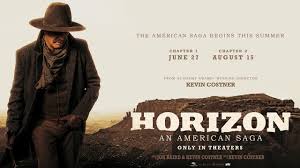
This isn’t exactly a groundbreaking movie, but that is ok. Westerns have a long and rich history in film and literature. The best of them, like Lonesome Dove, tell a story about America and about human nature that keeps us engaged and entertained. I felt that Horizon is up there with some of the better genre offerings. At the heart of this tale is Kevin Costner’s character, Hayes Ellison, who is the kind of stock figure we’ve seen in many Westerns—the tacit, reluctant hero. I was reminded of William Munny from Unforgiven, though Ellison is less brutal. He must protect a woman and young child from a band of outlaws seeking vengeance, and he does so almost grudgingly at first, like all good heroes, but once called into service he swings into action with the kind of cool performance moviegoers will appreciate.
Other plotlines include a group of settlers in over their heads, the target of a band of Apaches unhappy with the incursion on their territory. In one particularly grim scene, a band of outlaws looking to make easy money target a group of native women and children for their scalps; it’s easy money, at $100 a head. This is not the kind of thing you might have seen in a Western of an earlier era. It was a grisly sequence and underscores that there are really no heroes in this kind of story, though there is plenty of tension and conflict.
The film left me eager to see the remaining installments. I loved the scale of it—the film looks gorgeous, shot in Utah with stunning effect. A lot of care went into all of this—the story, yes, but also the sets and costumes, the languages of the native peoples—everything.
I’ve read some things about the poor box office performance of this film, which is a shame, because it’s a great movie. Perhaps it’s an old-fashioned kind of tale, from a bygone era of cinema. If so, that’s a sad development. There’s little enough at the multiplex for people to see that isn’t animated, or part of a comic book multiverse. Nothing wrong with those kinds of movies; my children love them. But it felt good to see a movie made for adults, which spoke a language of film that I haven’t seen for a while. If the days of these kinds of films have passed, because they require too much attention, that is a shame. Perhaps the audience for such films has shrunk so much that they are no longer profitable, the way it is becoming harder to sell good novels or good theater. If so, we will all be poorer for it. Even so, the measure of a work of art has little to do with how marketable it is. There are examples of this all through the history of art and literature. So, I’d urge you to go see Horizon—it’s a movie that in my opinion is worth the time and attention.
 Christopher Tuthill