
“The summer had turned, the summer had gone; the autumn had dropped upon Bly and had blown out half our lights. The place, with its gray sky and withered garlands, its bared spaces and scattered dead leaves, was like a theater after the performance–all strewn with crumpled playbills.”
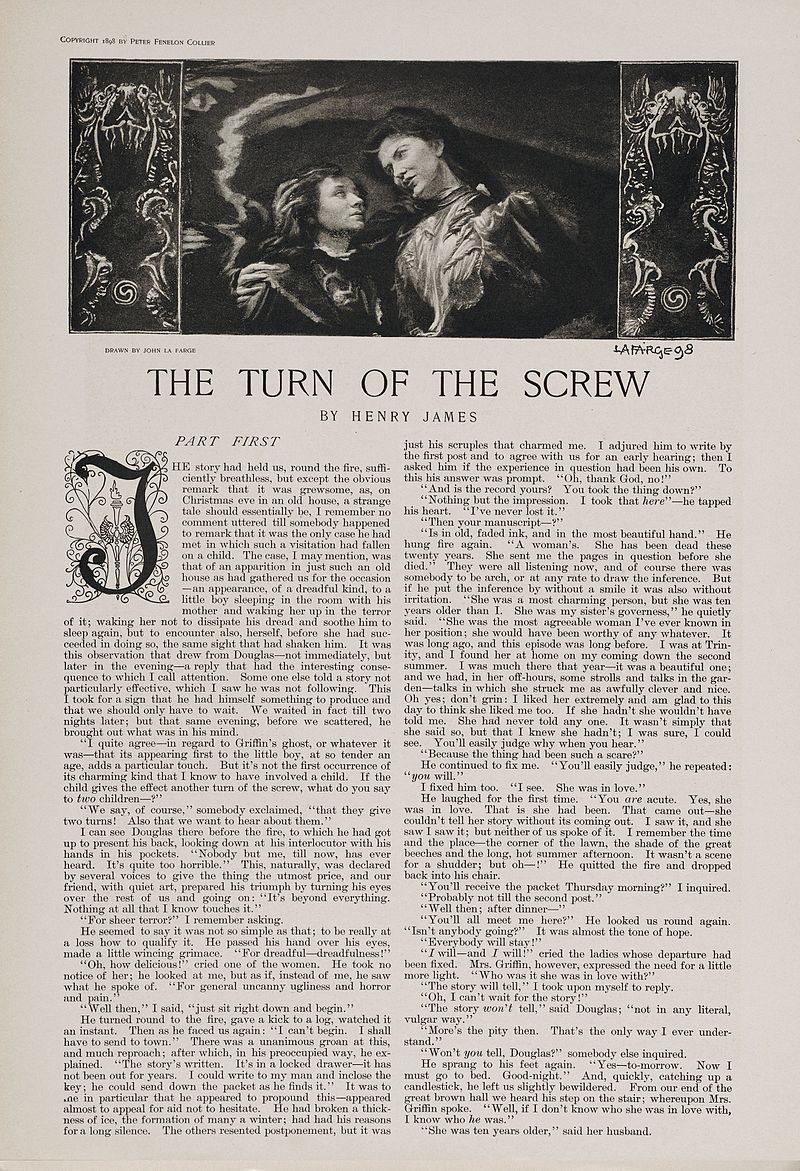
The Turn of the Screw is one of the most influential, classic horror tales ever written; everyone ought to read it. It’s a gothic story of a haunting at a British country estate, and the reader is never sure whether the ghosts are real or imagined. The story is told through a frame of a man reading a manuscript of a governess who believes that the children in her charge are being haunted by the ghosts of two former employees of the estate.
I find that the presence of children in fiction will usually increase the tension, and in a well written story like this one, you feel quite concerned for the children, worried that they are either being haunted, or being cared for by someone who is unstable and not up to the task. Either way, the sadness of these children, who are seemingly ignored by their parents, is something I couldn’t shake when I read this story. It was such a disturbing tale because of everything left to the reader’s imagination. In my opinion, this is usually the way to scare the reader far more than the usual genre tropes.
James was as prolific and famous as an author can be, and his reputation rests on a number of well known works, including Daisy Miller, Wings of the Dove, Portrait of a Lady, and The Golden Bowl, to name just a few. But it is Turn of the Screw that I always think of first, and I think this is likely true of other readers. It has been adapted no less than twenty-eight times, with numerous film versions, an opera by Benjamin Britten, various stage adaptations, and new adaptations still being made today. There’s something about this unsettling story that has deeply resonated with readers for more than a century.
 Christopher Tuthill