The Cask of Amontillado

Today, I’m again doing some brief thoughts on a few horror stories I’ve enjoyed over the years and which deserved inclusion on this reader’s guide to Halloween. You could probably pick 31 stories by Poe to read this season, but here are two of my very favorites, as well as two highly influential gothic novels.

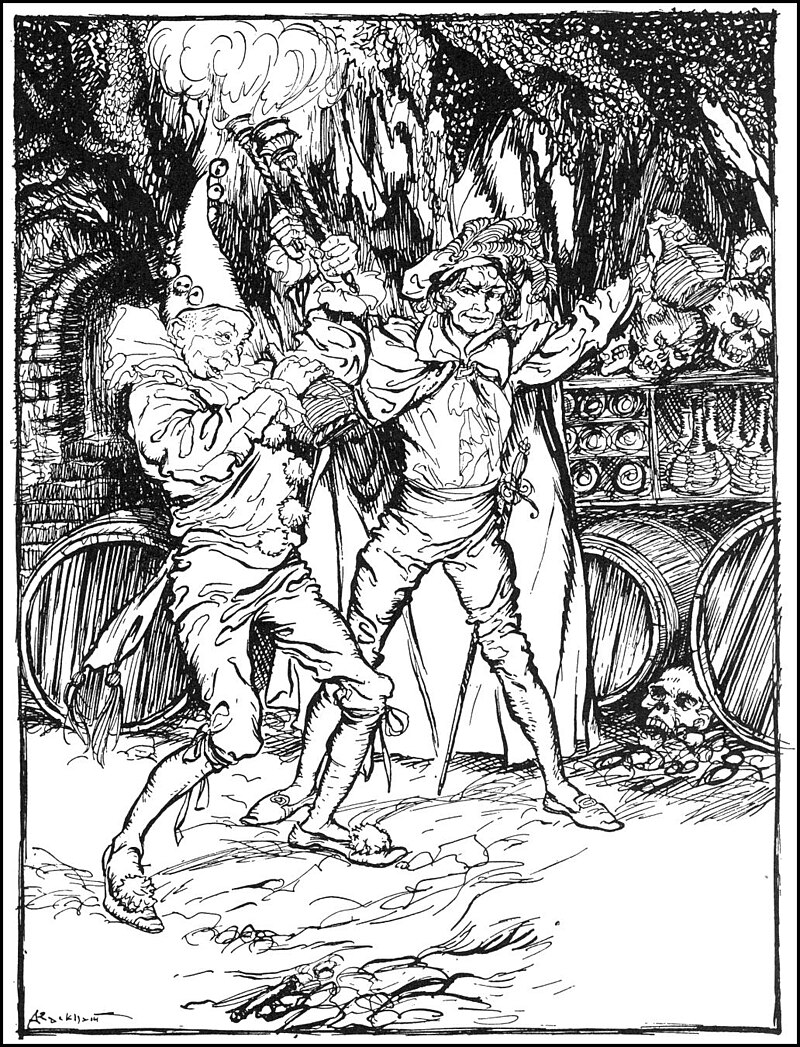
The Cask of Amontillado by Edgar Allan Poe (1846)

1935 Illustration by Arthur Rackham

“The thousand injuries of Fortunato I had borne as I best could, but when he ventured upon insult, I vowed revenge. You, who so well know the nature of my soul, will not suppose, however, that I gave utterance to a threat. At length I would be avenged; this was a point definitely settled—but the very definitiveness with which it was resolved, precluded the idea of risk. I must not only punish, but punish with impunity. A wrong is unredressed when retribution overtakes its redresser. It is equally unredressed when the avenger fails to make himself felt as such to him who has done the wrong.”

One of the most widely read and anthologized stories of Mr. Poe, who was perhaps the greatest writer of Gothic tales, the Cask of Amontillado has long been a favorite of mine, as I’m sure it has for many others. The first time I read it, I couldn’t quite believe what I was reading. This was supposed to be old, boring literature, and here we were amid one of the most horrible things my young brain had ever contemplated. For the first time, I realized that these old tales were perhaps better than whatever slasher stuff was at my local multiplex.

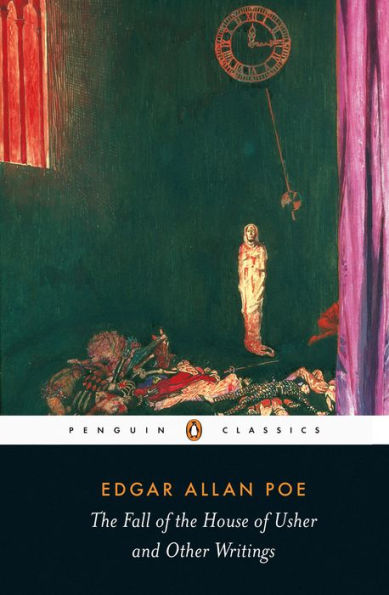
The Fall of the House of Usher by Edgar Allan Poe (1839)

“DURING the whole of a dull, dark, and soundless day in the autumn of the year, when the clouds hung oppressively low in the heavens, I had been passing alone, on horseback, through a singularly dreary tract of country; and at length found myself, as the shades of the evening drew on, within view of the melancholy House of Usher.”

This tale gave me the chills when I first read it as a lad, and it still has that effect now. It gets weirder and weirder as it progresses; a bizarre, supernatural and disturbing story of a reclusive man, his ghostlike sister, and their creepy ancestral home. One of the greatest horror tales ever written.

I also highly recommend a trip to the Poe Cottage in the Bronx, where he lived for a time. It’s such a neat piece of local history–a lot of places want to claim Poe as their own, but he did live in New York for the last few years of his life, with his ailing wife and her mother, and the small museum there is well worth a visit for New Yorkers.

Dracula by Bram Stoker (1897)

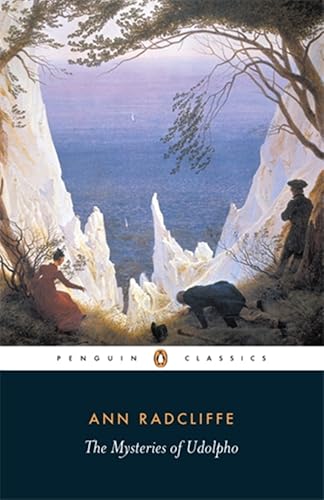
The Mysteries of Udolpho by Anne Radcliffe (1794)

“A well-informed mind is the best security against the contagion of folly and vice. The vacant mind is ever on the watch for relief, and ready to plunge into error, to escape from the languor of idleness. Store it with ideas, teach it the pleasure of thinking; and the temptations of the world without, will be counteracted by the gratifications derived from the world within.”
― The Mysteries of Udolpho by Anne Radcliffe

“How blessed are some people, whose lives have no fears, no dreads; to whom sleep is a blessing that comes nightly, and brings nothing but sweet dreams.” Dracula by Bram Stoker

No list of Halloween reading would be complete without Dracula, one of the first novels of its kind. An epistolary novel that moves much slower than most of the film versions with which people may be more familiar, it inspired many dozens of similar books. Stoker borrowed heavily from folklore to write this tale, which many critics have noted bore similarities to Anne Radcliffe’s The Mysteries of Udolpho, which is also well worth reading. Those interested in literary history and gothic tales should read both of these. Udolpho was published in 1794 and is considered by many to be the first gothic novel. The tragic story of a young woman’s misfortunes and strange occurrences at a castle where she lives, Udolpho has been praised by literary critics who have written on how this groundbreaking work influenced many later writers, including Poe, Stoker, Henry James, and Jane Austen, to name just a few.

Something Wicked This Way Comes…

I was quiet the past few days due to a campout, which was a bracing seasonal treat. It was a gorgeous weekend, the foliage was on full display, we heard owls at night as we enjoyed the fire, saw turkeys and deer and other small critters. It’s great to reconnect with nature when you’re able.

Today I’ll offer three short reviews of seasonal stories, to keep this October project going.

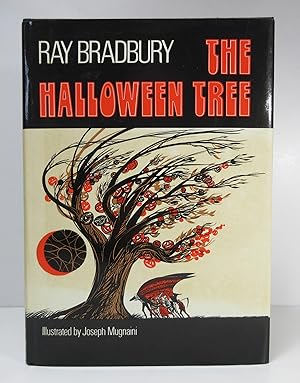
The Halloween Tree by Ray Bradbury (1972)

“Tom Skelton shivered. Anyone could see that the wind was a special wind this night, and the darkness took on a special feel because it was All Hallows’ Eve. Everything seemed cut from soft black velvet or gold or orange velvet. Smoke panted up out of a thousand chimneys like the plumes of funeral parades. From kitchen windows drifted two pumpkin smells: gourds being cut, pies being baked.”

This is a wonderful treat, a book that can be savored and read aloud to kids as the date draws near. I love doing that with my own children, and it holds up so well to repeated readings. It’s the story of a group of friends who go out trick or treating only to find that one of their pals, Pipkin, is extremely ill. To save him, they must accompany the mysterious Mr. Moundshroud on a journey across the world and many different cultures, learning about various rituals of death and the spirit world. This really is the perfect Halloween book for tweens and dreamers of all ages. In 1993, it was made into an animated special starring the great Leonard Nimoy as Moundshroud.

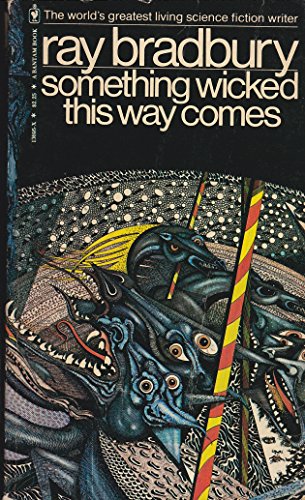
Something Wicked This Way Comes by Ray Bradbury (1962)

“And if it’s around October twentieth and everything smoky-smelling and the sky orange and ash gray at twilight, it seems Halloween will never come in a fall of broomsticks and a soft flap of bedsheets around corners.”

Bradbury was so prolific and wrote so many fine tales that it is hard to narrow it down to his best. In fact, you could have a list of 31 Bradbury stories for the season. But this one is a personal favorite of mine, bringing together all of Bradbury’s great themes in one place, in an extremely satisfying story of two friends, Jim Nightshade and Will Holloway, and the strange carnival that comes to Green Town one Halloween. I’ve written essays on this book and have read it a number of times, and to me it just gets better as the years go by. I love this story, and I think anyone who enjoys this season will love it, too. Probably my favorite book on this list, and that is saying something. Bradbury was heavily involved with the feature film from 1983, which is also a lot of fun.

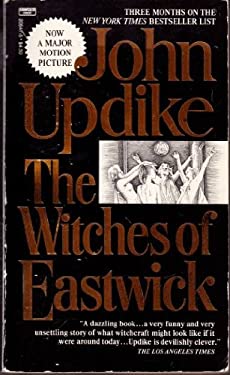
The Witches of Eastwick by John Updike (1984)

“Not until midlife did she truly believe that she had a right to exist, that the forces of nature had created her not as an afterthought and companion—a bent rib, as the infamous Malleus Maleficarum had it—but as the mainstay of the continuing Creation, as the daughter of a daughter and a woman whose daughters in turn would bear daughters.”

John Updike needs no introduction from me or anyone else. I was intrigued by the idea of this book about modern day witches living in Rhode Island, since I knew Updike from his Rabbit books, which I thoroughly enjoyed. I’ve yet to read a better saga about an American everyman in crisis, and find Updike’s prose to be really wonderful. This book is a total departure from that sort of novel, though his poetic command of language makes the book a joy to read. Told from the witches’ point of view, this is a fun, feminist update to these kinds of legends. If you are looking for a great literary read, this book’s for you. It was made into a successful film in 1987, with an all-star cast, directed by George Miller. Updike wrote a sequel in 2008 called The Widows of Eastwick.

The Phantom Coach, by Amelia Edwards (1864)

In the grand tradition of Victorian Christmas ghost stories, Amelia Edward’s The Phantom Coach first appeared in The December, 1864 issue of Charles Dickens’ literary journal, All the Year Round. Amazingly, the preceding link is to that full issue (the cover image is below), which I intend to read. Much of the run of this journal is freely available online, thanks to the Hathi Trust, the Internet Archive, and other sources.

The narrator of this tale of the damned is a man named Murray who is traveling across the Scottish moors when a snowstorm hits; afraid he won’t make it back home, he hails a passing stranger and asks for shelter. The man, Jacob, is the servant at a nearby house, but warns Murray that his master will not want him to stay. Jacob reluctantly allows Murray to follow him back to the residence.

The master of the house is at first irritated by Murray’s presence and tells him he has lived in this secluded place for twenty-three years, with no visitors at all for the past four. But the man is eager for news of the outside world—they have a fireside chat during which the old man tells him:

“The world grows hourly more and more sceptical of all that lies beyond its own narrow radius; and our men of science foster the fatal tendency. They condemn as fable all that resists experiment. They reject as false all that cannot be brought to the test of the laboratory or the dissecting-room. Against what superstition have they waged so long and obstinate a war, as against the belief in apparitions? And yet what superstition has maintained its hold upon the minds of men so long and so firmly?”

The man further says that he himself believed in the supernatural, and as a man of science, his career was ruined for it. He speaks with eloquence about various philosophers and scientists, leaving Murray in awe at the breadth of his knowledge; Murray says that he “wandered from topic to topic, from speculation to speculation, like an inspired dreamer.”

When the storm ends, Murray wishes to make his way home, though it is late at night—it’s decided he’ll join the mail coach, which will be passing through a few miles away. Jacob leads him to the stop, and now the story gets macabre. He mentions that a mail coach had crashed over an embankment, killing all aboard, nine years before.

It’s at times like this in most ghost stories when I, and most readers, want to tell the protagonist to find some other way home. Of course, Murray doesn’t. He gets on the coach when it arrives, at first relieved to be out of the cold, until he realizes the awful truth of the matter.

This is a very fun, atmospheric horror tale, and I can see why it has been anthologized so often. You are set up beautifully by the desolate moor, the irritable servant, finally the old man telling tales of the supernatural in a parlor teeming with hundreds of books and scholarly apparatus of every conceivable kind. Incidentally, I want a room just like this, complete with a fireplace and ghost stories and a glass of sherry. If anyone out there reading this wants to help me achieve this, I’d be grateful.

 I came across my copy of this tale in a Dover thrift edition of ghost stories. I’ve loved those Dover editions since I was a young man—for just a few dollars you get some first-rate stories. My college instructors used to kindly assign these editions to their poor students, and I’ve kept with the tradition.  

Amelia Edwards was a woman of many talents: in addition to writing many novels and short stories, she was also a journalist, illustrator, and Egyptologist. Like most of the authors on this list, you can learn more about her life in her Dictionary of Literary Biography entry, though you will need a login to access it.

Ma’ame Pelagie by Kate Chopin (1894)

“Ma’ame Pelagie,” they called her, though she was unmarried, as was her sister Pauline, a child in Ma’ame Pelagie’s eyes; a child of thirty-five.

Kate Chopin is well known for her novel The Awakening, but she was also a prolific writer of short stories, including this gem, Ma’ame Pelagie. Pelagie and her sister live in Louisiana in a three-room cabin beside their formerly grand ancestral home. For decades, we learn, they have lived this way, hoping to save enough to restore the mansion ‘shaped like the Pantheon,’ but now fallen into ruin. The sisters are visited by a niece who comes to live with them—her father, their brother, will soon be joining her. But the young girl cannot stand the sadness of the place and wants to leave.

“It was not the first time she had stolen away to the ruin at night-time, when the whole plantation slept; but she never before had been there with a heart so nearly broken. She was going there for the last time to dream her dreams; to see the visions that hitherto had crowded her days and nights, and to bid farewell to them.” Pelagie recalls these past grand days in a dreamlike reverie, the grand parties held there, and her lover, who went off to fight in ‘le guerre,’ as did so many others. And now we have the central problem on which this tale rests—the war, which eventually comes to the plantation. It is the tragedy of her life, to see her dreams ruined along with the grand house.

A year later, her brother Leandre builds a new, beautiful brick house where the old one stood. The house bustles with activity and music and the laughter of young people, the friends of ‘La Petite,’ her niece. However, Pelagie’s “soul had stayed in the shadow of the ruin.”

This is a great short gothic tale that works very well not only in the tragedy of these two women who live in the ruins of a once grand life, but also in the shadow of the civil war. The stain of slavery and the shadow of war haunts everything in this story of the south. The writing is quite elegant, as is much of the best writing of this period, and does much to transport us to these bygone days.

To learn more about Kate Chopin and her life, you can view this excellent PBS documentary on her.

A Good Man is Hard to Find by Flannery O’Connor (1953)

“You can do one thing or you can do another, kill a man or take a tire off his car, because sooner or later you’re going to forget what it was you done and just be punished for it.”

One of the most anthologized and well-regarded short stories of the last century, A Good Man is Hard to Find, like some of the other stories on this list, deserves its towering reputation. O’Connor was a master of the short story, and this tale is one of the most shocking gothic stories I’ve ever read. I can still recall the palpable dread I felt as I first read it many years ago in a college class on the short story.

This tale involves a family that is out for a drive when unspeakable violence occurs, but there is plenty of foreshadowing, with the grandmother mentioning the ‘loss of values’ in the modern world; she also points out a graveyard filled with slaves from a bygone era. She remembers that there was a plantation in the area, and convinces her son, Bailey, to take a turn onto a deserted road, where the family has a sudden accident, flipping their car, and are met by the “Misfit,” a terrifying killer.

This tale is suffused with the south, and with notions of God and the possibilities of salvation and grace. The grandmother attempts to placate the Misfit, who clearly means the family harm, saying he is one of her ‘babies,’ and touches his shoulder. But there’s no salvation here for anyone, it seems.

I think it is best to read something like this, with such a well-known reputation, with an open mind. It’s better not to seek out or think too much about any of the criticism of it at first, just read it. It will probably leave you feeling desolate, as some of the very best horror stories tend to do.

Flannery O’Connor wrote two novels and thirty-one short stories and is considered one of the great American writers of the 20th century. Sadly, she was ill with Lupus and died at just 39. Who knows what she may have achieved had she lived longer; as it is, she left behind an amazing legacy.

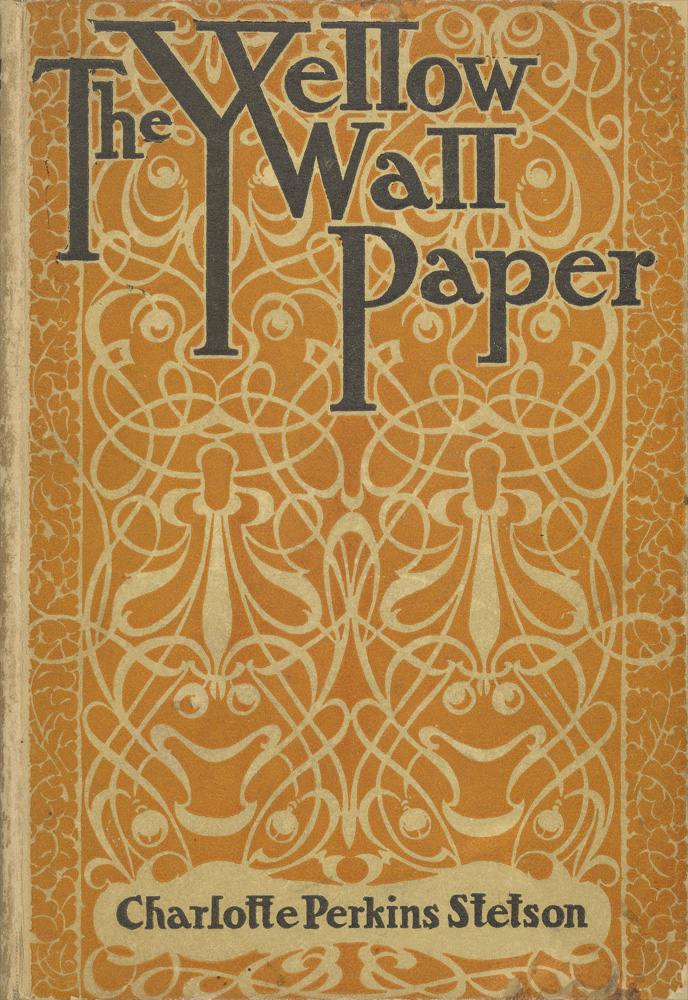
The Yellow Wallpaper by Charlotte Perkins Gilman (1892)

“I really have discovered something at last. Through watching so much at night, when it changes so, I have finally found out. The front pattern does move – and no wonder! The woman behind shakes it! Sometimes I think there are a great many women behind, and sometimes only one, and she crawls around fast, and her crawling shakes it all over. Then in the very bright spots she keeps still, and in the very shady spots she just takes hold of the bars and shakes them hard. And she is all the time trying to climb through. But nobody could climb through that pattern – it strangles so; I think that is why it has so many heads.”

This story has been analyzed in myriad ways and is considered an important work of feminist literature. It’s a chronicle of a mental breakdown; a woman is suffering from ‘a slight hysterical tendency’ according to her physician husband, following the birth of her child. She spends the story confined to an upstairs room at a country estate and comes to believe that a woman is trapped behind the yellow wallpaper in the room.

On reading the story, you end up infuriated by the woman’s husband, and sympathetic toward her plight, but the way Gilman describes her experience through a series of journal entries also makes the story quite memorable. Her slow descent into madness is told with convincing, disturbing detail.

Gilman suffered from postpartum depression, so this story has been read with this in mind. At the time, a ‘rest cure’ was administered for treatment, which only made things worse for her, so she stopped the treatment and resumed writing, later saying that she feared a mental breakdown had she continued to follow the doctor’s cure. Gilman instead followed the advice of a female doctor, Mary Putnam Jacobi, who argued against such rest. Much has been written about Gilman and her pioneering story, for those interested, your local library will have plenty of information about her life.

Young Goodman Brown, by Nathaniel Hawthorne (1835)

I first read Young Goodman Brown in high school and recall being puzzled by it. Hawthorne’s prose was perhaps a bit too dense for me, as I suspect it was for most of my ninth grade English class. But there was something unsettling about it, and I returned to it again and again through the years. Eventually, Hawthorne became one of my favorite writers, but it was an acquired taste.

We’re in the Puritan village of Salem; the tale was written in 1835 but Hawthorne is reaching back to the witch trials of 1692-93. The story seems straightforward. Young Goodman Brown leaves his wife, Faith, to go out on some ‘evil purpose,’ against her wishes. He travels past the town meeting house in Salem Village, and Hawthorne sets a foreboding tone:

“It was all as lonely as could be; and there is this peculiarity in such a solitude, that the traveller knows not who may be concealed by the innumerable trunks and the thick boughs overhead; so that, with lonely footsteps, he may yet be passing through an unseen multitude.”

“What if the devil himself should be at my very elbow!” Brown remarks, as he continues on his way. He meets others from the village on his path, including a man who is older than him, around age fifty, but who looks just like him, and remarks in a very matter of fact way that he had done terrible things with Young Goodman Brown’s grandfather:

“I helped your grandfather, the constable, when he lashed the Quaker woman so smartly through the streets of Salem. And it was I that brought your father a pitch-pine knot, kindled at my own hearth, to set fire to an Indian village, in King Philip’s War. They were my good friends, both; and many a pleasant walk have we had along this path, and returned merrily after midnight. I would fain be friends with you, for their sake.” The stranger goes on to say that he is acquainted will the deacon, the governor, and other elders of the town. This shakes Brown’s understanding of his own family and village, leaving him quite unsettled.

This stunning section ramps up the tension until Brown hears the voice of his wife, Faith, and is distraught that she is in the woods. He arrives at a clearing where all the village is assembled; he and Faith are to be initiated in a ceremony, binding them to the devil. He calls out to Faith that she must resist and “look up to heaven,” at which point the villagers disappear.

Brown is unsure whether the entire story was a dream, but it bewilders him to the point that “A stern, a sad, a darkly meditative, a distrustful, if not a desperate man, did he become, from the night of that fearful dream.” Hawthorne’s final sentence is: “And when he had lived long, and was borne to his grave, a hoary corpse, followed by Faith, an aged woman, and children and grand-children, a goodly procession, besides neighbors, not a few, they carved no hopeful verse upon his tombstone; for his dying hour was gloom.”

It may not be entirely fashionable today to believe in good and evil or supernatural powers, but this story still leaves me unsettled. The idea that your friends and neighbors, or your entire conception of the world, may be totally wrong, is something no one wants to admit. But the devil is right there in the story, cheerfully informing Brown that his father committed atrocities, that his grandfather enthusiastically persecuted his neighbors, and that Brown himself is on friendly terms with evil. Everyone in Salem is implicated; the story takes place during the Witch trials, at which Hawthorne’s own grandfather was a judge, making this tale even more grim.

There are no easy interpretations or answers in this tale. Brown lives the rest of his days haunted by his knowledge. There’s no redemption for him from God, or from anyone else, even his beloved Faith.

Hawthorne wrote plenty more in this vein: A Scarlet Letter, The House of Seven Gables, and numerous stories, and all of them leave me with this same feeling of helplessness in the face of evil. They’re also incredible to read, with the stylized, romantic prose adding to the sense of gloom and mystery.

I am not sure of Hawthorne is still taught in high schools, but he ought to be. This is one of the best short stories you’ll ever read, one that has stayed with me in the three and a half decades since I first encountered it.

31 Tales of Halloween

‘The Halloween Tree,’ by Ray Bradbury, 1964

October has long been my favorite month. I love Christmas, too, as well as every other holiday that affords me time to spend with my children. But there’s always been something special about October 31. As a child, I knew Halloween was a night devoted to kids, where magical things happened, where you had a bit of independence to go out with friends and have a grand time. The costumes, the folklore, the changing of the seasons, all add warmth and wonder to this grand day. My own children have enabled me to experience these feelings again. It is so fun enjoying the fall with them: decorating the house, creating costumes, getting ready. The anticipation of it, the colors and sounds and stories, are almost better than the day itself.

The stories are the things that really animate it for me. The list of writers I admire in this season is almost endless, but it begins somewhere around Shakespeare and continues into the present. Shelley, Poe, Hawthorne, Stoker, Lovecraft, Jackson, Bradbury—my list goes on and on. The only thing that stops me from reading all these authors constantly is lack of time.

This October, time permitting, I intend to have a project on this blog, where I write some thoughts about some of my very favorite tales in the genre. I can’t promise I’ll do so every day, though that is the goal. Certainly, I’ll do a post weekly, or every couple of days. These posts aren’t meant to be comprehensive, scholarly, or to offer some kind of profound critique. It’s mostly just for me, to write up thoughts and impressions and appreciation of these tales that affected me: why I like them so much, how they work, why I have such affection for them, in that vein. Hopefully I’ll add to the catalog throughout the year, with other seasonal tales. Maybe some readers out there feel the same way about some of these stories. My hope is to document some of my very favorite books and stories, and perhaps turn some readers out there onto some tales they may have overlooked, or never heard of. There are a great number of unappreciated stories out there that ought to have more attention, in my view.

So, I’ll see how it goes. If you’re a like minded reader, I hope you join in the fun by commenting or offering your own thoughts.

I’ll probably begin early, before October 1, with some other seasonal type stories to get started. I’ll throw in some children’s stories that I’ve been reading with my family as well.

I’ll post more soon. I hope those reading this enjoy the season. I plan to be outside as much as possible in the next six weeks, to enjoy the beauty of fall, before it gets too cold and the leaves are gone.

Happy Autumnal equinox. Enjoy your fall!