If you’d told me when I was twelve that we’d have endless new sci fi/superhero/fantasy movies and shows every single week, I would’ve been ecstatic. But alas, since I’m fifty and no longer twelve, I’m totally disinterested in most of it. Partly this is because I’m no longer a child, but it’s also because I enjoy new and different stories, and none of these gigantic intellectual properties do that. They just make the same exact stories over and over.
A long time ago, in a galaxy far, far away, George Lucas created something special that felt fresh. Comic books did that also, and some still do. Tolkien created a genre that has been well mined for generations. Other writers have done and continue to do this, and some films do as well. But most of the large properties simply make the same thing with slightly different characters or timelines. It obviously sells and many people love it. It doesn’t interest me, though– new and interesting stories do. But these famous, valuable names are like real estate snatched up by greedy developers.
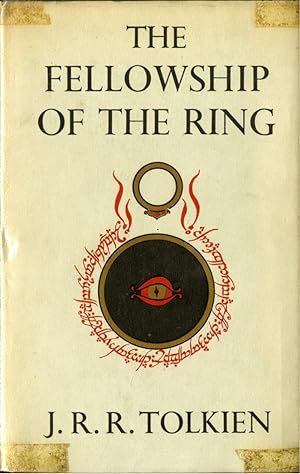
At times, older fans can get prickly about newer things. I’ve felt that way as well, mainly because the experience of reading an amazing novel can never be matched by any movie, no matter how well done. As George RR Martin recently commented, very rarely does a great book get a truly worthy interpretation, but when it happens it’s quite amazing. Dune managed it, in my opinion, and Jackson’s Lord of the Rings did, as well. But more often they just leave you cold.
Don’t adapt this, son. Don’t even try.
Most of these newer films are not made for middle aged guys, so I just accept that it isn’t for me, and go back to the books. But I admit, and as Martin said, I find the arrogance of some of these adaptations hard to believe. Luckily I will always have my bookshelves.
At times, sending out stories and manuscripts and getting no response can get frustrating. But that’s the way it is, and complaining about it doesn’t do any good. It is maddening when you see some of the awful things that become bestsellers, that get all kinds of attention and large publishing deals. Unfair, maybe, but that’s how it goes. First, you must write a great book, and then you must either know someone, or be in the right place at the right time. Some writers will beat the odds, so I keep plugging away, and in any case, I write for myself and won’t stop no matter what happens.
Which brings me to the subject of criticism, and gatekeepers. There are many of these that writers need to ignore. I was thinking of that curious thing, the writing workshop. In my experience, most of these were not at all a supportive environment; in fact, they were quite the opposite, in most cases, with students attacking each other’s work in an effort, I guess, to impress the instructor, a person who had published something and whose approval many in the class usually craved.
The comments on my stories were sometimes helpful, sometimes not, occasionally rude and off putting, and I listened to almost none of it except those written honestly. And yet, even an honest critic might be wrong. Gatekeepers at publishing houses, as well as literary agents, are quite often wrong about a great many things. Just check out the mountains of rejection letters received by people like Ursula LeGuin, Stephen King, Frank Herbert, and plenty of others.
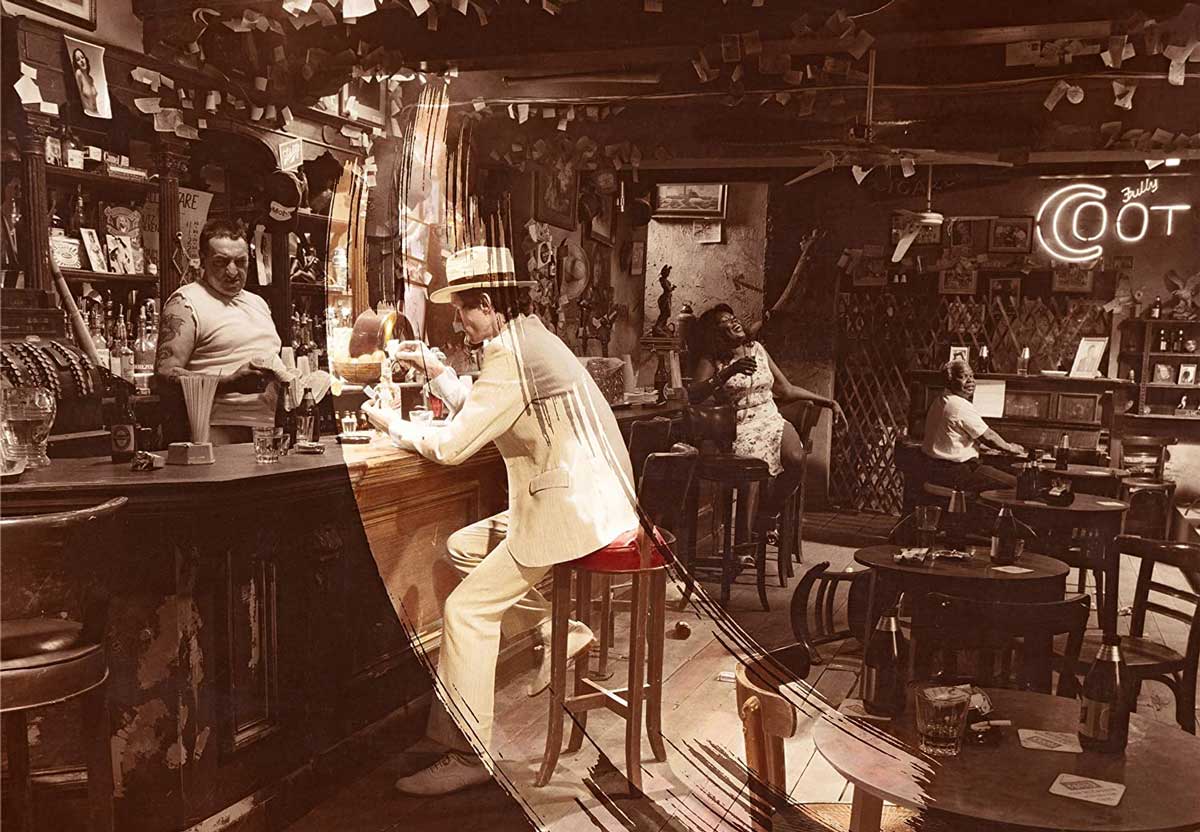
Last night, I couldn’t sleep and was listening to Led Zeppelin, one of my favorite bands. As I sometimes do with artists I admire, I went and looked up contemporary reviews of their groundbreaking records, which have sold over a hundred million copies. One snob said Robert Plant’s lyrics were awful. Rolling Stone wrote that the whole office laughed in mockery at “In Through the Out Door,” the band’s final album, recorded in the terrible wake of the death of Plant’s son. Quite hilarious, you bunch of hipster morons, was all I could think. What a terrible record that brought nothing but happiness and sold tens of millions of copies. Yep, Zeppelin sure were a laughingstock.
I’m now fifty, and I don’t do reviews of new books very often anymore. I used to years ago, for a couple of online sites, but I found that unless I want to spend a lot of time digesting a book, and can say something thoughtful and supportive, there is little point. These things are so subjective, and a random critic has as much to say on the topic of a new book as any thoughtful reader, of which there are a great many. Instead, I’ll do goodreads reviews of books I enjoy, sometimes. And I’ll let my friends and contacts know which books I’m reading. Major outlets like the New York Times and other venues might help a reader decide whether to buy something, I suppose, but more often it is a badge of honor that the author of the book can proudly wear. It may help boost sales. Or if it’s a negative review, they may never live it down.
As the years pass, I’ve realized that apart from a very few trusted book critics, I’d rather just read a book and make up my own mind. The opinions of editors and agents and others in the publishing business are meaningless. In the end, there are your words, your story, and you tell it as best you can. You hope someone likes it, but whether they do or not hardly matters at all. You’re left with your honesty and your effort, and that’s about all you can do. Anything less is not enough, no matter what accolades other people might want to give you. And if you stick to your own vision and work, you can never lose, no matter what any critic says.
“Once men turned their thinking over to machines in the hope that this would set them free. But that only permitted other men with machines to enslave them.” –Frank Herbert, DUNE
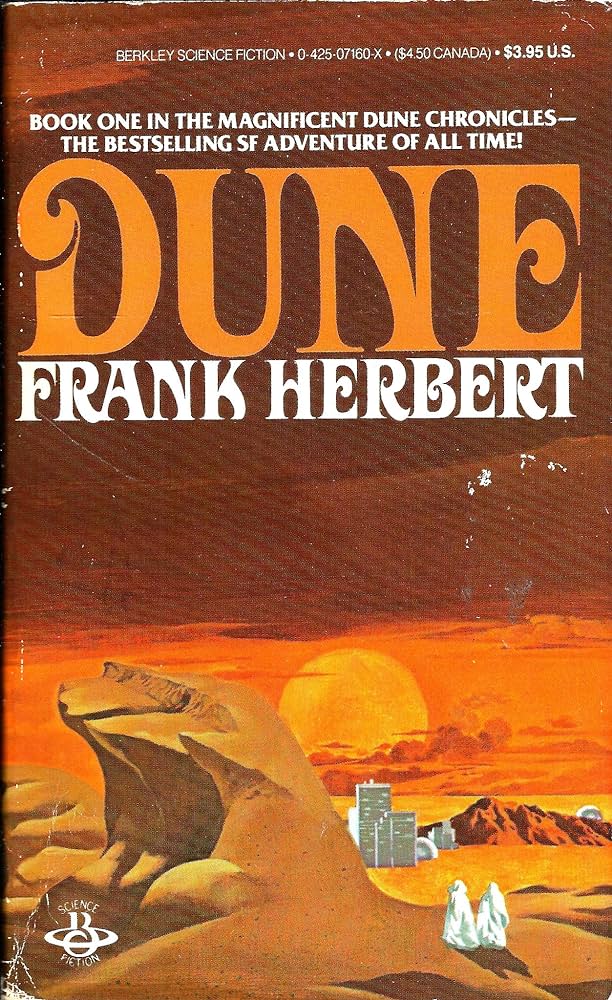
The new Dune film is amazing, far better than anything that fans of the book had any right to expect. I loved it. I started rereading the book as soon as I got home; I read the above quote and had to put the book down for a moment. Frank Herbert wrote that in 1965–probably quite a bit earlier, as ’65 is the publication date. What a visionary.
The film changed a few things, but that’s to be expected in a work of this size and scope; it would be impossible to adhere to everything Herbert wrote. At some point I may write up some further thoughts. But suffice to say it was great and left me speechless. Once I finish the first book, I’ll probably continue with the others, too. I loved the first three books in the cycle and enjoyed the next three as well, though I felt they weren’t at the same level of quality as the first two or three.
A good friend of mine also recommended the many sequels written by Brian Herbert and Kevin Anderson, so I may go down that Golden Path, as well.
I’m really in awe of Denis Villenueve and the whole cast of this movie, particularly Javier Bardem, who I felt carried much of the film as Stilgar. We’re lucky that a director as good as Villenueve was able to make this. In my opinion, this achievement is as great as Peter Jackson and Lord of the Rings, and will be remembered for a long time.
“The Wheel of Time turns, and ages come and pass, leaving memories that become legend. Legend fades to myth, and even myth is long forgotten when the Age that gave it birth comes again. In one Age, called the Third Age by some, an Age yet to come, an Age long past, a wind rose in the Mountains of Mist. The wind was not the beginning. There are neither beginnings nor endings to the turning of the Wheel of time. But it was a beginning.” ― Robert Jordan, The Eye of the World
So begins Robert Jordan’s fourteen-book, 4.4 million word saga, The Wheel of Time, a tale which has sold over ninety million copies since the first novel in the series was published in 1990.
Some three decades ago, or an age ago, in Wheel terms, when I was in high school and college, I happily devoured the first four books in Robert Jordan’s high fantasy series. It hit me at exactly the right time; I had recently read The Lord of the Rings and was constantly on the lookout for more epic fantasy. Jordan’s story fit the bill, and I enjoyed every minute I spent in his world.
As the series went on, I became disappointed with the next two or three books and eventually gave up on them. For me, what started out as an excellent fantasy adventure tale that was heading in a satisfying, if not entirely original direction became bogged down with an unwieldy plot and too many characters. Each new installment of the series introduced more plot elements, settings and people until I stopped seeing the heroes like Rand, Moiraine, Perrin, Egwene, Matt and the rest of the cast of characters that had started out on such a promising adventure in The Eye of the World.
My friends who were fantasy aficionados felt the same way. By the time the later installments of the books came out, I had moved on and lost interest. There were always plenty of other books to read, and other fantasy worlds to explore by writers like Tad Williams, Ursula LeGuin, and many others I was busy discovering. When new Jordan books arrived, I was interested in them but not tempted enough to buy and read them. I’d already spent thousands of pages with The Wheel of Time, and it seemed there was no end in sight.
When I saw that amazon was adapting the Wheel of Time, I thought it might be a good chance for them to tighten up this story a bit, maybe streamline things and tell a rousing tale. I watched season one with great hope but did not really enjoy it. However, I did go back to read The Eye of the World and The Great Hunt, books one and two of the series.
I’m happy to say that after thirty years, these first two installments hold up well. I had forgotten most of the plot over three decades, but I very much enjoyed Jordan’s setup in the Shire-like Two Rivers, the flight from the Myrddraal and the Trollocs, and the slow unveiling of the truth of Rand’s destiny. The magic system is well developed: female wizards wield a magical force called The One Power and must train for years to do it. The philosophical underpinnings of the Wheel, where the world is in a continuous cycle of history, were a fun innovation for the fantasy genre that gave the setting plenty of depth, to my mind.
For me, some of this story aged less well, specifically the adolescent romantic longings of the main characters. I guess I was ok with this kind of thing when I was a teen and in my early twenties, but such doe-eyed yearning was not exactly to my taste this time around. But I let it go, because the story is fun and engaging enough to keep me interested.
What I also found striking in my re-read was the all-female wizardry of the Aes Sedai. They are a powerful order, akin to the Bene Gesserit of Dune. The political maneuverings of their different classes allow for plenty of intrigue and some great plot twists. The idea that men have tainted the One Power is also reminiscent of LeGuin’s Earthsea books.
I could do with less of Jordan’s at times florid descriptions of how gorgeous and powerful some of these women are, though–he lays it on thick at times. In The Great Hunt there is a sequence where some evil women of the Seanchan, an invading army, have leashed and enslaved Aes Sedai and other women who can wield the One Power. I’m not sure the story needed this sadistic plot point, but I guess Jordan had his reasons.
Clearly, plenty of readers disagree with my criticisms, and loved the entire cycle, including the final three books, finished posthumously by the amazingly prolific Brandon Sanderson. It’s sad that Jordan didn’t live to finish the series, but it seems he had a good steward to bring to to its conclusion.
I enjoyed re-reading these two books very much, partly for nostalgia’s sake, but also because they’re a lot of fun. The Great Hunt has a particularly stirring climax, where Rand and his friends face impossible odds as they pursue an ancient, magical horn that will call back legendary heroes of a past age. There are some engaging action sequences with high stakes for everyone involved. Rand, who now knows he is The Dragon Reborn, the great hero on which the hope of the world rests, must fight a demonic being to save his friends. The different creatures and races in the book are also quite well described and evocative. Some of the nightmarish dream sequences, in which Rand and his friends face their darkest fears, brought on by the evil beings that are hunting them down, are well told and gripping. Like Herbert and Tolkien, Jordan took a lot of care in creating these alien societies, and they’re quite detailed and consistent. Jordan had a lot of panache in telling these stories, and it’s easy to see why so many fans stuck with him. Maybe I’ll make it all the way through to the end, this time.
It does seem clear by the end of book two, though, the direction in which this story is moving, so I’m unsure why this series could not have reached a perfectly satisfying conclusion in three or four books. That’s just one reader’s opinion, and others have felt differently, but with so many other good books to read, I can’t say with certainty that I’ll read the other twelve books in this series. Maybe this summer I’ll dive back in for The Dragon Reborn.
I sent some questions to our Tolkien Conference guest, Professor Nicholas Birns, you can read his responses below. Go to the conference page to register or submit a proposal.
For most of my life I’ve read copious amounts of fantasy and science fiction. I recall the Wild Cards series coming out in the late 80s; an acquaintance of mine sang the book’s praises, but the idea of comic book characters was something that at the time, as a 16 year old, I felt I was outgrowing. Maybe I was self-conscious reading Batman and Superman and the X-Men as an older teen, and advertising that I still loved those characters seemed unwise. Though of course, I read them at home, away from my peers.
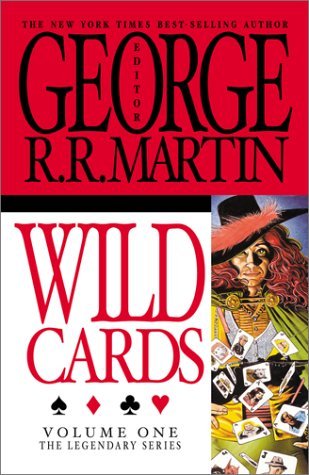
During the recent holiday break, I was looking for something light to read, and picked up the first volume of Wild Cards, that series I had shunned in my young, foolish days. If George RR Martin edited it, it must be good, I reasoned. I’ve been wanting to read Winds of Winter for some years now, but alas, it seems I’ll have to wait for that. I have read almost everything else George published, so I gave it a try.
How I wish I could go back 30+ years and tell sixteen year old me to read Wild Cards. I was the perfect demographic for it back then. I guess I still am. What a fun, crazy ride I had with these stories. I didn’t love all of them, but there were enough good ones to keep me interested, and the ones I didn’t like as much still had some cool elements.
Wild Cards, for those of you unfamiliar with this now-32-volume series, is a shared world alternate universe filled with superheroes, in which, at the end of World War II, an alien virus outbreak turns a large segment of humanity into mutants. It kills some of them outright, horribly disfigures others (known as Jokers) and turns some into superhumans (aces). It’s a funny, neat idea, full of noirish and comic elements, enough to keep an adult comic book reader happy during these long winter nights. I particularly enjoyed Roger Zelazny’s entry, as well as Martin’s. I don’t want to spoil the stories, they are too fun. If you enjoy comic books, but want something a little darker and more adult themed, give these books a try.
I’d never read something like this collection before. I loved the idea of a shared world in which lots of writers try their hand in storytelling in the same setting. I also really enjoyed the way these comics were written with adults in mind. I’d never seen this before in fiction, except perhaps when I read the novelization of the 1989 Batman movie as a teen. These stories reminded me of Frank Miller’s work with Batman, and Alan Moore’s many legendary tales of Swamp Thing, Watchmen, and others. I don’t regularly read comic books these days, but this first volume in the Wild Cards series made me want to revisit my favorites, and maybe read some more in the Wild Cards series.
The Wikipedia entry for this series says that Martin and his friends started the series after playing a GURPS style RPG based on superheroes, which makes perfect sense. The detailed backstories in each tale in this volume are a perfect fit with an RPG campaign of this style. Probably most people who have played in a campaign thought of turning it into a book (what a great idea!), but leave it to uncle George to actually pull it off. I was also reminded of the wonderful Dragonlance books, which were similarly based on a D and D campaign. I may also have to try Thieves World, which is a series I never read, but which was also a shared world.
There are so many books, and never enough time for me to read all my favorites, but I’m glad I gave this series a try. Winter is the perfect time to stay inside and curl up with a book. You’ll have fun with Wild Cards, I think. I just hope Winds of Winter comes out soon.
If you have an interest in Tolkien, or more generally in fantastic fiction, consider joining us at the New York Tolkien Conference at Baruch College this June! The details are at the conference site below. It’s always a grand time, with interesting speakers and friendly people. It’s also a chance to present your work, if you’re so inclined. If you have any questions, comment here on this post and I’ll respond, or send me a message. Hope to see some of you in June!
For Hobbit Day, I had great fun chatting with Jackson Schelhaas about Tolkien themed games on his excellent Exploring Arda podcast. We chatted about tabletop games, rpgs, video games and plenty more–check it out, and happy Hobbit Day!
In our family travels this summer, I brought along some quick, portable games to play with my eight and ten year old. A couple of them were real hits with the kids that we will continue to play.
One Roll Quest plays just like it sounds. There’s a big clear die with 5 tiny colored die inside. You roll it, and that roll immediately determines whether you live or die, gain fame and fortune or experience points. The inner, colored dice determine some more specific consequences for your character–i.e. Everyone gains fame and fortune, except you–you die! It’s a very fast paced and funny game that my kids and I played numerous times. We also played One Roll Chronicles, which is a book with a brief story, in which you start out drinking in a tavern (like all good adventurers) and wind up, of course, looking for fame and glory. I’d rate this one 10 out of five stars for the number of laughs we had over it. It even includes some one off jokes like ‘One roll pizza,’ in which the die roll determines what pie you’ll order and which toppings. (we ended up with pepperoni and cheese, but my daughter cheated). 🙂
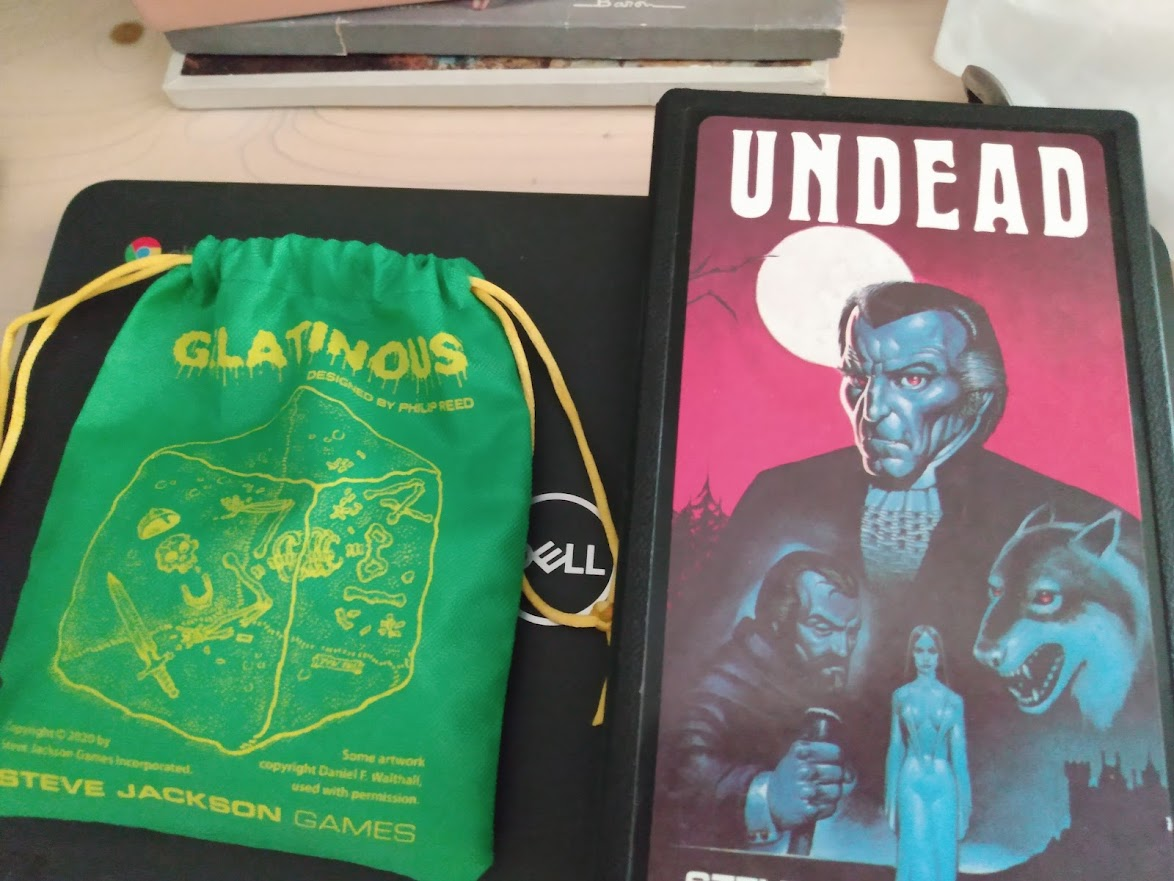
“Gelatinous” is another humorous dice game from Steve Jackson, in which each player gets 7 dice and tries to roll enough threes to create a gelatinous cube to win. Everyone can also lose and get eaten by a cube, which is a very amusing way to end this game. My kids found this one fun, as well.
We also played Catan dice, a shortened version of the game, in which all the dice have different resources on them, and you roll to create towns, cities, and roads. This was another fun and fast paced game, though it was less funny that the first two.
Finally, on a rainy day during our vacation, we played ‘Undead,’ a pocket box from Steve Jackson Games. This is a fun one, a bit more complicated than the others that will take an hour or two to complete. One player controls vampire hunters, the other is Dracula, and there is an option for a GM. It takes place in London in 1890, and is a hidden movement game that we found fun and thematically pleasing.
You can’t go wrong with any of these games. Steve Jackson Games has always done a great job with affordable, light games like these, and they keep creating great new ones all the time. I highly recommend supporting their kickstarters, or just checking out one of their many pocket or travel games if you’re looking for something to take with you on your vacation. They also make great diversions on game night with your friends.
Our trip was fun, as well. But games make everything better.
I’ve been busy preparing a manuscript for release next year; don’t want to give away too much about it, but it will appeal to those who like comedy and spooky stories. It’ll be a great seasonal read for Halloween, and I hope to have the release coincide with that, perhaps late summer.
Think The ‘Burbs meets The Haunting of Hill House. It’s a tale as old as time: Good, Evil, and Home Improvement.
I’ve also been working on a new book, about which I will say even less, since I’m still on draft #1. But it’s humor and fantasy, mixed with some more serious elements.
My hope is that these novels will build on the audience for my first book, The Osprey Man, and appeal to an even wider audience. I learned a lot through the release of my first book, and I hope the rollouts for these forthcoming books will be even better.
By the way, if you’re reading this, but haven’t read The Osprey Man, check out the pinned post on this blog for some reviews. Readers have loved this tale of two youths creating a comic book together, and memorializing their friend. It’s just $15 through my website–contact me for a signed copy. You can also purchase through the publisher for the same price, or get the ebook for just $5.99. It’s great for general readers, or for a young person in your life who loves to read. You can also ask your local library to purchase it; that is a great way to support writers.







 Christopher Tuthill