In the late 1990s, I got my first email account. Every so often, I’d receive an email, as everyone did, from a Nigerian prince who wanted to make me rich beyond my wildest dreams. All I needed to do was send him some money and bank routing numbers, and it would all fall into place. It seemed counterintuitive, I know, but maybe I should’ve trusted the prince. He seemed nice. Alas, I never took him up on his generous offer. Had I done that, I’d no doubt be a wealthy man now.
Recently I’ve received a spate of emails from enthusiastic readers who claim to absolutely love my work. The emails sound generated by an LLM, but no matter. They wish to make me rich: all I must do is fork over a few hundred dollars for publicity purposes, you see, and then my book sales will be off the charts and I’ll be raking in millions.
I was invited to a discord server, which I visited, out of curiosity. Who is running this scam, I wondered? I was greeted by a few people with handles like “Bookreader953” who told me how much they loved my work. When I asked what they loved about it, they couldn’t quite say. But they knew it was great, and I suppose that’s all that matters.
After this exchange, I logged onto my blog and saw that I had recently received a lot of hits from—you guessed it—Nigeria, as well as India and Pakistan. I’d never had anyone who’d visited my blog from those nations before, since my book was published by a small press without an international presence. But hey, I am always open to new readers.
I guess the Nigerian prince never went away. All these years, he’s been plotting new ways to make me rich.
Many years ago, when I was taking a graduate creative writing workshop, a well-known novelist instructor of mine commented that my story, set on a college campus, did not compare well with similar books by Philip Roth, Jane Smiley, Richard Russo, and other exemplars of the genre. She was correct. My story was in no way up to that lofty standard. But perhaps, since I was an earnest young student, she might have been kinder, instead of comparing me to some of the most famous writers of the day. This particular instructor had a reputation of being this way with everyone. In fact, most creative writing professors I encountered had this same reputation, causing me to stop taking such workshops after awhile. Even so, I took these sorts of criticisms personally. I should not have done that, but I think most young writers do.
I recently saw the obituary for this person and thought it was sad. She may have been a terrible teacher, but maybe she was a good person. Then I thought that her passing really didn’t rate up there with the deaths of the true, all-time literary greats, if that’s what we are to measure lives by.
I’ve been writing and submitting for decades now. I’ve had some modest success. To be blunt, in my experience, most of the writers and creative writing professors I’ve met have been ungenerous, competitive, petty, and small minded. If and when you meet a mentor or friend in the field, you should consider this very lucky indeed. It’s everyone for themselves.
The creative writing workshop at the MFA level was a particularly odd experience. The idea, I was told again and again, was to ‘respect the work,’ yet in my classes there was little respect or support given by instructors or other students, all of whom were usually desperate to impress the professor, a person who had met with some sort of literary success at some point in their career.
What no class or instructor can do is give you the drive to write better stories. This motivation has to come from within. And in my experience, creative writing programs do almost nothing to help you navigate getting an agent or making any commercial sales, mostly because the professors have no idea how to accomplish this.
So, you write stories because you want to do it–you enjoy it and it brings you satisfaction. For most of us, we may meet with some success, or maybe not, but that becomes almost beside the point. If you meet a generous writer who wants to help you along in writing endeavors, be thankful. To quote E.B. White at the end of Charlotte’s Web: “It is not often that someone comes along who is a true friend and a good writer. Charlotte was both.”
Somehow, it’s been a quarter century since The Fellowship of the Ring first hit multiplexes. That was half a lifetime ago for me. I recall waiting for the movies eagerly, feeling very concerned that they wouldn’t be any good, that they’d get Tolkien all wrong and mess up my favorite book.
I needn’t have worried. They were great films, much better than anyone had a right to expect, and I loved them from the start. Oh, there were plenty of complaints from lots of people about what Peter Jackson and his team got wrong about Tolkien, but such criticisms were in the minority, far outweighed by the millions who loved the movies. The artistic achievement here was really beyond what even the most ardent fan might have hoped. The music, the costumes, the cast, the locations, the attention to detail, the story all came together in a way that rarely happens. The filmmakers created something grand that has stood the test of time.
I am somewhat surprised that a bigger deal hasn’t been made of this anniversary, but never mind that. I saw that the extended version of Fellowship was in the theater and asked my thirteen-year-old son what he thought. He’s read the books and seen the movies and was enthusiastically in favor of seeing them on a big screen, an experience he’d never had. My ten-year-old daughter also wanted to see it; she fretted a little that she’d not yet read the books, but she soon got over this and happily came along.
My daughter’s response to the films was quite sweet, and for me, it put to rest once and for all the idea that these films were somehow no good. I know Christopher Tolkien, as well as some Tolkien superfans, hated the movies, but whenever I heard such criticisms over the years, I couldn’t have cared less, and after seeing my daughter’s adoring reaction to the movies, I think whether someone disliked these films is not something I could ever be persuaded to care about. She loved the epic scope of it, the characters and the settings and the battles. She loved Gimli and Gandalf and the hobbits and everything in between. Again: she is ten years old and now can’t wait to read The Lord of the Rings. It was her introduction to this vast, glorious epic. She knows about Tolkien, since she’s heard me talking about his books and has seen all the games and memorabilia I have, but these movies further sparked her imagination, just as Harry Potter and other books and movies have. There is nothing at all wrong with her uncritical love of these movies, nor with the way the rest of the audience have found happiness or escape or emotion in it. Any critic, no matter how well versed (or not) in Tolkien, is free to dislike the movies as much as they wish, but it’s quite clear they are missing the point and need to perhaps understand that we all come to these things differently.
For my part, after having lived with these interpretations of the books for so long, I was amazed at how well they held up. They still look better than anything else out there, which is a real testament to the craftsmanship, hard work, and love with which they were made. It’s of course condensed and simplified from the novel, but I don’t care about that at all. Filmmakers are required to do things to sell a movie; it’s a different medium that requires different things than a book does, especially when so much money is at stake. Given such constraints, it is a miracle these movies were as good as they were.
My children loved seeing The Fellowship of the Ring so much that we went back Saturday to see The Two Towers, and Sunday for The Return of the King. We are now reading the books together. I can’t think of a better way to spend a weekend. If you’ve never seen these movies on the big screen, I highly recommend it.
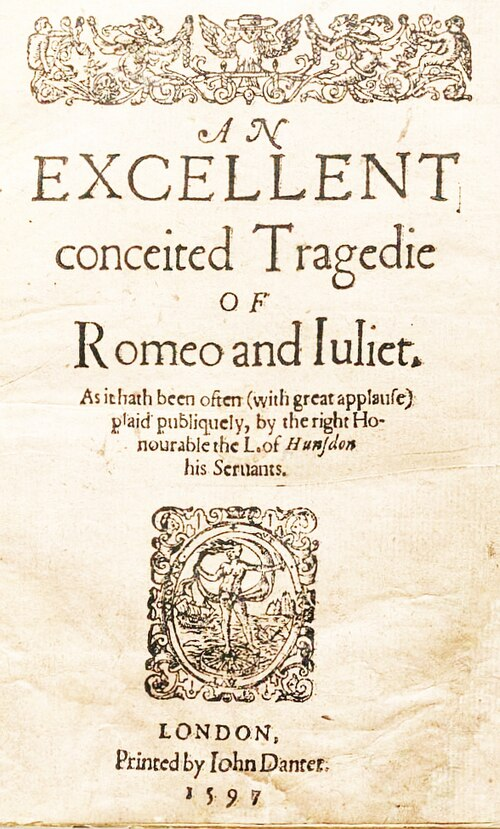
I just watched Franco Zeffirelli’s Romeo and Juliet with my thirteen year old son, and we both enjoyed it so much. I last viewed it when I was a Freshman in high school, nearly forty years ago. I recall being very moved by it, but doing my best to keep my enthusiasm for it hidden from my classmates. I still have many lines from it committed to memory thanks to my ninth grade English teacher.
In viewing it now: my goodness what an amazing production. The costumes, the sets, the locations, the cast are all superb. This has got to be one of the best film versions of a Shakespeare play ever made. One of the things I found quite arresting was the duel scene; the sweat and dirt and grit and athleticism of the cast made it feel startlingly real. The same is true of the passionate desperation with which Romeo and Juliet fall for each other. Completely reckless and irresponsible, as the young so often can be.
There’s the beauty of the language, of course–my son remarked with surprise at several points in the play, when he realized where some famous quote came from: “A plague on both your houses!” “A rose by any other name would smell as sweet.” “Parting is such sweet sorrow.” On and on it went. Only in reading and seeing these plays performed do you get a true appreciation of how magnificent they are, and how much of our culture owes a great debt to Shakespeare.
I found this tragedy terribly sad as a fourteen year old, so upsetting that I didn’t much want to watch it or read it again. I have read it a few times since then over the years, but now that I have children of my own, the story was far more wrenching to me. When you’re young I don’t think you really know just how inexperienced and innocent you are. The passage of time and a different perspective have made this play much greater in my eyes.
“It is absolutely necessary, for the peace and safety of mankind, that some of earth’s dark, dead corners and unplumbed depths be let alone; lest sleeping abnormalities wake to resurgent life, and blasphemously surviving nightmares squirm and splash out of their black lairs to newer and wider conquests.”
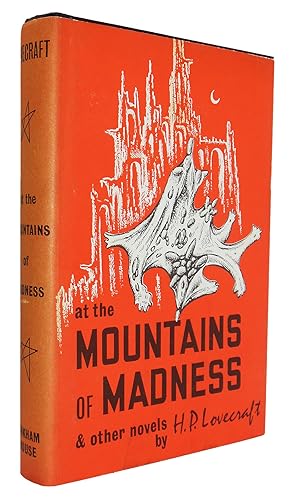
Lovecraft is another of those giants of horror who could fill this list all on his own, but I had to pick just one story, and this is one I really enjoy. A group of ill-fated scientists from Miskatonic University make the terrible mistake of going to Antarctica where they find evidence of a race of beings far older than anything known to humans before, beyond a range of mountains larger than any that have ever been recorded. They explore buildings left behind by this civilization, which have been devised through ‘non-Euclidean geometry,’ and find hieroglyphs that help them learn about Elder-things and shoggoths, monsters that populated the place and whom they have foolishly awakened. They escape, but not before losing several members of the party. The novella serves as a warning to others who might want to return to study the antarctic.
Lovecraft has of course been highly influential and much has been written about him and his work. “Who Goes There?”, John Campbell’s horror tale set in the arctic with a group of explorers, immediately comes to mind, as do the films based upon it, including the 1951 version “The Thing From Another World,” as well as John Carpenter’s excellent “The Thing” from 1982.
I think it’s best to learn about Lovecraft straight from the source. There are many entry points for his mythos, but I think this is a great place to start. You could also read the Call of Cthulhu, The Case of Charles Dexter Ward, Dagon, or any number of others. The Library of America has a wonderful collection of his tales that I highly recommend.
So there you have it. Thirty-one tales of gothic terror and wonder over the month of October. I think it’s a pretty good list of some of the gems I’ve read over the years; I chose them in no particular order as the month went by, but I stand by each of them as tales that are either unique, or influential, or just plain scary enough to keep you up at night. Perhaps I’ll choose another 31 next October. For now, I hope you’ve enjoyed perusing this list, and that you’ve been inspired to read something you haven’t before. If you have your own favorites, or if you like what you’ve read, be sure to let me know in the comments.
“Crawford felt drops of sweat run down his ribs under his shirt as he slowly forced the muscles of his neck to tilt his head up; he saw the upper slope, bristling with trees that obstructed a view of the road, and then he saw the outer branches of the tree he was braced against, and finally he gathered his tattered courage and looked straight up.
And it took all of his self-control not to recoil or scream, and he was distantly resentful that he couldn’t just die in this instant.”
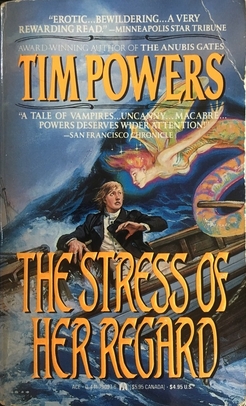
Tim Powers has had a long and illustrious career writing historical fantasy, and he ought to be a household name. You can read any of his books and be transported to a different world, but for this time of year I think Stress of Her Regard is a great place to begin. It’s a wonderful tale about Michael Crawford, who accidentally finds himself the object of a nephilim, a sort of succubi that he has unwittingly courted. His bride to be is found dead, and he’s the main suspect. He travels around Europe trying to rid himself of the creature, and meets up with Shelley, Byron, Keats, Dr. Polidori, and others, all of whom are trying to avoid these strange, dangerous creatures. It’s great fun to read and gets my highest recommendation-for those who love literary history and fantasy, it doesn’t get much better than this. I’d also recommend Powers’ other books, which are all terrific. I particularly enjoyed On Stranger Tides, a pirate story, and his Last Call series. He’s one of the best fantasy writers we have, and he’s still going, with his latest book due out this fall.
Today, I’m again doing some brief thoughts on a few horror stories I’ve enjoyed over the years and which deserved inclusion on this reader’s guide to Halloween. You could probably pick 31 stories by Poe to read this season, but here are two of my very favorites, as well as two highly influential gothic novels.
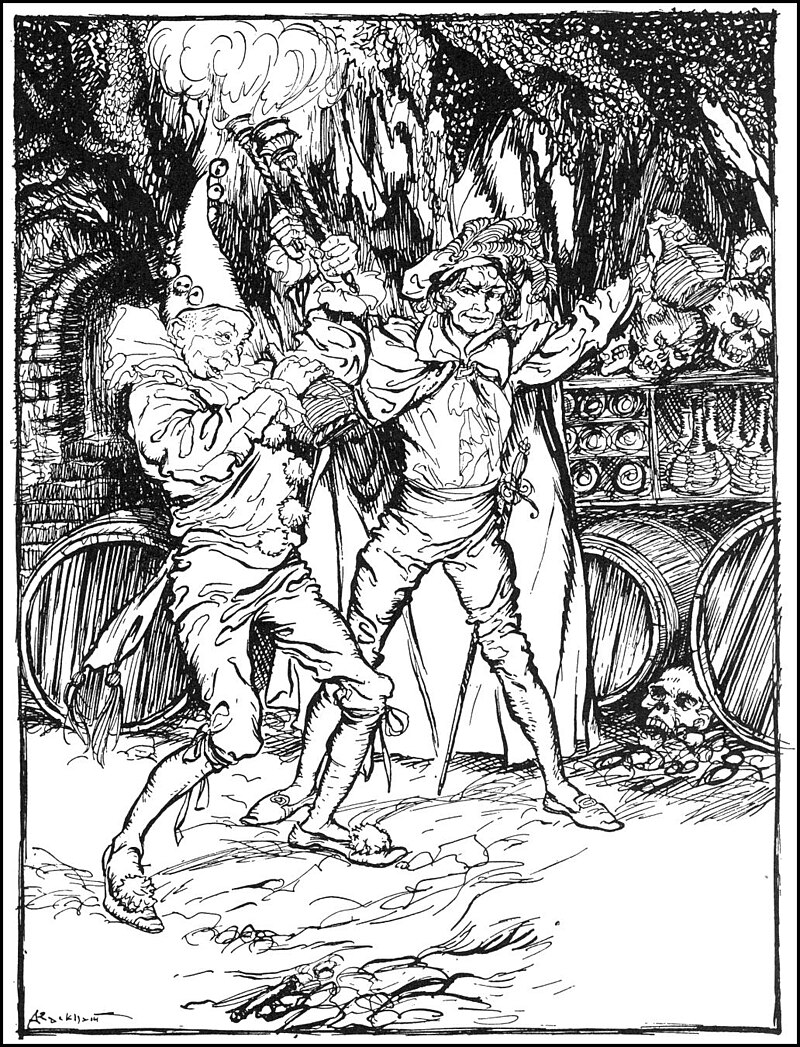
The Cask of Amontillado by Edgar Allan Poe (1846)
1935 Illustration by Arthur Rackham
“The thousand injuries of Fortunato I had borne as I best could, but when he ventured upon insult, I vowed revenge. You, who so well know the nature of my soul, will not suppose, however, that I gave utterance to a threat. At length I would be avenged; this was a point definitely settled—but the very definitiveness with which it was resolved, precluded the idea of risk. I must not only punish, but punish with impunity. A wrong is unredressed when retribution overtakes its redresser. It is equally unredressed when the avenger fails to make himself felt as such to him who has done the wrong.”
One of the most widely read and anthologized stories of Mr. Poe, who was perhaps the greatest writer of Gothic tales, the Cask of Amontillado has long been a favorite of mine, as I’m sure it has for many others. The first time I read it, I couldn’t quite believe what I was reading. This was supposed to be old, boring literature, and here we were amid one of the most horrible things my young brain had ever contemplated. For the first time, I realized that these old tales were perhaps better than whatever slasher stuff was at my local multiplex.
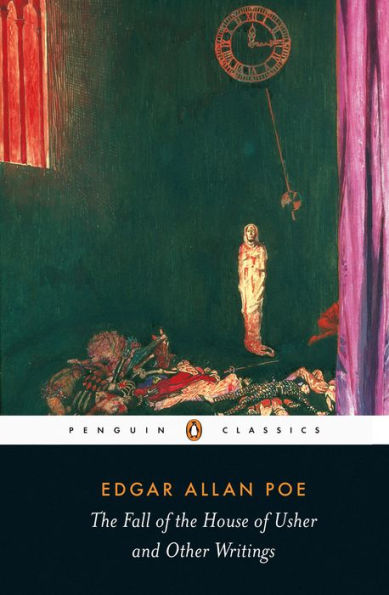
The Fall of the House of Usher by Edgar Allan Poe (1839)
“DURING the whole of a dull, dark, and soundless day in the autumn of the year, when the clouds hung oppressively low in the heavens, I had been passing alone, on horseback, through a singularly dreary tract of country; and at length found myself, as the shades of the evening drew on, within view of the melancholy House of Usher.”
This tale gave me the chills when I first read it as a lad, and it still has that effect now. It gets weirder and weirder as it progresses; a bizarre, supernatural and disturbing story of a reclusive man, his ghostlike sister, and their creepy ancestral home. One of the greatest horror tales ever written.
I also highly recommend a trip to the Poe Cottage in the Bronx, where he lived for a time. It’s such a neat piece of local history–a lot of places want to claim Poe as their own, but he did live in New York for the last few years of his life, with his ailing wife and her mother, and the small museum there is well worth a visit for New Yorkers.
Dracula by Bram Stoker (1897)
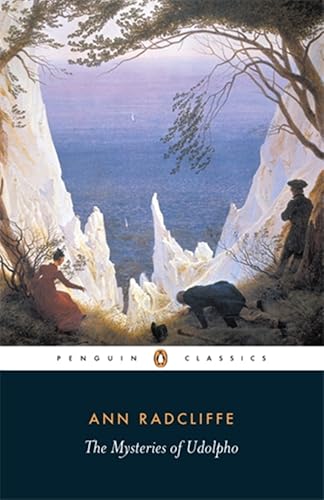
The Mysteries of Udolpho by Anne Radcliffe (1794)
“A well-informed mind is the best security against the contagion of folly and vice. The vacant mind is ever on the watch for relief, and ready to plunge into error, to escape from the languor of idleness. Store it with ideas, teach it the pleasure of thinking; and the temptations of the world without, will be counteracted by the gratifications derived from the world within.” ― The Mysteries of Udolpho by Anne Radcliffe
“How blessed are some people, whose lives have no fears, no dreads; to whom sleep is a blessing that comes nightly, and brings nothing but sweet dreams.” Dracula by Bram Stoker
No list of Halloween reading would be complete without Dracula, one of the first novels of its kind. An epistolary novel that moves much slower than most of the film versions with which people may be more familiar, it inspired many dozens of similar books. Stoker borrowed heavily from folklore to write this tale, which many critics have noted bore similarities to Anne Radcliffe’s The Mysteries of Udolpho, which is also well worth reading. Those interested in literary history and gothic tales should read both of these. Udolpho was published in 1794 and is considered by many to be the first gothic novel. The tragic story of a young woman’s misfortunes and strange occurrences at a castle where she lives, Udolpho has been praised by literary critics who have written on how this groundbreaking work influenced many later writers, including Poe, Stoker, Henry James, and Jane Austen, to name just a few.
I was quiet the past few days due to a campout, which was a bracing seasonal treat. It was a gorgeous weekend, the foliage was on full display, we heard owls at night as we enjoyed the fire, saw turkeys and deer and other small critters. It’s great to reconnect with nature when you’re able.
Today I’ll offer three short reviews of seasonal stories, to keep this October project going.
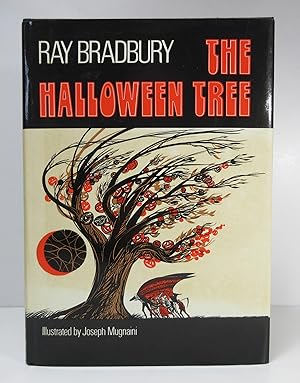
The Halloween Tree by Ray Bradbury (1972)
“Tom Skelton shivered. Anyone could see that the wind was a special wind this night, and the darkness took on a special feel because it was All Hallows’ Eve. Everything seemed cut from soft black velvet or gold or orange velvet. Smoke panted up out of a thousand chimneys like the plumes of funeral parades. From kitchen windows drifted two pumpkin smells: gourds being cut, pies being baked.”
This is a wonderful treat, a book that can be savored and read aloud to kids as the date draws near. I love doing that with my own children, and it holds up so well to repeated readings. It’s the story of a group of friends who go out trick or treating only to find that one of their pals, Pipkin, is extremely ill. To save him, they must accompany the mysterious Mr. Moundshroud on a journey across the world and many different cultures, learning about various rituals of death and the spirit world. This really is the perfect Halloween book for tweens and dreamers of all ages. In 1993, it was made into an animated special starring the great Leonard Nimoy as Moundshroud.
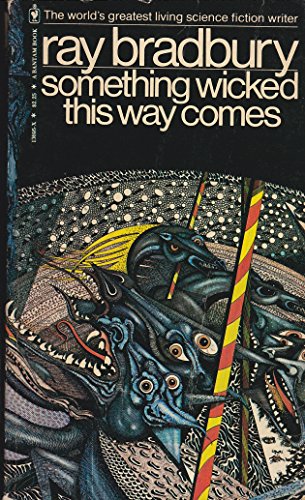
Something Wicked This Way Comes by Ray Bradbury (1962)
“And if it’s around October twentieth and everything smoky-smelling and the sky orange and ash gray at twilight, it seems Halloween will never come in a fall of broomsticks and a soft flap of bedsheets around corners.”
Bradbury was so prolific and wrote so many fine tales that it is hard to narrow it down to his best. In fact, you could have a list of 31 Bradbury stories for the season. But this one is a personal favorite of mine, bringing together all of Bradbury’s great themes in one place, in an extremely satisfying story of two friends, Jim Nightshade and Will Holloway, and the strange carnival that comes to Green Town one Halloween. I’ve written essays on this book and have read it a number of times, and to me it just gets better as the years go by. I love this story, and I think anyone who enjoys this season will love it, too. Probably my favorite book on this list, and that is saying something. Bradbury was heavily involved with the feature film from 1983, which is also a lot of fun.
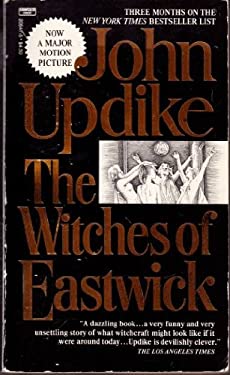
The Witches of Eastwick by John Updike (1984)
“Not until midlife did she truly believe that she had a right to exist, that the forces of nature had created her not as an afterthought and companion—a bent rib, as the infamous Malleus Maleficarum had it—but as the mainstay of the continuing Creation, as the daughter of a daughter and a woman whose daughters in turn would bear daughters.”
John Updike needs no introduction from me or anyone else. I was intrigued by the idea of this book about modern day witches living in Rhode Island, since I knew Updike from his Rabbit books, which I thoroughly enjoyed. I’ve yet to read a better saga about an American everyman in crisis, and find Updike’s prose to be really wonderful. This book is a total departure from that sort of novel, though his poetic command of language makes the book a joy to read. Told from the witches’ point of view, this is a fun, feminist update to these kinds of legends. If you are looking for a great literary read, this book’s for you. It was made into a successful film in 1987, with an all-star cast, directed by George Miller. Updike wrote a sequel in 2008 called The Widows of Eastwick.
In the grand tradition of Victorian Christmas ghost stories, Amelia Edward’s The Phantom Coach first appeared in The December, 1864 issue of Charles Dickens’ literary journal, All the Year Round. Amazingly, the preceding link is to that full issue (the cover image is below), which I intend to read. Much of the run of this journal is freely available online, thanks to the Hathi Trust, the Internet Archive, and other sources.
The narrator of this tale of the damned is a man named Murray who is traveling across the Scottish moors when a snowstorm hits; afraid he won’t make it back home, he hails a passing stranger and asks for shelter. The man, Jacob, is the servant at a nearby house, but warns Murray that his master will not want him to stay. Jacob reluctantly allows Murray to follow him back to the residence.
The master of the house is at first irritated by Murray’s presence and tells him he has lived in this secluded place for twenty-three years, with no visitors at all for the past four. But the man is eager for news of the outside world—they have a fireside chat during which the old man tells him:
“The world grows hourly more and more sceptical of all that lies beyond its own narrow radius; and our men of science foster the fatal tendency. They condemn as fable all that resists experiment. They reject as false all that cannot be brought to the test of the laboratory or the dissecting-room. Against what superstition have they waged so long and obstinate a war, as against the belief in apparitions? And yet what superstition has maintained its hold upon the minds of men so long and so firmly?”
The man further says that he himself believed in the supernatural, and as a man of science, his career was ruined for it. He speaks with eloquence about various philosophers and scientists, leaving Murray in awe at the breadth of his knowledge; Murray says that he “wandered from topic to topic, from speculation to speculation, like an inspired dreamer.”
When the storm ends, Murray wishes to make his way home, though it is late at night—it’s decided he’ll join the mail coach, which will be passing through a few miles away. Jacob leads him to the stop, and now the story gets macabre. He mentions that a mail coach had crashed over an embankment, killing all aboard, nine years before.
It’s at times like this in most ghost stories when I, and most readers, want to tell the protagonist to find some other way home. Of course, Murray doesn’t. He gets on the coach when it arrives, at first relieved to be out of the cold, until he realizes the awful truth of the matter.
This is a very fun, atmospheric horror tale, and I can see why it has been anthologized so often. You are set up beautifully by the desolate moor, the irritable servant, finally the old man telling tales of the supernatural in a parlor teeming with hundreds of books and scholarly apparatus of every conceivable kind. Incidentally, I want a room just like this, complete with a fireplace and ghost stories and a glass of sherry. If anyone out there reading this wants to help me achieve this, I’d be grateful.
I came across my copy of this tale in a Dover thrift edition of ghost stories. I’ve loved those Dover editions since I was a young man—for just a few dollars you get some first-rate stories. My college instructors used to kindly assign these editions to their poor students, and I’ve kept with the tradition.
Amelia Edwards was a woman of many talents: in addition to writing many novels and short stories, she was also a journalist, illustrator, and Egyptologist. Like most of the authors on this list, you can learn more about her life in her Dictionary of Literary Biography entry, though you will need a login to access it.
“Ma’ame Pelagie,” they called her, though she was unmarried, as was her sister Pauline, a child in Ma’ame Pelagie’s eyes; a child of thirty-five.
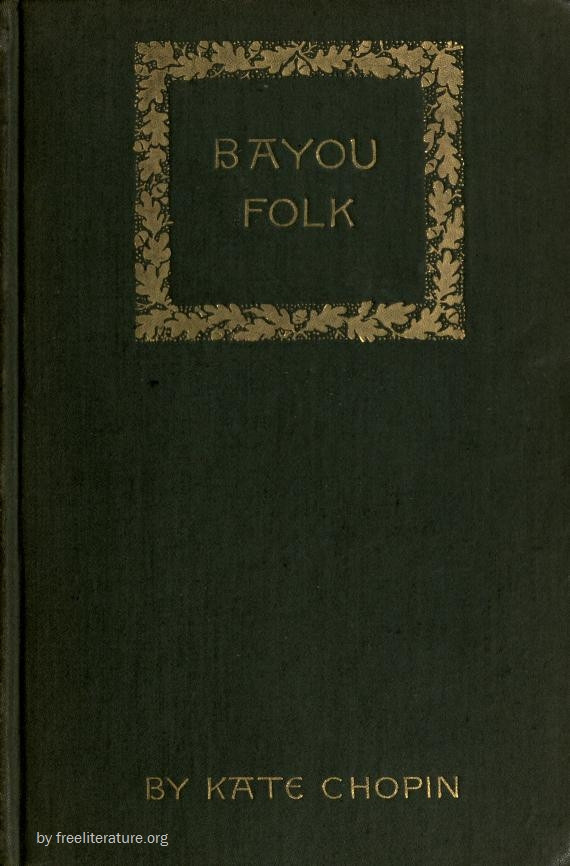
Kate Chopin is well known for her novel The Awakening, but she was also a prolific writer of short stories, including this gem, Ma’ame Pelagie. Pelagie and her sister live in Louisiana in a three-room cabin beside their formerly grand ancestral home. For decades, we learn, they have lived this way, hoping to save enough to restore the mansion ‘shaped like the Pantheon,’ but now fallen into ruin. The sisters are visited by a niece who comes to live with them—her father, their brother, will soon be joining her. But the young girl cannot stand the sadness of the place and wants to leave.
“It was not the first time she had stolen away to the ruin at night-time, when the whole plantation slept; but she never before had been there with a heart so nearly broken. She was going there for the last time to dream her dreams; to see the visions that hitherto had crowded her days and nights, and to bid farewell to them.” Pelagie recalls these past grand days in a dreamlike reverie, the grand parties held there, and her lover, who went off to fight in ‘le guerre,’ as did so many others. And now we have the central problem on which this tale rests—the war, which eventually comes to the plantation. It is the tragedy of her life, to see her dreams ruined along with the grand house.
A year later, her brother Leandre builds a new, beautiful brick house where the old one stood. The house bustles with activity and music and the laughter of young people, the friends of ‘La Petite,’ her niece. However, Pelagie’s “soul had stayed in the shadow of the ruin.”
This is a great short gothic tale that works very well not only in the tragedy of these two women who live in the ruins of a once grand life, but also in the shadow of the civil war. The stain of slavery and the shadow of war haunts everything in this story of the south. The writing is quite elegant, as is much of the best writing of this period, and does much to transport us to these bygone days.

 Christopher Tuthill