Something Wicked This Way Comes…

I was quiet the past few days due to a campout, which was a bracing seasonal treat. It was a gorgeous weekend, the foliage was on full display, we heard owls at night as we enjoyed the fire, saw turkeys and deer and other small critters. It’s great to reconnect with nature when you’re able.

Today I’ll offer three short reviews of seasonal stories, to keep this October project going.

The Halloween Tree by Ray Bradbury (1972)
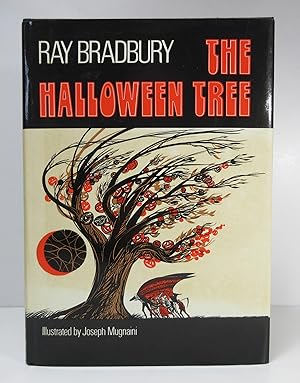
“Tom Skelton shivered. Anyone could see that the wind was a special wind this night, and the darkness took on a special feel because it was All Hallows’ Eve. Everything seemed cut from soft black velvet or gold or orange velvet. Smoke panted up out of a thousand chimneys like the plumes of funeral parades. From kitchen windows drifted two pumpkin smells: gourds being cut, pies being baked.”

This is a wonderful treat, a book that can be savored and read aloud to kids as the date draws near. I love doing that with my own children, and it holds up so well to repeated readings. It’s the story of a group of friends who go out trick or treating only to find that one of their pals, Pipkin, is extremely ill. To save him, they must accompany the mysterious Mr. Moundshroud on a journey across the world and many different cultures, learning about various rituals of death and the spirit world. This really is the perfect Halloween book for tweens and dreamers of all ages. In 1993, it was made into an animated special starring the great Leonard Nimoy as Moundshroud.

Something Wicked This Way Comes by Ray Bradbury (1962)
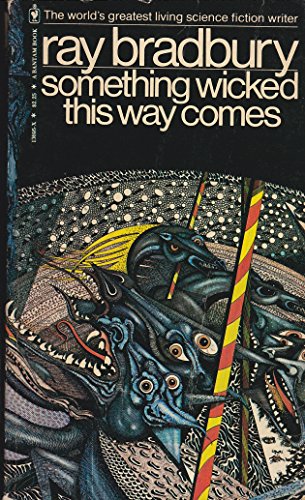
“And if it’s around October twentieth and everything smoky-smelling and the sky orange and ash gray at twilight, it seems Halloween will never come in a fall of broomsticks and a soft flap of bedsheets around corners.”

Bradbury was so prolific and wrote so many fine tales that it is hard to narrow it down to his best. In fact, you could have a list of 31 Bradbury stories for the season. But this one is a personal favorite of mine, bringing together all of Bradbury’s great themes in one place, in an extremely satisfying story of two friends, Jim Nightshade and Will Holloway, and the strange carnival that comes to Green Town one Halloween. I’ve written essays on this book and have read it a number of times, and to me it just gets better as the years go by. I love this story, and I think anyone who enjoys this season will love it, too. Probably my favorite book on this list, and that is saying something. Bradbury was heavily involved with the feature film from 1983, which is also a lot of fun.

The Witches of Eastwick by John Updike (1984)
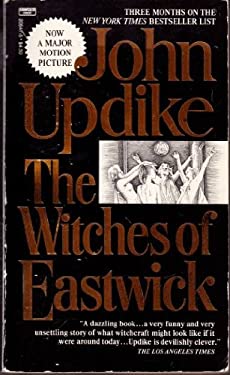
“Not until midlife did she truly believe that she had a right to exist, that the forces of nature had created her not as an afterthought and companion—a bent rib, as the infamous Malleus Maleficarum had it—but as the mainstay of the continuing Creation, as the daughter of a daughter and a woman whose daughters in turn would bear daughters.”

John Updike needs no introduction from me or anyone else. I was intrigued by the idea of this book about modern day witches living in Rhode Island, since I knew Updike from his Rabbit books, which I thoroughly enjoyed. I’ve yet to read a better saga about an American everyman in crisis, and find Updike’s prose to be really wonderful. This book is a total departure from that sort of novel, though his poetic command of language makes the book a joy to read. Told from the witches’ point of view, this is a fun, feminist update to these kinds of legends. If you are looking for a great literary read, this book’s for you. It was made into a successful film in 1987, with an all-star cast, directed by George Miller. Updike wrote a sequel in 2008 called The Widows of Eastwick.

A Good Man is Hard to Find by Flannery O’Connor (1953)

“You can do one thing or you can do another, kill a man or take a tire off his car, because sooner or later you’re going to forget what it was you done and just be punished for it.”

One of the most anthologized and well-regarded short stories of the last century, A Good Man is Hard to Find, like some of the other stories on this list, deserves its towering reputation. O’Connor was a master of the short story, and this tale is one of the most shocking gothic stories I’ve ever read. I can still recall the palpable dread I felt as I first read it many years ago in a college class on the short story.

This tale involves a family that is out for a drive when unspeakable violence occurs, but there is plenty of foreshadowing, with the grandmother mentioning the ‘loss of values’ in the modern world; she also points out a graveyard filled with slaves from a bygone era. She remembers that there was a plantation in the area, and convinces her son, Bailey, to take a turn onto a deserted road, where the family has a sudden accident, flipping their car, and are met by the “Misfit,” a terrifying killer.

This tale is suffused with the south, and with notions of God and the possibilities of salvation and grace. The grandmother attempts to placate the Misfit, who clearly means the family harm, saying he is one of her ‘babies,’ and touches his shoulder. But there’s no salvation here for anyone, it seems.

I think it is best to read something like this, with such a well-known reputation, with an open mind. It’s better not to seek out or think too much about any of the criticism of it at first, just read it. It will probably leave you feeling desolate, as some of the very best horror stories tend to do.

Flannery O’Connor wrote two novels and thirty-one short stories and is considered one of the great American writers of the 20th century. Sadly, she was ill with Lupus and died at just 39. Who knows what she may have achieved had she lived longer; as it is, she left behind an amazing legacy.

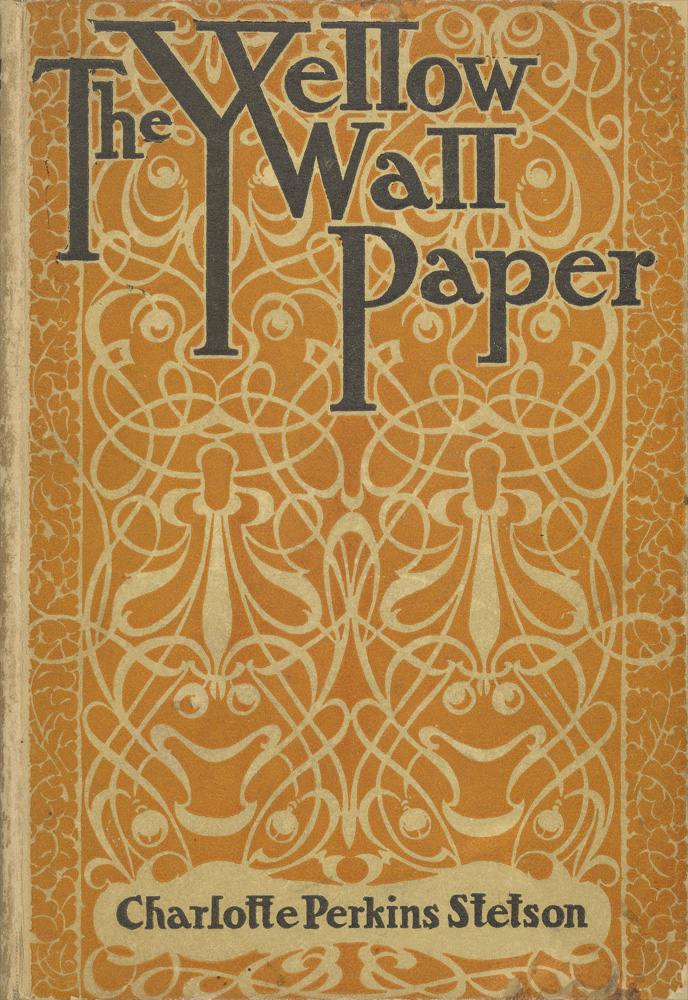
The Yellow Wallpaper by Charlotte Perkins Gilman (1892)

“I really have discovered something at last. Through watching so much at night, when it changes so, I have finally found out. The front pattern does move – and no wonder! The woman behind shakes it! Sometimes I think there are a great many women behind, and sometimes only one, and she crawls around fast, and her crawling shakes it all over. Then in the very bright spots she keeps still, and in the very shady spots she just takes hold of the bars and shakes them hard. And she is all the time trying to climb through. But nobody could climb through that pattern – it strangles so; I think that is why it has so many heads.”

This story has been analyzed in myriad ways and is considered an important work of feminist literature. It’s a chronicle of a mental breakdown; a woman is suffering from ‘a slight hysterical tendency’ according to her physician husband, following the birth of her child. She spends the story confined to an upstairs room at a country estate and comes to believe that a woman is trapped behind the yellow wallpaper in the room.

On reading the story, you end up infuriated by the woman’s husband, and sympathetic toward her plight, but the way Gilman describes her experience through a series of journal entries also makes the story quite memorable. Her slow descent into madness is told with convincing, disturbing detail.

Gilman suffered from postpartum depression, so this story has been read with this in mind. At the time, a ‘rest cure’ was administered for treatment, which only made things worse for her, so she stopped the treatment and resumed writing, later saying that she feared a mental breakdown had she continued to follow the doctor’s cure. Gilman instead followed the advice of a female doctor, Mary Putnam Jacobi, who argued against such rest. Much has been written about Gilman and her pioneering story, for those interested, your local library will have plenty of information about her life.

The Haunting of Hill House, by Shirley Jackson (1959)

“It was a house without kindness, never meant to be lived in, not a fit place for people or for love or for hope. Exorcism cannot alter the countenance of a house; Hill House would stay as it was until it was destroyed.”

I’ve been writing about a number of unnerving books this month, but The Haunting of Hill House might be the finest of them all. You can read it as a haunted house story, which it is, but I can only think of a handful of books that truly scared me, made me feel so unsettled that I couldn’t stop thinking about the book, or that kept me up at night. Shirley Jackson was such a fine writer that I can’t recommend this book, or her other works, highly enough. The trials of Eleanor Vance in Hill House are some of the most upsetting things any horror character has ever had to endure, and I found myself terrified for her as I read this book. Without giving anything away, there is a scene involving the possible presence of a supernatural entity that is one of the most the most disturbing passages I have ever read.

What makes The Haunting of Hill House work so well is that Jackson doesn’t rely on cheap scares or obvious explanations; you go along with the story without thinking. You sympathize with Eleanor and the other characters and before you know it you are tangled up in their fears and disappointments and terrors. It’s scary because Jackson makes it all seem so real and believable; usually, when reading in this genre, it is easy to set aside your feelings and realize it’s just a ghost story. Jackson makes that much harder by making her characters seem so human, by telling her tale so well.

If you only have time to read one book this season, it should be this one. There are lots of great horror writers, but Jackson was just a great writer, period, and I don’t think anyone has ever surpassed her achievement in this genre. Her short stories are also essential reading for any student of fiction.  

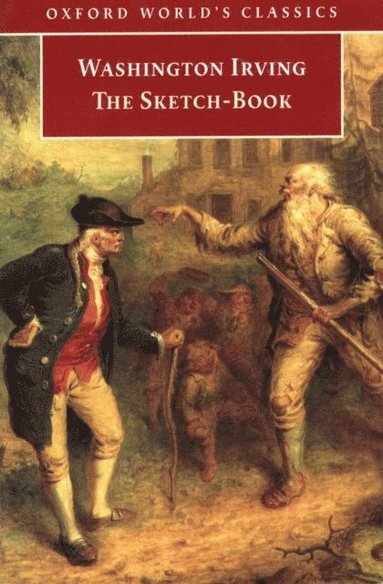
The Sketch-book of Geoffrey Crayon, Gent., by Washington Irving (1819)

The centerpieces of this are, of course, the Legend of Sleepy Hollow and Rip Van Winkle, both of which stand the test of time as well as any seasonal tales I’ve read. I go back to these every year and have read them aloud to my children more than once. Disney’s animated Ichabod and Mr. Toad does a pretty respectable job of bringing Sleepy Hollow to life; in my view it’s probably the best adaptation of the tale, complete with Bing Crosby crooning and narrating his way through.

The entire Sketch-book is quite worth reading; it includes some great Christmas tales, as well, and some ghost stories, essays, and tales of a trip to England, all told by the good humored, erudite narrator, Mr. Diedrich Knickerbocker.

Rip Van Winkle is such an amusing story, and I am particularly struck by how poor hen-pecked Rip doesn’t miss a beat, or his wife, when returning from his two decadeslumber in the Kaatskills, though he is surprised to learn there has been a revolution. Diedrich states humorously: “Rip, in fact, was no politician; the changes of states and empires made but little impression on him; but there was one species of despotism under which he had long groaned, and that was–petticoat government. Happily, that was at an end; he had got his neck out of the yoke of matrimony, and could go in and out whenever he pleased, without dreading the tyranny of Dame Van Winkle.” He happily returns to a life of idleness and lives with his now grown daughter.

Sleepy Hollow has become such a part of American culture that it would feel wrong to not read it every fall, at some point. Several years ago, I made a pilgrimage to Sunnyside, Irving’s home near the town, which I highly recommend. Irving was one of America’s first professional authors, and well-known in his lifetime as such. It is fun to visit his estate in the fall. There are some great guided tours and events each weekend for children. The nearby cemetery, where he was laid to rest, is also worth a visit.

What strikes me most about reading this tale is the humor of it, and the tongue in cheek manner Irving uses. It’s a lively tale that feels modern; to me its no wonder Irving found such a ready audience for his writing. I highly recommend reading it and the rest of the Sketch-book this fall.