Time Enough at Last

One of my fondest, most primal memories of childhood is being up late in the summertime, reading a good book, while everyone else in our busy house was asleep. There were so many novels I enjoyed back then, and I read indiscriminately, for the pure joy of being lost in a fantastic new world.

There were many great series for young people back in the early 1980s, and I read many of them. The Hardy Boys, The Black Stallion, Matt Christopher’s sports stories, Encyclopedia Brown the boy detective, Danny Dunn, a boy wonder who created all kinds of machines with his pals, and on and on. There were some great works of literature too, like Madeline L’Engle’s A Wind in the Door, Mark Twain’s Tom Sawyer Detective, Ray Bradbury and The Martian Chronicles, and others. Today I can see how much more sophisticated these last three are, but as a young boy I didn’t care about their literary merit, I just wanted to read.

To read as a nine year old meant getting lost in another world that seemed so real I became irritated when my mundane surroundings intruded. It meant an escape into magic and mystery and wonder, into past eras that seemed completely real, as if I were suddenly in a time machine, transported to colonial era America, or King Arthur’s Court. Perhaps I’d go to a distant strange planet, or an isolated pacific island, or any other a million different times and places. There was nothing so wonderful in the world as being lost in those pages, many millions of miles away from wherever I was and whatever was happening around me in my little corner of the world.

I’m now fifty, and very occasionally this magnificent feeling will come over me again when I’m reading a truly great, original book. It seems to happen less and less these days; perhaps that is a failure of imagination on my part, or perhaps it just happens with age. After you’ve read so many books, they cannot all have that glorious impact, and many of them will seem merely adequate. I’ll say that in the past few months, Ron Chernow’s Hamilton was a biography that transported me to the early days of America in a way that was quite breathtaking; I don’t normally read a lot of history, but he is such a fine writer, telling the story of the founder in such an empathetic way, that I was swept up in the drama of it and couldn’t wait to read more.

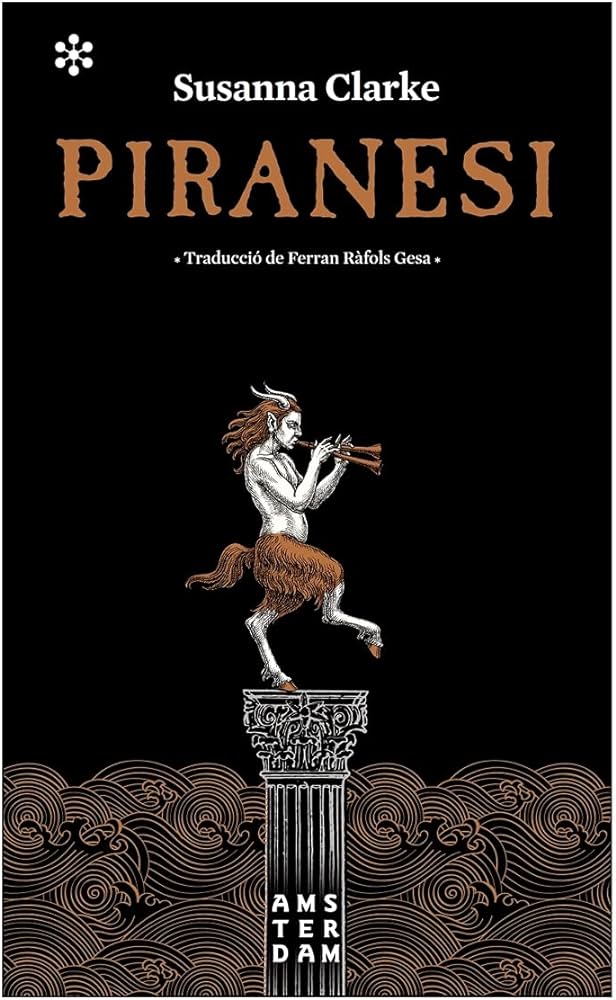
Novels are a different matter, and as I’ve read so many of them, it has become harder for me to find ones I truly love, that affect my outlook so dramatically, that can transport me in that same primal way. Susanna Clarke’s writing does that for me, and I recall a well-spent winter evening not long ago, when I was up through the night, finding revelations on every page of her incredible book, Piranesi, which I finished in one sitting. I can’t recommend her work highly enough, and I was ecstatic to learn she has a new novel arriving this fall.
In this hyper-connected age, it is increasingly difficult to shut out the outside world and enter the fortress of mystery and imagination that is a great reading experience. I read whenever I can, as much as I can, but with the demands of a job and a family it’s not always easy. I’ll stay up late at night when I’m not too tired, or read when I have downtime on the train or before the rest of my family is up. I guard my reading time jealously, just like when I was a boy, and get frustrated sometimes when there isn’t enough time or quiet for me to read every novel or work of history or criticism on my shelves. My collection is wide and varied–I have books on a great many topics, because I am never sure which one I will need at any given moment. This is one of the great things about being a librarian, as well: if I don’t have it on my shelves at home, I can almost certainly find what I need in the library.

I enjoy movies, though I’m not exactly a movie critic. I have found that films, television and video games don’t transport me the way a good book does. Maybe some people find the same elation and deep mystery watching things or playing video games, but it doesn’t happen for me. I can enjoy such media, but it won’t impact me in the same way, and while I don’t know for certain, I suspect that the effort required of a careful, thoughtful reader will always make the reward of reading that much greater. To me, it’s a bit like the difference between hiking to the top of a mountain and taking in the view, as opposed to having someone drive you up there on a paved road. (The same can be said for writing vs. AI-assisted writing, but that is the topic for some other post.)

One of the essential things about reading is the way it can change your perceptions, your outlook, your knowledge of the world, and perhaps even knowledge of yourself. The greatest works help us do this and will enrich your life in ways like nothing else. For me, reading a great book is one of the last bulwarks I have in guarding my mind from a ceaseless stream of meaningless junk that increasingly defines modern life.

The other night my young daughter, who is brilliant and perfect, happened upon the Twilight Zone episode, “Time Enough at Last,” with the great Burgess Meredith. I hesitated to show it to her, but she was eager to see it and I relented. At the end, she was in tears for Henry Bemis, the tortured man who lives through an atomic war only to be left utterly alone, despondent, bereft of all hope, sans spectacles. “I hate this,” she said. “He was finally able to read and now he can’t.” I felt like an awful father for having shown her the episode. We talked a bit about the message of the show but she was inconsolable, much like I was decades ago when I first saw it.

In these waning days of summer, I admit I feel some pressure to read what I haven’t from my list so far, but my task shall be Herculean. I have a copy of Thomas Pynchon’s Against the Day, which I have never read and will likely not get to before the end of August. I have works by Saul Bellow, Robert Caro, Don DeLillo, Tim Powers, Toni Morrison, Barbara Tuchman, Octavia Butler, and too many others to list sitting on my shelves, waiting to be opened, calling to me, but time is running out. I’ll get to a few of them, and the rest will likely need to wait for winter break, or next summer, when I will have time enough at last.
Facebook is Terrible

Since 2006 or 2007, I’ve been on facebook, for better or worse. I was happy to reconnect with old friends, and make a few new ones. I built up an author page there, and helped run a conference page that had over 700 followers.

Last week, my account was compromised. Facebook locked the account, and has now suspended it. I have no way to get back into this account I’d built over the past 15 years. All the work that went into building up those pages is gone. Despite repeated attempts to contact the facebook help center, no one responds to my messages.

I know this is my own fault for dealing with facebook in the first place, but it was a convenient and easy way to connect with readers and those interested in the conference. However, facebook has deemed me in violation of their terms of service because of this hack, and that’s that. It feels a bit like Judge Dredd, quite draconian.

I guess I’ve learned not to try and build something like that again on facebook. I’ve created a new account to try and connect with friends and family again, but the platform is way too unreliable to use for a small business or educational site. Better to just stick to wordpress, where I at least have control over things.

Facebook’s many issues have been well known for years, yet many of us continue to use it out of convenience. However, with all the problems for users over the past months, they may be charting a path to irrelevance. Already, no young people I know use it. Give it a few more years and it’ll be like myspace or google+.

A shame all that work has disappeared into the ether, but so it goes.

Chapter 1, Part 2

In the opening of my new story, we met the denizens of Dogwood Street, a suburban neighborhood, including:

Billy Joe, a drunken reprobate

Simon, a professor

Rex, a strange newcomer who has moved into an abandoned house

Rex has arrived in the midst of Billy Joe’s noisy, drunken stupor, and put an end to it. In the next part of the story, the conflict is ramped up…read on!

If you missed part one, here is the link.

Horizon

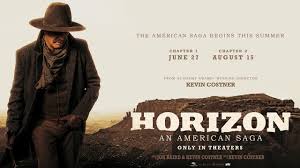
I found the first installment of Horizon to be an excellent epic Western, the kind of film that is rarely in theaters anymore. The movie is ambitious and sprawling, a tale that spans years and the lives of multiple characters in the settling of the western frontier. It’s not a sanitized version of that era, though there is plenty of drama. The cast is excellent, and the story is gripping. It’s long, and though it doesn’t move at a breakneck pace, it kept me interested the whole way through and I’m eager to see what comes next.

This isn’t exactly a groundbreaking movie, but that is ok. Westerns have a long and rich history in film and literature. The best of them, like Lonesome Dove, tell a story about America and about human nature that keeps us engaged and entertained. I felt that Horizon is up there with some of the better genre offerings. At the heart of this tale is Kevin Costner’s character, Hayes Ellison, who is the kind of stock figure we’ve seen in many Westerns—the tacit, reluctant hero. I was reminded of William Munny from Unforgiven, though Ellison is less brutal. He must protect a woman and young child from a band of outlaws seeking vengeance, and he does so almost grudgingly at first, like all good heroes, but once called into service he swings into action with the kind of cool performance moviegoers will appreciate.

Other plotlines include a group of settlers in over their heads, the target of a band of Apaches unhappy with the incursion on their territory. In one particularly grim scene, a band of outlaws looking to make easy money target a group of native women and children for their scalps; it’s easy money, at $100 a head. This is not the kind of thing you might have seen in a Western of an earlier era. It was a grisly sequence and underscores that there are really no heroes in this kind of story, though there is plenty of tension and conflict.

The film left me eager to see the remaining installments. I loved the scale of it—the film looks gorgeous, shot in Utah with stunning effect. A lot of care went into all of this—the story, yes, but also the sets and costumes, the languages of the native peoples—everything.

I’ve read some things about the poor box office performance of this film, which is a shame, because it’s a great movie. Perhaps it’s an old-fashioned kind of tale, from a bygone era of cinema. If so, that’s a sad development. There’s little enough at the multiplex for people to see that isn’t animated, or part of a comic book multiverse. Nothing wrong with those kinds of movies; my children love them. But it felt good to see a movie made for adults, which spoke a language of film that I haven’t seen for a while. If the days of these kinds of films have passed, because they require too much attention, that is a shame. Perhaps the audience for such films has shrunk so much that they are no longer profitable, the way it is becoming harder to sell good novels or good theater. If so, we will all be poorer for it. Even so, the measure of a work of art has little to do with how marketable it is. There are examples of this all through the history of art and literature. So, I’d urge you to go see Horizon—it’s a movie that in my opinion is worth the time and attention.

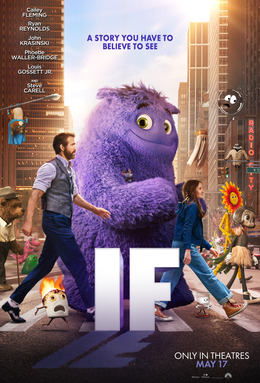
IF

I took my nine-year-old daughter to see IF, the recent movie with Ryan Reynolds, John Krasinski, and young Cailey Fleming as the lead. It’s a sweet story about imagination and growing up. I hadn’t read any reviews and knew nothing about it before going, but I knew what we were in for when there were scenes of some of the characters watching the Jimmy Stewart classic “Harvey,” about a man and his imaginary friend, a giant rabbit.

The film deftly handles some serious subjects, including the death of a parent and the serious illness of another. Normally, I would be worried that such a tale might be guilty of mawkishness, of overloading us with too much pathos, but this movie had such good humor and genial performances that it never veers into this kind of cheap emotion.

At the heart of this story is the idea that as we age, we leave behind childish things in our eagerness to become adults. The danger is that you can completely lose your imagination, your sense of wonder, all the things that make life worth living in the first place. The main character, twelve-year-old Bea, is starting to close herself off from a world of hurt after losing her mother; her father, played by Krasinski, becomes ill with a heart condition, leaving the young girl in a scary and vulnerable situation. She stays with her kindly grandmother, played by Fiona Shaw in another fine performance, and immediately lets grandma know she’s no longer a kid, and can deal with adult problems.

While worrying about her dad, Bea meets one of her grandmother’s neighbors, an eccentric man named Cal (Ryan Reynolds), who, she learns, lives with a variety of IFs, or ‘imaginary friends’ who have been abandoned by children who grew up and grew out of them. There is a giant purple monster that is on the advertising for the film, voiced by Steve Carrell, as well as a ballerina, a spy, a teddy bear, and a whole cast of whimsical characters in search of children to help. The problem is that adults, and even most children, cannot see these imaginary beings, no matter how hard the creatures try to get their attention.

This setup may sound a bit daft, but I found it a sweet story, and one that had some surprising depth. Every adult I know can use more of the things that the movie explores—fun, warmth, laughter, imagination, and everything else that children have in abundance and that most adults lose if they aren’t careful.

If the mark of a good YA story is that it keeps children engaged while also entertaining parents, IF does the job admirably. I would go as far as saying it was a moving story. My daughter loved it, and I thought it was great too, with excellent performances by all the cast, and enough comedy to lighten the tone from some more serious themes.

If you have a tween, be sure to take them to see this film. There are few movies like this, that tell an earnest tale with warmth and humor, and this is one that adults and kids can enjoy. Kudos to Krasinski, who also wrote and directed this film, it’s an excellent, heartfelt story.

Alexander Hamilton

There has been so much written on Hamilton that I can’t add a whole lot here, except to say that I would not delay on reading Ron Chernow’s masterful biography of the man. Just a brilliant book, combining voluminous research with engaging, lively writing. Hamilton’s life story lends itself to such an epic scope, and I can see why it has captivated so many. It’s not often someone rises from absolutely nothing to the highest levels of fame and power.

Whatever your thoughts on Hamilton, whatever you already know about him, I would give my highest recommendation to Chernow’s book. A few years back I read his Grant biography, which was a similar tour-de-force, and kept me so eager to read more, despite its massive size.

I’m looking for other summer things to read, and am eyeing Chernow’s Washington, which won the Pultizer in 2011. I may have to dive into that next. Such a fine writer, really doing a great public service by helping us better understand these early years of our country.

My summer reading list is large and always too ambitious. I have a few other big ones I might read, will have to see what strikes my fancy. But I was considering Pynchon’s Against the Day, which I’ve never read, as well as some other history books (I recently got Bruce Catton’s civil war trilogy) and a few fantasy novels. As always, there are so many great things to read, and so little time!

New Project

Here’s the start of something I’ve been working on for awhile. It was supposed to be out this fall, but my plans fell through, and I’ve been looking for a new publisher.

This one is a dark fantasy/comedy about a neighborhood gone bad. Think ‘The ‘Burbs’ meets Haunting of Hill House, with a touch of Something Wicked This Way Comes. I’ll be sharing chapters of it here in the coming weeks.

If you enjoyed what you read, please comment and let me know, and share it.

And Happy Solstice!

Happy Father’s Day

I’ve been thinking of my dad, a man who never made a fuss about father’s day, or about anything else. Born during the great depression, he grew up without having very much. He often told me stories of going to the movies for a nickel when he was growing up during World War II. His father would give him a dime on Saturday, and he’d have to decide whether to buy comic books or go to a movie. He had a bike at one point and rode it around Riverhead, but it was stolen one day, and his father could not afford to buy him a new one. That story stuck with me. He loved the bike and he wanted a new one, but his father, a carpenter and house painter, didn’t have enough money to buy him another.

As a boy he had various odd jobs, including one as a caddy. He made good money doing that, and had some hilarious tales of the caddyshack, as it was in the 1940s. He once won a huge pot in a craps game and was nearly attacked by an angry older caddy, but ran away and brought the dough back to his parents. He then stayed away from the golf course for a week, from fear of his vengeful nemesis.

After graduating high school, dad joined the air force. He would tell me that he felt very lucky—the Korean War was going on, and he knew people who perished in that conflict, but he was sent to Germany and worked on a base there. He served at other bases in the early fifties, then returned home to try and start a career. All the while, this penniless man sent money home to his mom and dad, as plenty of soldiers of that generation did.

My dad was a smart man, who read a lot of history and politics, and he would have been an excellent teacher, lawyer, or professor. But he wasn’t inclined to take advantage of the GI Bill. He was a practical guy and had to make money right away to help his parents. He worked at a few different jobs, including RCA, a surveying job for the department of agriculture, and finally found work with New York Telephone. He stayed in a rooming house in Hempstead NY at first, living there during the week, and commuted home to be with his parents on the weekends. Eventually he was able to secure a job with NY Telephone in Riverhead, the town where he had grown up and where his parents lived. He got the job and stayed there for more than forty years, moving up from a janitor to eventually a switchman, which had much better pay.

As a boy, I remember him working very long hours, overnight shifts, taking all the overtime he could get to support his large family. Never once did he complain. He just did it. A devout Catholic, he was unfailingly kind to everyone he ever met. Despite the loss of one of his sons, he never felt sorry for himself–he didn’t view life as a tragedy, more as a comedy. He always had a twinkle in his eye and a terrible joke or pun at the ready. He was always smiling, always happy to come home and see his wife and children, no matter what kind of day he had.

There were six of us children, and I cherished the times I got to spend with him. He took great pride in all of us. Despite how busy he was, he always had time to be the little league coach or to go on scouting trips or take us to the city for baseball games. He was a true family man. Never drank, never swore (very often) and never yelled at us. He doted on my mother and his family was his great joy. He was as strong as they come.

I miss my dad, who passed away in 2013. I was happy he got to enjoy retirement for the last thirteen years of his life. He certainly enjoyed it, filling his days with visits from friends, reading the newspaper, watching old gangster movies and westerns, and watching his Mets. He had heart trouble, but he never complained about that, either.

The other day, someone I know mentioned the kinds of ‘sacrifices’ modern parents make. I understood what he meant, he was simply saying that we do stuff for our children, we always make choices. But I disagreed with him, and I told him so. In my view, these are not sacrifices, not remotely. If you decide to have children, this is simply your job, and what’s more, it is the most important job you have. You must do it. If you don’t, you’re not living up to your work as a parent. So I don’t like hearing of sacrifices in this way. Just do what you’re supposed to.

Thanks, dad. Happy father’s day.

Adaptations

If you’d told me when I was twelve that we’d have endless new sci fi/superhero/fantasy movies and shows every single week, I would’ve been ecstatic. But alas, since I’m fifty and no longer twelve, I’m totally disinterested in most of it. Partly this is because I’m no longer a child, but it’s also because I enjoy new and different stories, and none of these gigantic intellectual properties do that. They just make the same exact stories over and over.

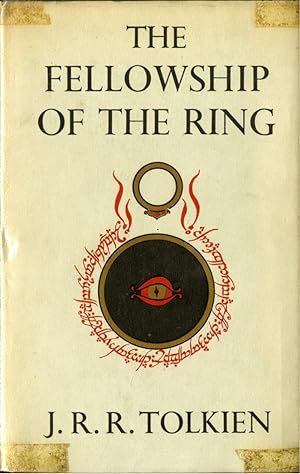
A long time ago, in a galaxy far, far away, George Lucas created something special that felt fresh. Comic books did that also, and some still do. Tolkien created a genre that has been well mined for generations. Other writers have done and continue to do this, and some films do as well. But most of the large properties simply make the same thing with slightly different characters or timelines. It obviously sells and many people love it. It doesn’t interest me, though– new and interesting stories do. But these famous, valuable names are like real estate snatched up by greedy developers.

At times, older fans can get prickly about newer things. I’ve felt that way as well, mainly because the experience of reading an amazing novel can never be matched by any movie, no matter how well done. As George RR Martin recently commented, very rarely does a great book get a truly worthy interpretation, but when it happens it’s quite amazing. Dune managed it, in my opinion, and Jackson’s Lord of the Rings did, as well. But more often they just leave you cold.

Don’t adapt this, son. Don’t even try.

Most of these newer films are not made for middle aged guys, so I just accept that it isn’t for me, and go back to the books. But I admit, and as Martin said, I find the arrogance of some of these adaptations hard to believe. Luckily I will always have my bookshelves.

On Critics, and Other Matters

At times, sending out stories and manuscripts and getting no response can get frustrating. But that’s the way it is, and complaining about it doesn’t do any good. It is maddening when you see some of the awful things that become bestsellers, that get all kinds of attention and large publishing deals. Unfair, maybe, but that’s how it goes. First, you must write a great book, and then you must either know someone, or be in the right place at the right time. Some writers will beat the odds, so I keep plugging away, and in any case, I write for myself and won’t stop no matter what happens.

Which brings me to the subject of criticism, and gatekeepers. There are many of these that writers need to ignore. I was thinking of that curious thing, the writing workshop. In my experience, most of these were not at all a supportive environment; in fact, they were quite the opposite, in most cases, with students attacking each other’s work in an effort, I guess, to impress the instructor, a person who had published something and whose approval many in the class usually craved.

The comments on my stories were sometimes helpful, sometimes not, occasionally rude and off putting, and I listened to almost none of it except those written honestly. And yet, even an honest critic might be wrong. Gatekeepers at publishing houses, as well as literary agents, are quite often wrong about a great many things. Just check out the mountains of rejection letters received by people like Ursula LeGuin, Stephen King, Frank Herbert, and plenty of others.

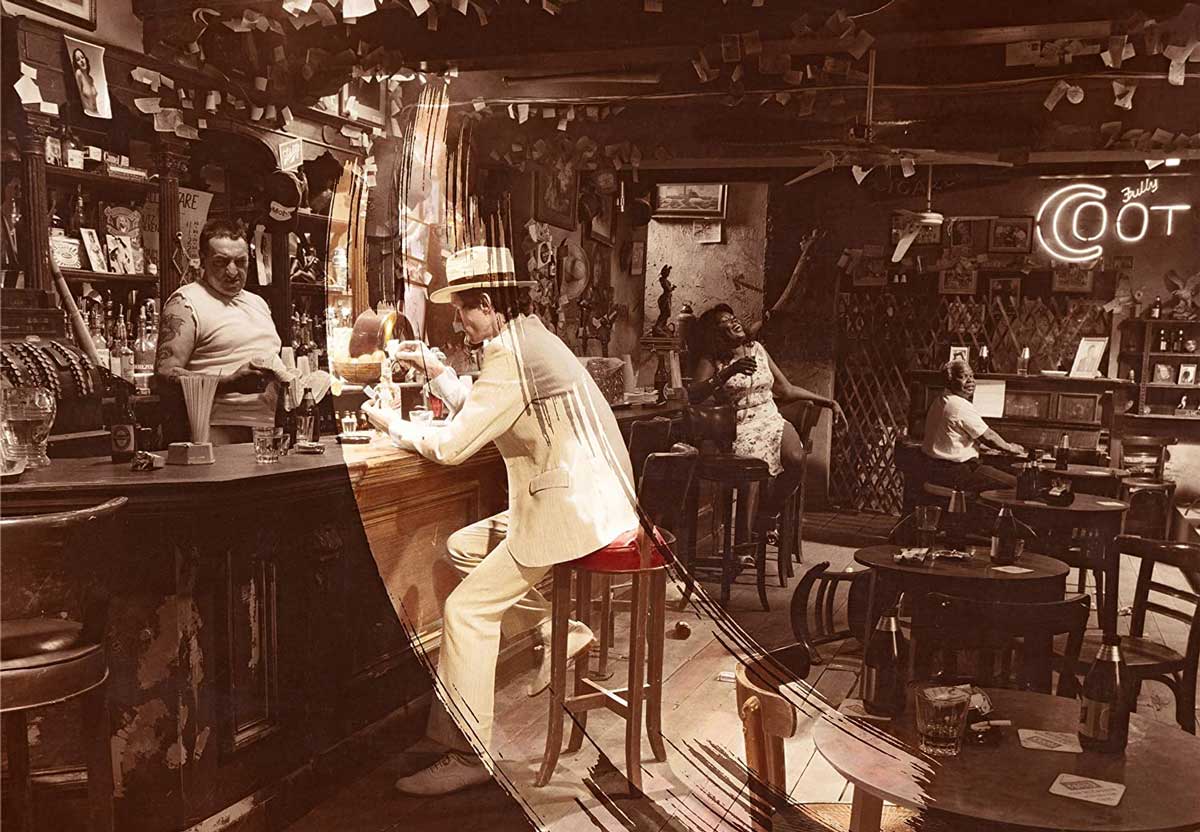
Last night, I couldn’t sleep and was listening to Led Zeppelin, one of my favorite bands. As I sometimes do with artists I admire, I went and looked up contemporary reviews of their groundbreaking records, which have sold over a hundred million copies. One snob said Robert Plant’s lyrics were awful. Rolling Stone wrote that the whole office laughed in mockery at “In Through the Out Door,” the band’s final album, recorded in the terrible wake of the death of Plant’s son. Quite hilarious, you bunch of hipster morons, was all I could think. What a terrible record that brought nothing but happiness and sold tens of millions of copies. Yep, Zeppelin sure were a laughingstock.

 I’m now fifty, and I don’t do reviews of new books very often anymore. I used to years ago, for a couple of online sites, but I found that unless I want to spend a lot of time digesting a book, and can say something thoughtful and supportive, there is little point. These things are so subjective, and a random critic has as much to say on the topic of a new book as any thoughtful reader, of which there are a great many. Instead, I’ll do goodreads reviews of books I enjoy, sometimes. And I’ll let my friends and contacts know which books I’m reading. Major outlets like the New York Times and other venues might help a reader decide whether to buy something, I suppose, but more often it is a badge of honor that the author of the book can proudly wear. It may help boost sales. Or if it’s a negative review, they may never live it down.

As the years pass, I’ve realized that apart from a very few trusted book critics, I’d rather just read a book and make up my own mind. The opinions of editors and agents and others in the publishing business are meaningless. In the end, there are your words, your story, and you tell it as best you can. You hope someone likes it, but whether they do or not hardly matters at all. You’re left with your honesty and your effort, and that’s about all you can do. Anything less is not enough, no matter what accolades other people might want to give you. And if you stick to your own vision and work, you can never lose, no matter what any critic says.