T.S. Eliot

T.S. Eliot was born September 26, 1888, 135 years ago. The Love Song of J. Alfred Prufrock, first published in June 1915, is a groundbreaking work that left me floored when I first encountered it as a young man. Wonderful, evocative, elegaic, just beautiful. I committed much of it to memory and read all of his work, which I revisit often.

I’m not going to parse the poem here; many learned scholars have done so over the past hundred and eight years. What I will say is that as an eighteen year old, I read this poem and was deeply moved. It was not like any poem I’d read before. Among many memorable images, Eliot writes:

“I have seen the eternal Footman hold my coat, and snicker,       
And in short, I was afraid.”

I think this and much of this work speaks for itself and needs no intermediary. I knew as a teenager what Eliot was getting at, felt it in my soul, and still remember that unsettling, exciting moment, and feel it just as keenly over thirty years later.

Happy reading, my friends.

The Love Song of J. Alfred Prufrock

S’io credesse che mia risposta fosse
A persona che mai tornasse al mondo,
Questa fiamma staria senza piu scosse.
Ma perciocche giammai di questo fondo
Non torno vivo alcun, s’i’odo il vero,
Senza tema d’infamia ti rispondo.


Let us go then, you and I, 
When the evening is spread out against the sky 
Like a patient etherised upon a table; 
Let us go, through certain half-deserted streets, 
The muttering retreats       
Of restless nights in one-night cheap hotels 
And sawdust restaurants with oyster-shells: 
Streets that follow like a tedious argument 
Of insidious intent 
To lead you to an overwhelming question …         
Oh, do not ask, “What is it?” 
Let us go and make our visit. 

In the room the women come and go 
Talking of Michelangelo. 

The yellow fog that rubs its back upon the window-panes,       
The yellow smoke that rubs its muzzle on the window-panes 
Licked its tongue into the corners of the evening, 
Lingered upon the pools that stand in drains, 
Let fall upon its back the soot that falls from chimneys, 
Slipped by the terrace, made a sudden leap,         
And seeing that it was a soft October night, 
Curled once about the house, and fell asleep. 

And indeed there will be time 
For the yellow smoke that slides along the street, 
Rubbing its back upon the window-panes;         
There will be time, there will be time 
To prepare a face to meet the faces that you meet; 
There will be time to murder and create, 
And time for all the works and days of hands 
That lift and drop a question on your plate;         
Time for you and time for me, 
And time yet for a hundred indecisions, 
And for a hundred visions and revisions, 
Before the taking of a toast and tea. 

In the room the women come and go         
Talking of Michelangelo. 

And indeed there will be time 
To wonder, “Do I dare?” and, “Do I dare?” 
Time to turn back and descend the stair, 
With a bald spot in the middle of my hair—         
They will say: “How his hair is growing thin!” 
My morning coat, my collar mounting firmly to the chin, 
My necktie rich and modest, but asserted by a simple pin— 
They will say: “But how his arms and legs are thin!” 
Do I dare       
Disturb the universe? 
In a minute there is time 
For decisions and revisions which a minute will reverse. 

For I have known them all already, known them all:— 
Have known the evenings, mornings, afternoons,         
I have measured out my life with coffee spoons; 
I know the voices dying with a dying fall 
Beneath the music from a farther room. 
  So how should I presume? 

And I have known the eyes already, known them all—       
The eyes that fix you in a formulated phrase, 
And when I am formulated, sprawling on a pin, 
When I am pinned and wriggling on the wall, 
Then how should I begin 
To spit out all the butt-ends of my days and ways?       
  And how should I presume? 

And I have known the arms already, known them all— 
Arms that are braceleted and white and bare 
But in the lamplight, downed with light brown hair! 
It is perfume from a dress       
That makes me so digress? 
Arms that lie along a table, or wrap about a shawl. 
  And should I then presume? 
  And how should I begin?

Shall I say, I have gone at dusk through narrow streets       
And watched the smoke that rises from the pipes 
Of lonely men in shirt-sleeves, leaning out of windows?… 

I should have been a pair of ragged claws 
Scuttling across the floors of silent seas.

And the afternoon, the evening, sleeps so peacefully!       
Smoothed by long fingers, 
Asleep … tired … or it malingers, 
Stretched on the floor, here beside you and me. 
Should I, after tea and cakes and ices, 
Have the strength to force the moment to its crisis?       
But though I have wept and fasted, wept and prayed, 
Though I have seen my head grown slightly bald brought in upon a platter, 
I am no prophet—and here’s no great matter; 
I have seen the moment of my greatness flicker, 
And I have seen the eternal Footman hold my coat, and snicker,       
And in short, I was afraid. 

And would it have been worth it, after all, 
After the cups, the marmalade, the tea, 
Among the porcelain, among some talk of you and me, 
Would it have been worth while,         
To have bitten off the matter with a smile, 
To have squeezed the universe into a ball 
To roll it toward some overwhelming question, 
To say: “I am Lazarus, come from the dead, 
Come back to tell you all, I shall tell you all”—         
If one, settling a pillow by her head, 
  Should say: “That is not what I meant at all. 
  That is not it, at all.” 

And would it have been worth it, after all, 
Would it have been worth while,         
After the sunsets and the dooryards and the sprinkled streets, 
After the novels, after the teacups, after the skirts that trail along the floor— 
And this, and so much more?— 
It is impossible to say just what I mean! 
But as if a magic lantern threw the nerves in patterns on a screen:       
Would it have been worth while 
If one, settling a pillow or throwing off a shawl, 
And turning toward the window, should say: 
  “That is not it at all, 
  That is not what I meant, at all.”

No! I am not Prince Hamlet, nor was meant to be; 
Am an attendant lord, one that will do 
To swell a progress, start a scene or two, 
Advise the prince; no doubt, an easy tool, 
Deferential, glad to be of use,         
Politic, cautious, and meticulous; 
Full of high sentence, but a bit obtuse; 
At times, indeed, almost ridiculous— 
Almost, at times, the Fool. 

I grow old … I grow old …       
I shall wear the bottoms of my trousers rolled. 

Shall I part my hair behind? Do I dare to eat a peach? 
I shall wear white flannel trousers, and walk upon the beach. 
I have heard the mermaids singing, each to each. 

I do not think that they will sing to me.         

I have seen them riding seaward on the waves 
Combing the white hair of the waves blown back 
When the wind blows the water white and black. 

We have lingered in the chambers of the sea 
By sea-girls wreathed with seaweed red and brown       
Till human voices wake us, and we drown.

Hobbit Day!

For Hobbit Day, I had great fun chatting with Jackson Schelhaas about Tolkien themed games on his excellent Exploring Arda podcast. We chatted about tabletop games, rpgs, video games and plenty more–check it out, and happy Hobbit Day!

Dragonfly

This dragonfly landed on my hand as I was on a nature walk. Seems like a good omen as we head toward autumn.

Labor Day and low pay

My labor day thought: I totally understand why people refuse to work low paying jobs. I’ve been searching unsuccessfully for part time gigs for some time now. I had one interview where the pay was less than twenty bucks an hour. And you needed a master’s degree plus some years of experience for this professional level, academic job in a library. I told them no thanks and explained that the pay was outrageously, insultingly low. They agreed but explained it was all the money they were allotted for the position.

My full time job’s real dollar earning value has gone way down over the years, pathetically so. My pay has remained exactly the same for years while the cost of everything skyrockets, hence my search for extra work. Luckily I like my job, I enjoy helping students and working in a library, and I’m thankful for that. Yet somehow CUNY finds ways to pay their upper management hundreds of thousands of dollars a year while the rest of us struggle to buy groceries and drown in debt. Not a great feeling.

So, if you’re going to pay a worker some insulting amount of money that barely covers gas as they give up their evening or Saturday, no thanks.

I hate talking and thinking about money, but it’s pretty frustrating to never have enough of it. Yes, I understand that I’m not starving or homeless. I should be thankful I have a job, and I am. I just wish my institution valued us, even a little bit. They make it very clear they do not.

Join a union. They built our middle class and their scarcity is the reason the middle class is hurting so badly now.

https://www.youtube.com/watch?v=DwbzxemJZIc

The Award-Winning OSPREY MAN

I’m happy to report that THE OSPREY MAN won second place in the YA category of the CIPA EVVY awards! Congratulations to all the winners.

If you’d like a copy, please get in touch, I’ll sign it and send it to you. It’s cheaper and more personal than amazon 🙂

Happy reading!

Star Wars: Rebellion

A long time ago in a galaxy far, far away…

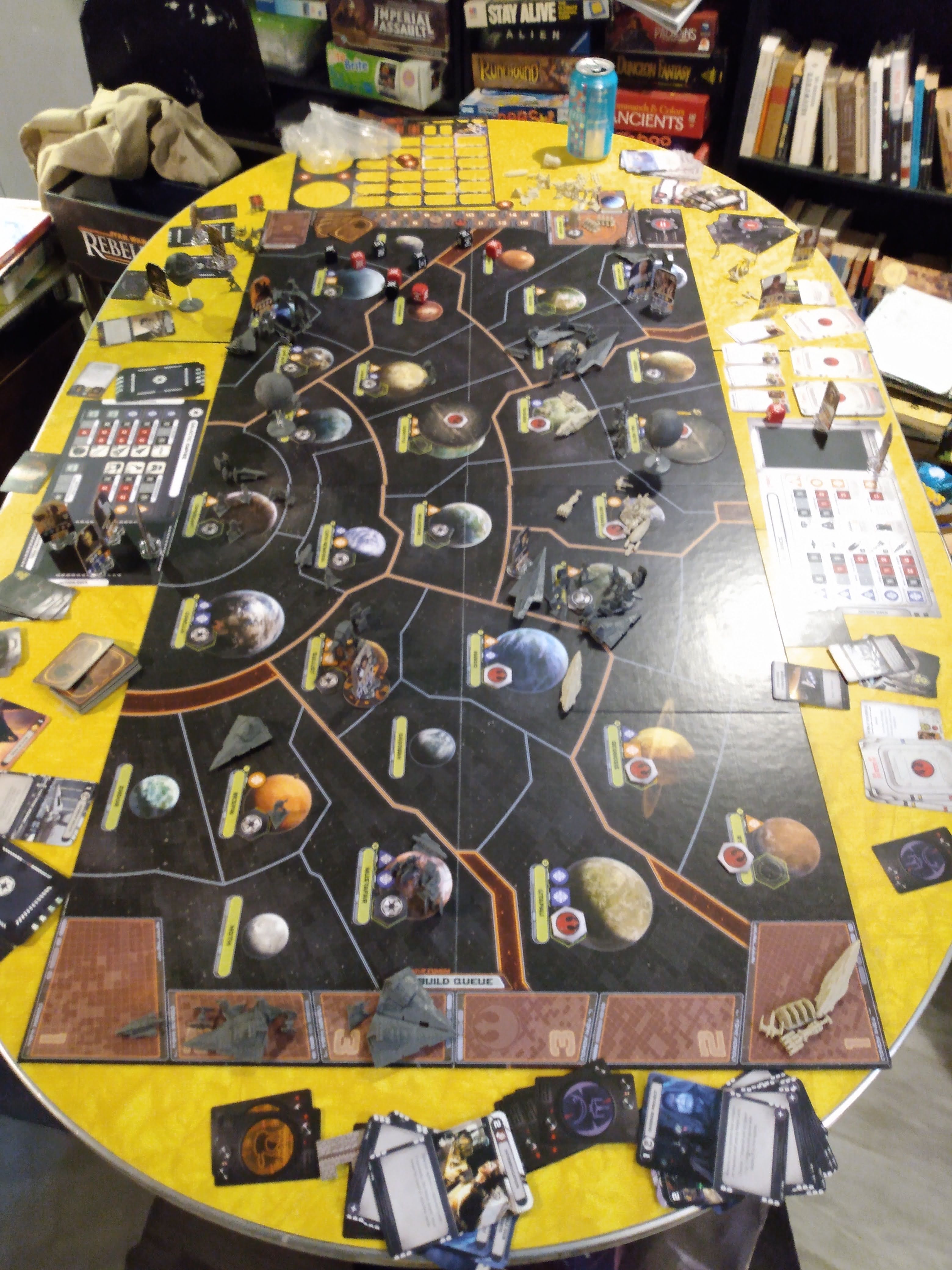
There was an endless appetite for games based on our favorite heroes and villains. Star Wars Rebellion, I am happy to report, is one of the very best of the bunch. Made by Fantasy Flight Games, it has their usual high quality minis, a beautiful board with numerous planets and systems, and lots of cards and markers and characters. It’s for 2-4 players, though I have only played the two player version. One side plays the rebels, the other is the dark side.

Rebellion is varied enough and features enough twists and turns that I think it has a high level of replayability. My 10 year old and I have played it 6 or seven times since we got it, and it’s always been fun and surprising. Essentially, the rebel player has a hidden base that the empire is trying to find. If the rebels can stave off the superior firepower of the empire and hang on for enough turns, while increasing their sympathy throughout the galaxy, they’ll win. But the moment the empire finds the rebel base, it’s over for the rebels. Each time we’ve played, both of us had a chance to win by the final round, making for an exciting and unexpected end with each game.

Each player has special attributes and cards to help them win; the rebels, for example, are aided by cards that allow them to change the location of the base, should the empire draw near. Other cards will allow sabotage, and to increase your reach through the galaxy. The rebels will gain victory points through a series of objective cards that award points when completed. The empire, meanwhile, has far superior numbers and brutal planet destroying weapons like the Death Star, making them hard to beat.

The character cards are also well designed. Each of the rebel characters have special skills and powers that allow them to succeed at basic missions, like gaining loyalty in systems, establishing weapons production, or conducting raids on the empire. The empire characters have similar skills, and are able to corrupt the rebels, destroy them with the death star, or otherwise ruin their chances to win. For example, in one very funny moment in our game, Obi Wan was turned to the dark side, which is rather hard to envision if you’re a fan of the old films, like me.

There are plenty of opportunities for battles, and that’s a lot of the fun of this game. You can move into systems and attack with your fleet of finely constructed X-Wings, Tie-Fighters, Star Destroyers and ground forces. You’re aided in battle by the leaders you’ve chosen and special cards that you draw through each round of combat. Nothing hurts so badly as building up a legion of rebel troops only to have them wiped out by Stormtroopers and AT-ATs (take it from me.)

This game is not cheap–the price runs around $90, but if you’re a fan of strategic war games, and of Star Wars, and you think you’ll have time to play this one, I’d say go ahead and buy it. It’s a lengthy game, often taking a few sessions of an hour or two each (or most of a day, if you’re able) to complete. I have found it a great way to spend time with my son, who has delighted in beating me a number of times.

Rebellion is pretty true to the spirit of the films. I love it, and recommend it highly, rating it five out of five stars. Maybe six out of five if you’re a star wars fans into miniatures and epic boardgames.

Axis & Allies & Zombies

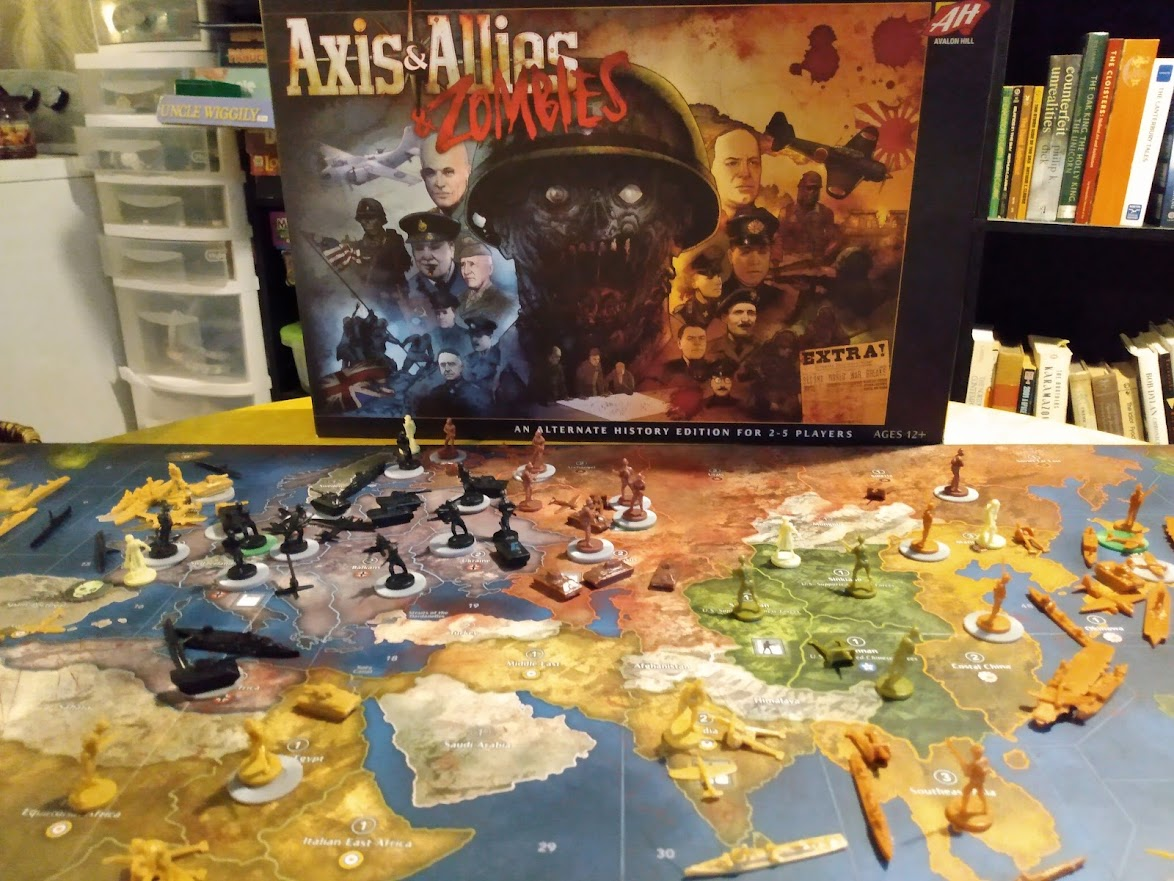
As if World War II needed some extra violence and mayhem, Avalon Hill added zombies to their classic game. It’s for two to five players, controlling one of the same powers as the original game, with the wild card of zombies for good measure.

I’ve been playing the original version of this game for many years; I find it a fun, lengthy wargame and my 10 year old son enjoys it very much. He could see after a few games, and after playing some more recent kinds of wargames, that the combat mechanics, while involved, are fairly standard, and when he saw this version with monsters in it he wanted it badly.

We’ve played it a number of times now, and it is always fun. The story is that some sort of noxious smoke, unleashed by a Nazi archaeological dig, circulates around the globe creating zombies. The zombies can end up overtaking you before your opponent, which can be funny. You draw a zombie card before your turn, and add a zombie to a territory. You also have a chance to drive them out of your territories, but beware! If you lose, your soldiers end up zombified, which can be disastrous for your chances to win, even while being quite hilarious. You also have a chance to roll for tech advances that will help you fight the zombies, similar to your ability to advance your technology in the original game. Who doesn’t want a chainsaw tank or zombie mind control ray in their arsenal? No one, that’s who.

The pieces are high quality, and in line with what you would expect from an Axis & Allies game. It’s a worthy addition to this series. I have been thinking of picking up one of the other versions of the game, as there are now editions focused on WWI, the Pacific theater, and so on. But two games of this sort are enough for now. One of the fun things about these enormous wargames is the epic feel of them. It can sometimes take numerous sessions over several days to finish. We have a number of these types of big games in our collection, and adding to that seems unwise. The most disastrous thing that has happened while playing one of these occurred when our cat, in her nocturnal roamings, destroyed a game of War of the Ring after two solid days of play. We tried to soldier on, but the feline monster won the day.

If you like Axis and Allies, I’d rate this one 4.5 out of 5 stars. Highly recommended!

One Roll Quest!

In our family travels this summer, I brought along some quick, portable games to play with my eight and ten year old. A couple of them were real hits with the kids that we will continue to play.

One Roll Quest plays just like it sounds. There’s a big clear die with 5 tiny colored die inside. You roll it, and that roll immediately determines whether you live or die, gain fame and fortune or experience points. The inner, colored dice determine some more specific consequences for your character–i.e. Everyone gains fame and fortune, except you–you die! It’s a very fast paced and funny game that my kids and I played numerous times. We also played One Roll Chronicles, which is a book with a brief story, in which you start out drinking in a tavern (like all good adventurers) and wind up, of course, looking for fame and glory. I’d rate this one 10 out of five stars for the number of laughs we had over it. It even includes some one off jokes like ‘One roll pizza,’ in which the die roll determines what pie you’ll order and which toppings. (we ended up with pepperoni and cheese, but my daughter cheated). 🙂

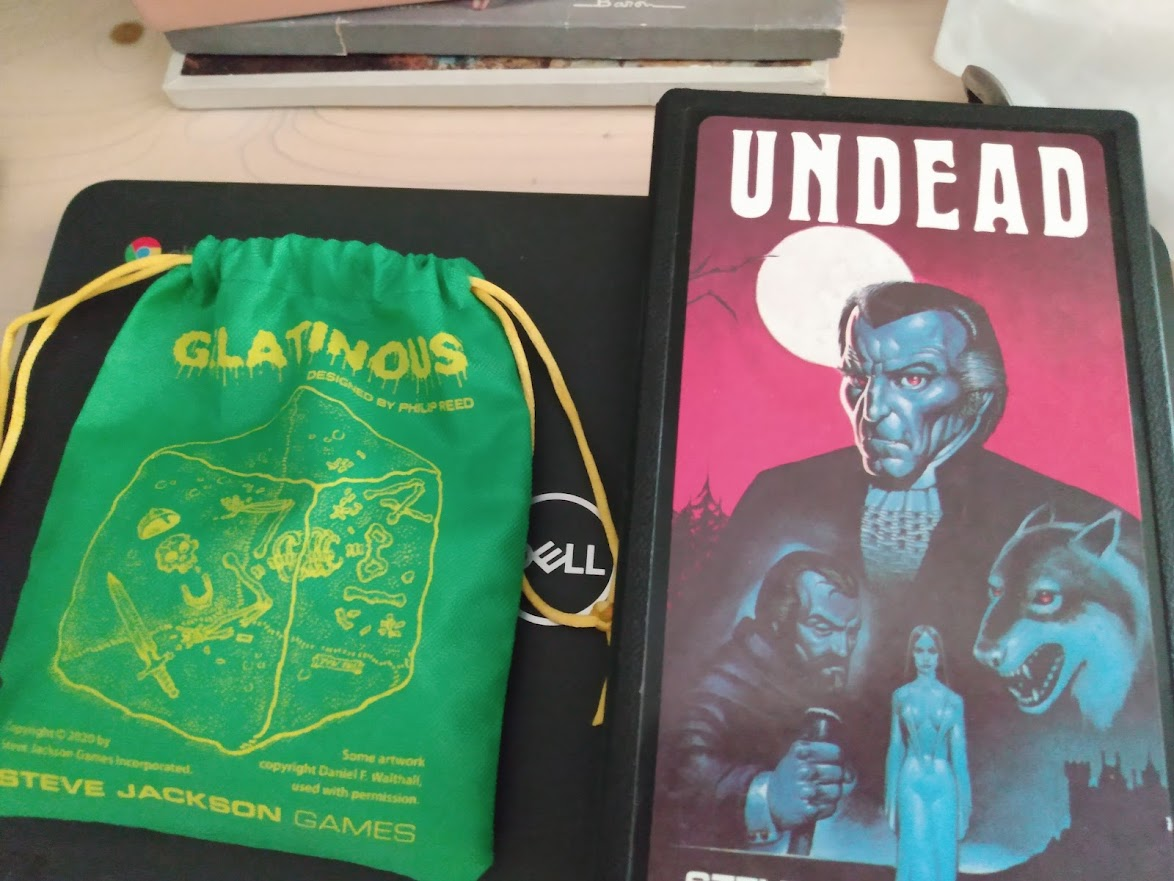
“Gelatinous” is another humorous dice game from Steve Jackson, in which each player gets 7 dice and tries to roll enough threes to create a gelatinous cube to win. Everyone can also lose and get eaten by a cube, which is a very amusing way to end this game. My kids found this one fun, as well.

We also played Catan dice, a shortened version of the game, in which all the dice have different resources on them, and you roll to create towns, cities, and roads. This was another fun and fast paced game, though it was less funny that the first two.

Finally, on a rainy day during our vacation, we played ‘Undead,’ a pocket box from Steve Jackson Games. This is a fun one, a bit more complicated than the others that will take an hour or two to complete. One player controls vampire hunters, the other is Dracula, and there is an option for a GM. It takes place in London in 1890, and is a hidden movement game that we found fun and thematically pleasing.

You can’t go wrong with any of these games. Steve Jackson Games has always done a great job with affordable, light games like these, and they keep creating great new ones all the time. I highly recommend supporting their kickstarters, or just checking out one of their many pocket or travel games if you’re looking for something to take with you on your vacation. They also make great diversions on game night with your friends.

Our trip was fun, as well. But games make everything better.

Asimov’s Foundation

I loved Isaac Asimov’s Foundation series when I first read it as a teen. It’s still one of my all time favorite science fiction series–it imprinted on me at a young age, before I had read very much, but it holds up quite well. Asimov’s later installments, in which he revisited and added to the series, were great too.

I’m not setting out to review the books right now, nor the new, slick production from Apple TV. What I will say about the show, after watching a couple episodes and then giving up, is that it must take some gargantuan ego or confidence to change such a classic work until it’s unrecognizable, and still call it Foundation. I have no idea where the show is going and didn’t care much after what I’ve watched. The production is expensive and looks cool and the actors are quite talented but the story was so different from what I read that it seemed strange to say it’s based on Asimov. Aside from the title and the most general plot setup, it wasn’t. It seems I’m in the minority, and many people love it, but that’s my opinion. I’ll probably just re-read Foundation instead.

Call me old fashioned; I don’t mind. Books don’t always need expensive adaptations. This series seemed ripe for such a show, but it wasn’t to my taste at all.

A Summer Invocation

A SUMMER INVOCATION

by Walt Whitman, 1881

Thou orb aloft full dazzling,

Flooding with sheeny light the gray beach sand;

Thou sibilant near sea, with vistas far, and foam,

And tawny streaks and shades, and spreading blue;

Before I sing the rest, O sun refulgent,

My special word to thee.

Hear me, illustrious!

Thy lover me—for always I have loved thee,

Even as basking babe—then happy boy alone by some wood edge—thy
touching distant beams enough,

Or man matured, or young or old—as now to thee I launch my invocation.

(Thou canst not with thy dumbness me deceive.

I know before the fitting man all Nature yields.

Though answering not in words, the skies, trees, hear his voice—and thou,
O sun,

As for thy throes, thy perturbations, sudden breaks and shafts of flame gigantic,

I understand them—I know those flames, those perturbations well.)

Thou that with fructifying heat and light,

O’er myriad forms—o’er lands and waters, North and South,

O’er Mississippi’s endless course, o’er Texas’ grassy plains, Kanada’s woods,

O’er all the globe, that turns its face to thee, shining in space,

Thou that impartially enfoldest all—not only continents, seas,

Thou that to grapes and weeds and little wild flowers givest so liberally,

Shed, shed thyself on mine and me—mellow these lines.

Fuse thyself here—with but a fleeting ray out of thy million millions,

Strike through this chant.

Nor only launch thy subtle dazzle and thy strength for this;

Prepare the later afternoon of me myself—prepare my lengthening shadows.

Prepare my starry nights.

WALT WHITMAN

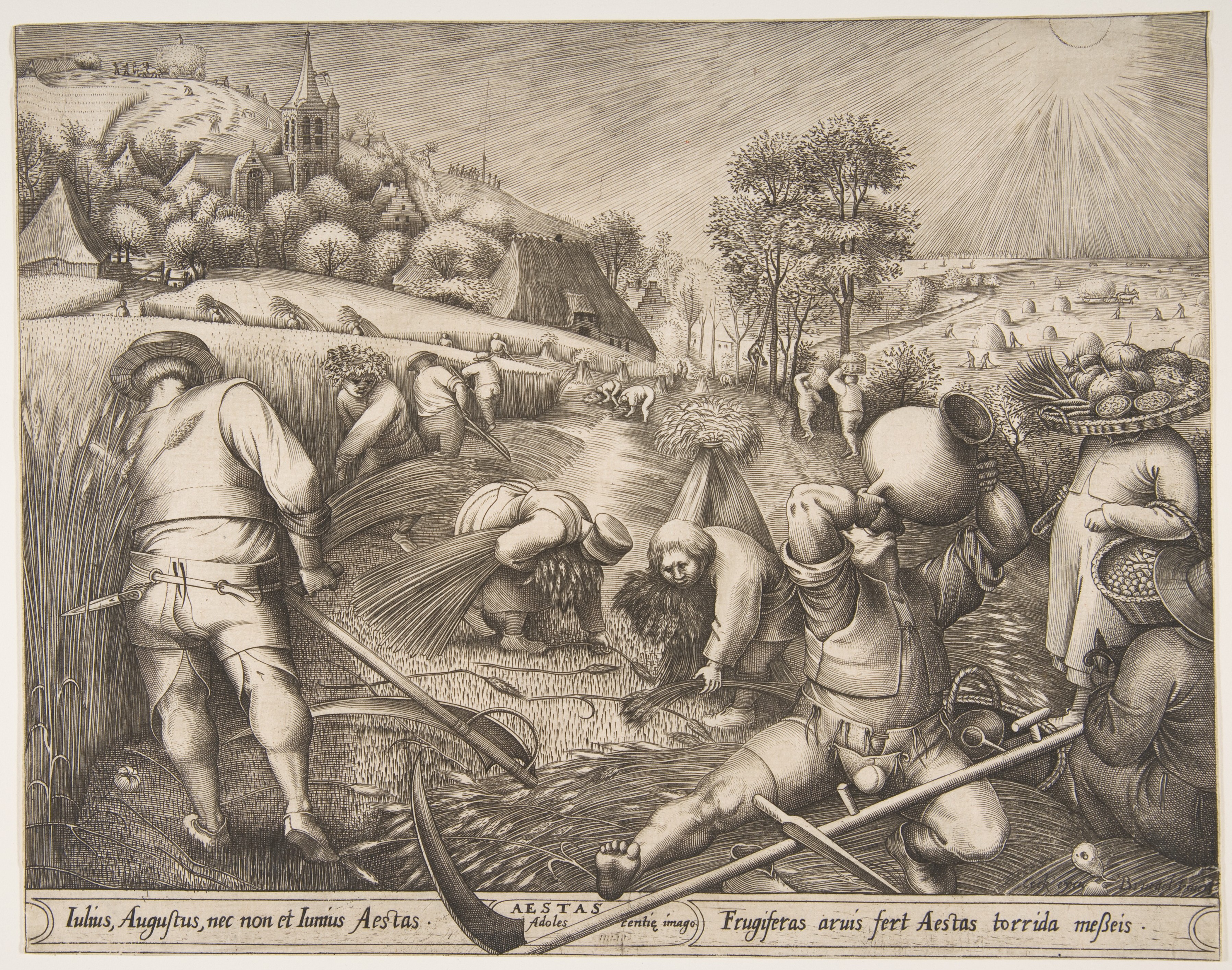
Summer, Pieter Bruegel the Elder, 1568