Halloween Reading List

Starting Octber 1, I wrote short reviews and thoughts about 31 different Gothic tales that I have enjoyed through the years. I did this in no particular order, choosing a new one every day from my bookshelf. My reading is skewed heavily toward things published decades ago; the most recent one here is Roger Zelazny’s A Night in the Lonesome October, from 1993, with the oldest being Anne’s Radcliffe’s The Mysteries of Udolpho from 1794. Thirteen of these were written before 1900. The breakdown, when I looked at it, went like this:

1700s: 1 1800s: 12 (1890s: 5, 1810s, 2, 1830s, 2 1840s 1 1860s 2) 1930s: 1 1940s: 1 1950s: 4

1960s: 2 1970s: 4 1980s: 5 1990s: 1

The entire list, with links, is below, for anyone interested. My reading habits in general skew this way, as well. For whatever reason I am not usually in the habit of reading contemporary things or bestsellers, with some exceptions, which you can see on the list. I recall many years ago a creative writing professor damning me with faint praise by saying my writing style was ‘old fashioned,’ which I took as a badge of honor.

This was a fun project, and I may do a more limited one of holiday tales in December.

  1. The October Country by Ray Bradbury, 1955
  2. Young Goodman Brown by Nathaniel Hawthorne, 1835
  3. The Sketch-book of Geoffrey Crayon by Washington Irving, 1819
  4. A Night in the Lonesome October by Roger Zelazny, 1993
  5. The Case Against Satan by Ray Russell, 1962
  6. The Exorcist by William Peter Blatty, 1971
  7. The Haunting of Hill House by Shirley Jackson, 1959
  8. Fevre Dream by George RR Martin, 1982
  9. The Body by Stephen King, 1982
  10. I Am Legend by Richard Matheson, 1954
  11. Frankenstein by Mary Shelley, 1818
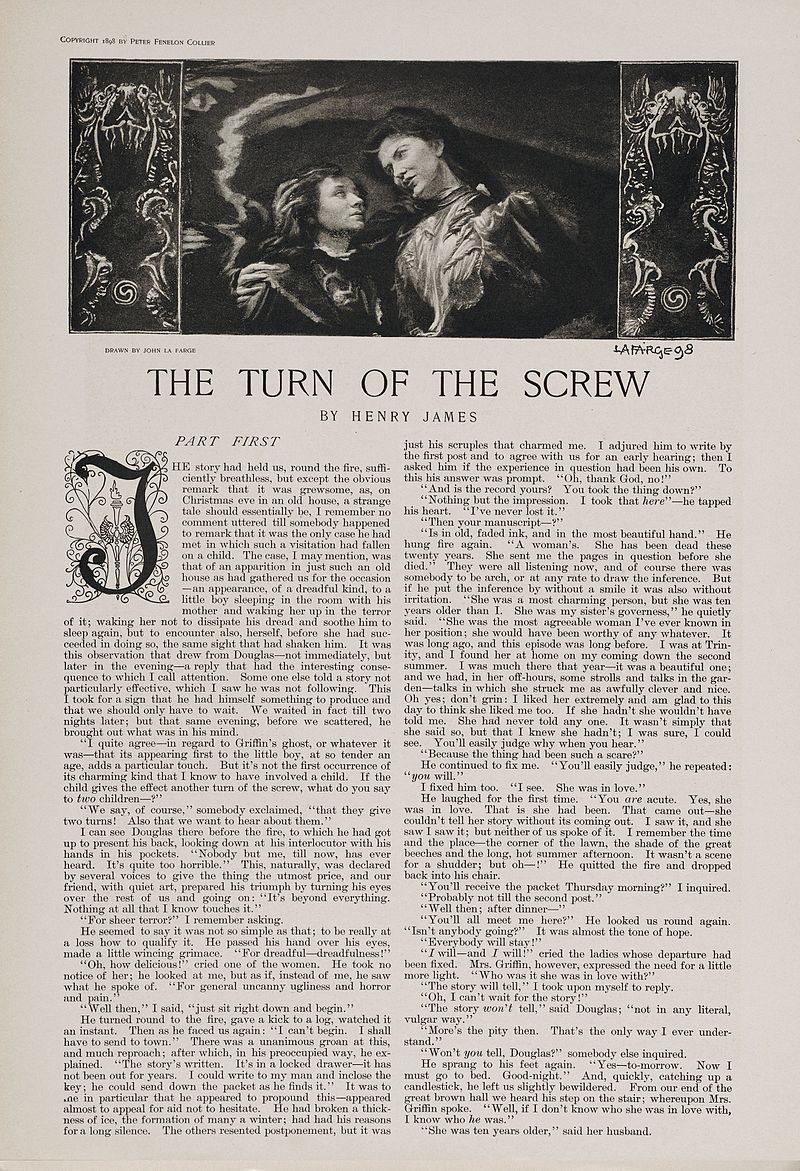
  12. The Turn of the Screw by Henry James, 1898
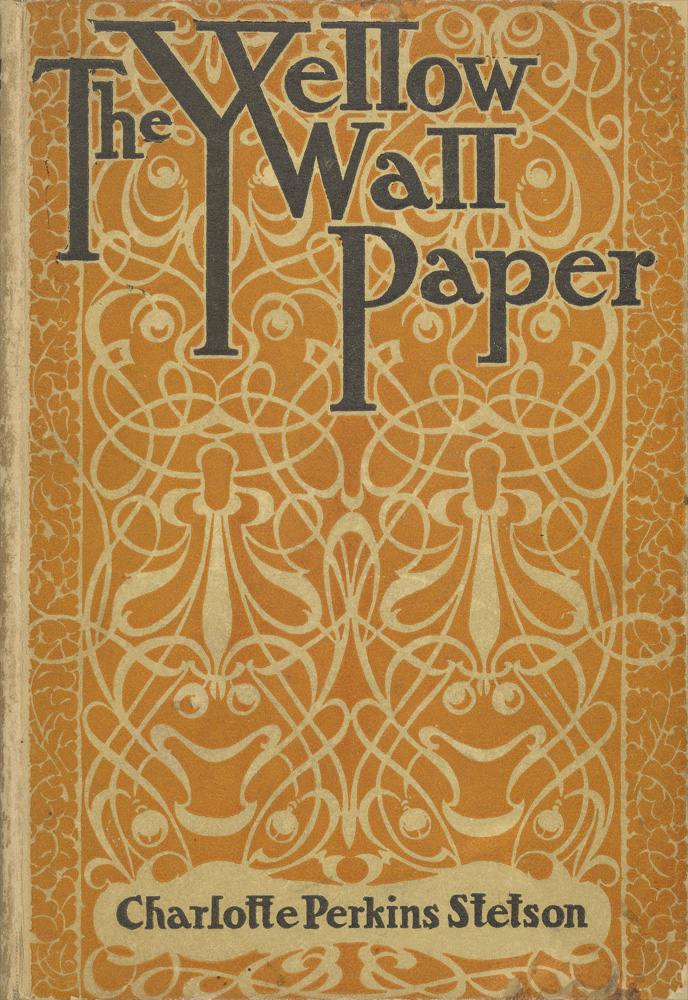
  13. The Yellow Wallpaper by Charlotte Perkins Gilman, 1892
  14. A Good Man is Hard to Find by Flannery O’Connor, 1953
  15. Interview With the Vampire by Anne Rice, 1976
  16. In Dark New England Days by Sarah Orne Jewett, 1890
  17. Ma’ame Pelagie by Kate Chopin, 1894
  18. The Moonstone Mass by Harriet Prescott Spofford, 1868
  19. The Phantom Coach by Amelia Edwards, 1864
  20. The Refugee by Jane Rice, 1943
  21. Ghost Story by Peter Straub, 1979
  22. Mort by Terry Pratchett, 1987
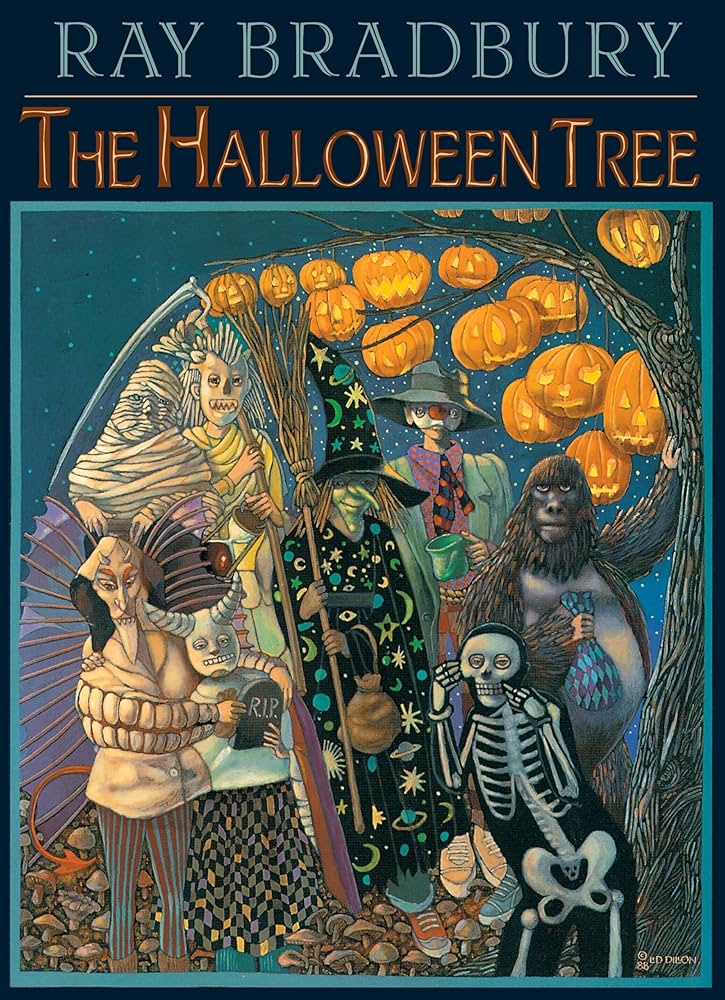
  23. The Halloween Tree by Ray Bradbury, 1972
  24. Something Wicked This Way Comes, by Ray Bradbury, 1962
  25. The Witches of Eastwick by John Updike, 1984
  26. The Fall of the House of Usher by Edgar Allan Poe, 1839
  27. The Cask of Amontillado by Poe, 1846
  28. Dracula by Bram Stoker, 1897
  29. The Mysteries of Udolpho by Anne Radcliffe, 1794
  30. The Stress of Her Regard by Tim Powers, 1989
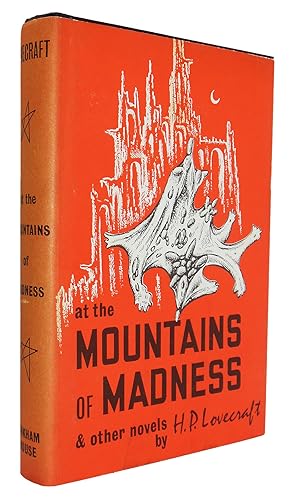
  31. At the Mountains of Madness by H.P. Lovecraft, 1936
At the Mountains of Madness by H.P. Lovecraft (1936)

“It is absolutely necessary, for the peace and safety of mankind, that some of earth’s dark, dead corners and unplumbed depths be let alone; lest sleeping abnormalities wake to resurgent life, and blasphemously surviving nightmares squirm and splash out of their black lairs to newer and wider conquests.”

Lovecraft is another of those giants of horror who could fill this list all on his own, but I had to pick just one story, and this is one I really enjoy. A group of ill-fated scientists from Miskatonic University make the terrible mistake of going to Antarctica where they find evidence of a race of beings far older than anything known to humans before, beyond a range of mountains larger than any that have ever been recorded. They explore buildings left behind by this civilization, which have been devised through ‘non-Euclidean geometry,’ and find hieroglyphs that help them learn about Elder-things and shoggoths, monsters that populated the place and whom they have foolishly awakened. They escape, but not before losing several members of the party. The novella serves as a warning to others who might want to return to study the antarctic.

Lovecraft has of course been highly influential and much has been written about him and his work. “Who Goes There?”, John Campbell’s horror tale set in the arctic with a group of explorers, immediately comes to mind, as do the films based upon it, including the 1951 version “The Thing From Another World,” as well as John Carpenter’s excellent “The Thing” from 1982.

I think it’s best to learn about Lovecraft straight from the source. There are many entry points for his mythos, but I think this is a great place to start. You could also read the Call of Cthulhu, The Case of Charles Dexter Ward, Dagon, or any number of others. The Library of America has a wonderful collection of his tales that I highly recommend.

So there you have it. Thirty-one tales of gothic terror and wonder over the month of October. I think it’s a pretty good list of some of the gems I’ve read over the years; I chose them in no particular order as the month went by, but I stand by each of them as tales that are either unique, or influential, or just plain scary enough to keep you up at night. Perhaps I’ll choose another 31 next October. For now, I hope you’ve enjoyed perusing this list, and that you’ve been inspired to read something you haven’t before. If you have your own favorites, or if you like what you’ve read, be sure to let me know in the comments.

Happy Halloween!

The Cask of Amontillado

Today, I’m again doing some brief thoughts on a few horror stories I’ve enjoyed over the years and which deserved inclusion on this reader’s guide to Halloween. You could probably pick 31 stories by Poe to read this season, but here are two of my very favorites, as well as two highly influential gothic novels.

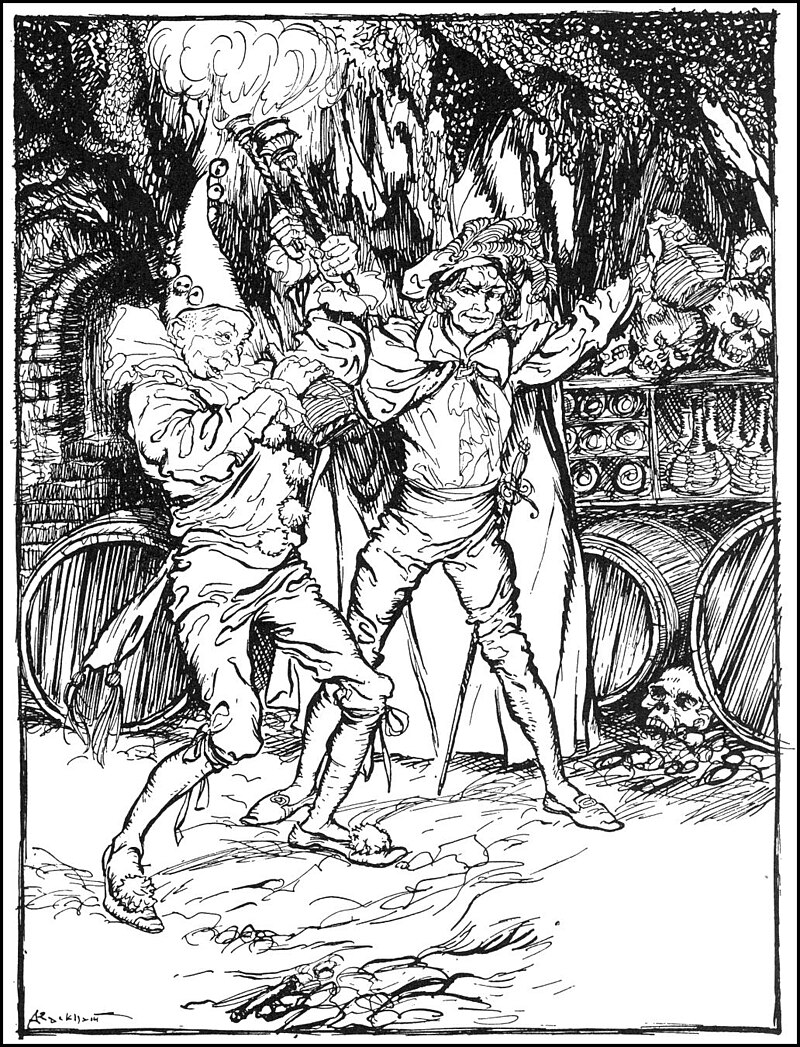
The Cask of Amontillado by Edgar Allan Poe (1846)

1935 Illustration by Arthur Rackham

“The thousand injuries of Fortunato I had borne as I best could, but when he ventured upon insult, I vowed revenge. You, who so well know the nature of my soul, will not suppose, however, that I gave utterance to a threat. At length I would be avenged; this was a point definitely settled—but the very definitiveness with which it was resolved, precluded the idea of risk. I must not only punish, but punish with impunity. A wrong is unredressed when retribution overtakes its redresser. It is equally unredressed when the avenger fails to make himself felt as such to him who has done the wrong.”

One of the most widely read and anthologized stories of Mr. Poe, who was perhaps the greatest writer of Gothic tales, the Cask of Amontillado has long been a favorite of mine, as I’m sure it has for many others. The first time I read it, I couldn’t quite believe what I was reading. This was supposed to be old, boring literature, and here we were amid one of the most horrible things my young brain had ever contemplated. For the first time, I realized that these old tales were perhaps better than whatever slasher stuff was at my local multiplex.

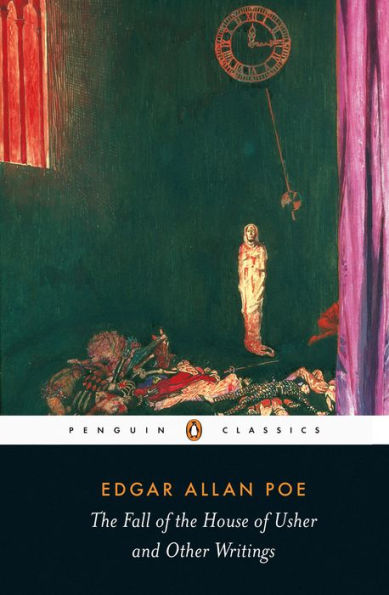
The Fall of the House of Usher by Edgar Allan Poe (1839)

“DURING the whole of a dull, dark, and soundless day in the autumn of the year, when the clouds hung oppressively low in the heavens, I had been passing alone, on horseback, through a singularly dreary tract of country; and at length found myself, as the shades of the evening drew on, within view of the melancholy House of Usher.”

This tale gave me the chills when I first read it as a lad, and it still has that effect now. It gets weirder and weirder as it progresses; a bizarre, supernatural and disturbing story of a reclusive man, his ghostlike sister, and their creepy ancestral home. One of the greatest horror tales ever written.

I also highly recommend a trip to the Poe Cottage in the Bronx, where he lived for a time. It’s such a neat piece of local history–a lot of places want to claim Poe as their own, but he did live in New York for the last few years of his life, with his ailing wife and her mother, and the small museum there is well worth a visit for New Yorkers.

Dracula by Bram Stoker (1897)

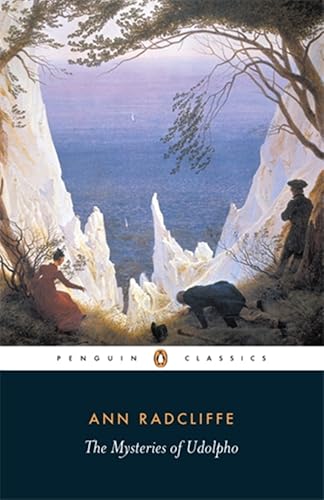
The Mysteries of Udolpho by Anne Radcliffe (1794)

“A well-informed mind is the best security against the contagion of folly and vice. The vacant mind is ever on the watch for relief, and ready to plunge into error, to escape from the languor of idleness. Store it with ideas, teach it the pleasure of thinking; and the temptations of the world without, will be counteracted by the gratifications derived from the world within.”
― The Mysteries of Udolpho by Anne Radcliffe

“How blessed are some people, whose lives have no fears, no dreads; to whom sleep is a blessing that comes nightly, and brings nothing but sweet dreams.” Dracula by Bram Stoker

No list of Halloween reading would be complete without Dracula, one of the first novels of its kind. An epistolary novel that moves much slower than most of the film versions with which people may be more familiar, it inspired many dozens of similar books. Stoker borrowed heavily from folklore to write this tale, which many critics have noted bore similarities to Anne Radcliffe’s The Mysteries of Udolpho, which is also well worth reading. Those interested in literary history and gothic tales should read both of these. Udolpho was published in 1794 and is considered by many to be the first gothic novel. The tragic story of a young woman’s misfortunes and strange occurrences at a castle where she lives, Udolpho has been praised by literary critics who have written on how this groundbreaking work influenced many later writers, including Poe, Stoker, Henry James, and Jane Austen, to name just a few.

The Phantom Coach, by Amelia Edwards (1864)

In the grand tradition of Victorian Christmas ghost stories, Amelia Edward’s The Phantom Coach first appeared in The December, 1864 issue of Charles Dickens’ literary journal, All the Year Round. Amazingly, the preceding link is to that full issue (the cover image is below), which I intend to read. Much of the run of this journal is freely available online, thanks to the Hathi Trust, the Internet Archive, and other sources.

The narrator of this tale of the damned is a man named Murray who is traveling across the Scottish moors when a snowstorm hits; afraid he won’t make it back home, he hails a passing stranger and asks for shelter. The man, Jacob, is the servant at a nearby house, but warns Murray that his master will not want him to stay. Jacob reluctantly allows Murray to follow him back to the residence.

The master of the house is at first irritated by Murray’s presence and tells him he has lived in this secluded place for twenty-three years, with no visitors at all for the past four. But the man is eager for news of the outside world—they have a fireside chat during which the old man tells him:

“The world grows hourly more and more sceptical of all that lies beyond its own narrow radius; and our men of science foster the fatal tendency. They condemn as fable all that resists experiment. They reject as false all that cannot be brought to the test of the laboratory or the dissecting-room. Against what superstition have they waged so long and obstinate a war, as against the belief in apparitions? And yet what superstition has maintained its hold upon the minds of men so long and so firmly?”

The man further says that he himself believed in the supernatural, and as a man of science, his career was ruined for it. He speaks with eloquence about various philosophers and scientists, leaving Murray in awe at the breadth of his knowledge; Murray says that he “wandered from topic to topic, from speculation to speculation, like an inspired dreamer.”

When the storm ends, Murray wishes to make his way home, though it is late at night—it’s decided he’ll join the mail coach, which will be passing through a few miles away. Jacob leads him to the stop, and now the story gets macabre. He mentions that a mail coach had crashed over an embankment, killing all aboard, nine years before.

It’s at times like this in most ghost stories when I, and most readers, want to tell the protagonist to find some other way home. Of course, Murray doesn’t. He gets on the coach when it arrives, at first relieved to be out of the cold, until he realizes the awful truth of the matter.

This is a very fun, atmospheric horror tale, and I can see why it has been anthologized so often. You are set up beautifully by the desolate moor, the irritable servant, finally the old man telling tales of the supernatural in a parlor teeming with hundreds of books and scholarly apparatus of every conceivable kind. Incidentally, I want a room just like this, complete with a fireplace and ghost stories and a glass of sherry. If anyone out there reading this wants to help me achieve this, I’d be grateful.

 I came across my copy of this tale in a Dover thrift edition of ghost stories. I’ve loved those Dover editions since I was a young man—for just a few dollars you get some first-rate stories. My college instructors used to kindly assign these editions to their poor students, and I’ve kept with the tradition.  

Amelia Edwards was a woman of many talents: in addition to writing many novels and short stories, she was also a journalist, illustrator, and Egyptologist. Like most of the authors on this list, you can learn more about her life in her Dictionary of Literary Biography entry, though you will need a login to access it.

Ma’ame Pelagie by Kate Chopin (1894)

“Ma’ame Pelagie,” they called her, though she was unmarried, as was her sister Pauline, a child in Ma’ame Pelagie’s eyes; a child of thirty-five.

Kate Chopin is well known for her novel The Awakening, but she was also a prolific writer of short stories, including this gem, Ma’ame Pelagie. Pelagie and her sister live in Louisiana in a three-room cabin beside their formerly grand ancestral home. For decades, we learn, they have lived this way, hoping to save enough to restore the mansion ‘shaped like the Pantheon,’ but now fallen into ruin. The sisters are visited by a niece who comes to live with them—her father, their brother, will soon be joining her. But the young girl cannot stand the sadness of the place and wants to leave.

“It was not the first time she had stolen away to the ruin at night-time, when the whole plantation slept; but she never before had been there with a heart so nearly broken. She was going there for the last time to dream her dreams; to see the visions that hitherto had crowded her days and nights, and to bid farewell to them.” Pelagie recalls these past grand days in a dreamlike reverie, the grand parties held there, and her lover, who went off to fight in ‘le guerre,’ as did so many others. And now we have the central problem on which this tale rests—the war, which eventually comes to the plantation. It is the tragedy of her life, to see her dreams ruined along with the grand house.

A year later, her brother Leandre builds a new, beautiful brick house where the old one stood. The house bustles with activity and music and the laughter of young people, the friends of ‘La Petite,’ her niece. However, Pelagie’s “soul had stayed in the shadow of the ruin.”

This is a great short gothic tale that works very well not only in the tragedy of these two women who live in the ruins of a once grand life, but also in the shadow of the civil war. The stain of slavery and the shadow of war haunts everything in this story of the south. The writing is quite elegant, as is much of the best writing of this period, and does much to transport us to these bygone days.

To learn more about Kate Chopin and her life, you can view this excellent PBS documentary on her.

In Dark New England Days by Sarah Orne Jewett (1890)

Sarah Orne Jewett is a Maine writer known for tales like The Country of Pointed Firs, A White Heron, and numerous short stories and poems that bring the region to life. One of the really interesting things about reading her books is that not only do you get a sense of what Maine was like in the late 1800s, you also get to hear the way people spoke, the diction and accent that they had. If you’re traveling in Maine you will still hear an accent that differs from other regions of the country, and even other areas in New England and the northeast. As time goes on and people are more apt to move around, these kinds of accents are being lost, but you can still hear it when you travel off the beaten path.

“In Dark New England Days” is a gothic story with a deep sense of doom and foreboding from the beginning. We are introduced to the sad case of the three Knowles sisters, ‘Closed-mouth old maids’ who spent their lives taking care of their cruel old father who has now died of a stroke. Mercifully, from the sounds of the story, as one character declares: “The old Cap’n kept ’em child’n long as he lived, an’ then they was too old to l’arn different.” His body is on display in their home–quite macabre by today’s standards, but more commonplace when the story was written. Even so, it is enough to give you the creeps from the opening lines of the story.

On the evening he dies, the sisters, Betsy, Hannah, and Susan, pull out an old chest belonging to their dead father, who had been a seafaring man, and learn that he’d been hoarding gold his whole life, though they lived in abject poverty. They are ecstatic with their new wealth and for the first time in many years they seem to have hope. Yet even as they stare at their gold: “He stopped to listen, came nearer, stopped again, and then crept close to the old house. He stepped upon the banking, next the window with the warped shutter; there was a knot-hole in it high above the women’s heads, towards the top. As they leaned over the chest, an eager eye watched them.”

The next morning, the money is gone: “The sisters had been rich for one night; in the morning they waked to find themselves poor with a bitter pang of poverty of which they had never dreamed.” They blame a neighbor with whom their father had a feud: Enoch Holt, and take him to court. He escapes without a guilty verdict, but not before Hannah Knowles stands before the court and declares: “Curse your right hand, then!” cried Hannah Knowles, growing tall and thin like a white flame drawing upward. “Curse your right hand, yours and all your folks’ that follow you! May I live to see the day!”

It is a chilling scene, and an awful declaration. The misery with which the sisters lived under their tyrant of a father is only made worse by the cruelty of the theft. But as in any good gothic tale, there are some fates worse than death, some things worse even than a sad, lonely life of poverty. I don’t wish to give away the ending, so I highly recommend reading this story and some others by Jewett.

Today we are not without plenty of so-called horror movies, gore-fests and plenty of over-the-top films and television to give us superficial scares. In my view, stories like this one do the job in a much more convincing, chilling fashion. The tale sets you up and gets its hooks in and doesn’t let go.

A Good Man is Hard to Find by Flannery O’Connor (1953)

“You can do one thing or you can do another, kill a man or take a tire off his car, because sooner or later you’re going to forget what it was you done and just be punished for it.”

One of the most anthologized and well-regarded short stories of the last century, A Good Man is Hard to Find, like some of the other stories on this list, deserves its towering reputation. O’Connor was a master of the short story, and this tale is one of the most shocking gothic stories I’ve ever read. I can still recall the palpable dread I felt as I first read it many years ago in a college class on the short story.

This tale involves a family that is out for a drive when unspeakable violence occurs, but there is plenty of foreshadowing, with the grandmother mentioning the ‘loss of values’ in the modern world; she also points out a graveyard filled with slaves from a bygone era. She remembers that there was a plantation in the area, and convinces her son, Bailey, to take a turn onto a deserted road, where the family has a sudden accident, flipping their car, and are met by the “Misfit,” a terrifying killer.

This tale is suffused with the south, and with notions of God and the possibilities of salvation and grace. The grandmother attempts to placate the Misfit, who clearly means the family harm, saying he is one of her ‘babies,’ and touches his shoulder. But there’s no salvation here for anyone, it seems.

I think it is best to read something like this, with such a well-known reputation, with an open mind. It’s better not to seek out or think too much about any of the criticism of it at first, just read it. It will probably leave you feeling desolate, as some of the very best horror stories tend to do.

Flannery O’Connor wrote two novels and thirty-one short stories and is considered one of the great American writers of the 20th century. Sadly, she was ill with Lupus and died at just 39. Who knows what she may have achieved had she lived longer; as it is, she left behind an amazing legacy.

The Yellow Wallpaper by Charlotte Perkins Gilman (1892)

“I really have discovered something at last. Through watching so much at night, when it changes so, I have finally found out. The front pattern does move – and no wonder! The woman behind shakes it! Sometimes I think there are a great many women behind, and sometimes only one, and she crawls around fast, and her crawling shakes it all over. Then in the very bright spots she keeps still, and in the very shady spots she just takes hold of the bars and shakes them hard. And she is all the time trying to climb through. But nobody could climb through that pattern – it strangles so; I think that is why it has so many heads.”

This story has been analyzed in myriad ways and is considered an important work of feminist literature. It’s a chronicle of a mental breakdown; a woman is suffering from ‘a slight hysterical tendency’ according to her physician husband, following the birth of her child. She spends the story confined to an upstairs room at a country estate and comes to believe that a woman is trapped behind the yellow wallpaper in the room.

On reading the story, you end up infuriated by the woman’s husband, and sympathetic toward her plight, but the way Gilman describes her experience through a series of journal entries also makes the story quite memorable. Her slow descent into madness is told with convincing, disturbing detail.

Gilman suffered from postpartum depression, so this story has been read with this in mind. At the time, a ‘rest cure’ was administered for treatment, which only made things worse for her, so she stopped the treatment and resumed writing, later saying that she feared a mental breakdown had she continued to follow the doctor’s cure. Gilman instead followed the advice of a female doctor, Mary Putnam Jacobi, who argued against such rest. Much has been written about Gilman and her pioneering story, for those interested, your local library will have plenty of information about her life.

The Turn of the Screw, by Henry James (1898)

“The summer had turned, the summer had gone; the autumn had dropped upon Bly and had blown out half our lights. The place, with its gray sky and withered garlands, its bared spaces and scattered dead leaves, was like a theater after the performance–all strewn with crumpled playbills.”

The Turn of the Screw is one of the most influential, classic horror tales ever written; everyone ought to read it. It’s a gothic story of a haunting at a British country estate, and the reader is never sure whether the ghosts are real or imagined. The story is told through a frame of a man reading a manuscript of a governess who believes that the children in her charge are being haunted by the ghosts of two former employees of the estate.

I find that the presence of children in fiction will usually increase the tension, and in a well written story like this one, you feel quite concerned for the children, worried that they are either being haunted, or being cared for by someone who is unstable and not up to the task. Either way, the sadness of these children, who are seemingly ignored by their parents, is something I couldn’t shake when I read this story. It was such a disturbing tale because of everything left to the reader’s imagination. In my opinion, this is usually the way to scare the reader far more than the usual genre tropes.

James was as prolific and famous as an author can be, and his reputation rests on a number of well known works, including Daisy Miller, Wings of the Dove, Portrait of a Lady, and The Golden Bowl, to name just a few. But it is Turn of the Screw that I always think of first, and I think this is likely true of other readers. It has been adapted no less than twenty-eight times, with numerous film versions, an opera by Benjamin Britten, various stage adaptations, and new adaptations still being made today. There’s something about this unsettling story that has deeply resonated with readers for more than a century.

The Body, by Stephen King (1982)

“It’s hard and painful for you to talk about these things … and then people just look at you strangely. They haven’t understood what you’ve said at all, or why you almost cried while you were saying it. That’s the worst, I think. When the secret stays locked within not for want of a teller but for want of an understanding ear.”

Today I’m looking back to the 1980s again, a decade that was very good for commercial horror. From his excellent collection Different Seasons, The Body is probably my favorite King story. He’s incredibly prolific and has written lots of great stories and novels, but I find the realism of this one very gripping. It’s not a horror tale, exactly, but more a story of friendship and growing up.

By now almost everyone knows this story about four twelve-year-olds in Castle Rock, and their quest to see a dead body. These children all come from difficult circumstances, but form an unbreakable bond in this story, and King makes it all seem so real that we can easily relate to them. The main character, Gordie, is a storyteller, a stand in for King, I guess, since he also graduates from the University of Maine and becomes a successful writer.

I know many of King’s fans enjoy the vampires, monsters, and supernatural horror of his stories, and I like them as well and have read many of them. But to me, King is at his best when he tells a more restrained, realistic tale like this one. He’s a master of horror, I know, but I think what has given him such popularity and staying power are his observations on working class and poor lives lived in everyday kinds of places. It makes his characters quite sympathetic.

The other stories in this book are quite good, as well. Apt Pupil, Rita Hayworth and the Shawshank Redemption, and the Breathing Method are all great novellas. Three of them, of course, were made into very successful Hollywood films. Most writers would be thrilled to have even one story as successful as any of these, but King has always been in a league of his own.