Friendship and The Chair Company

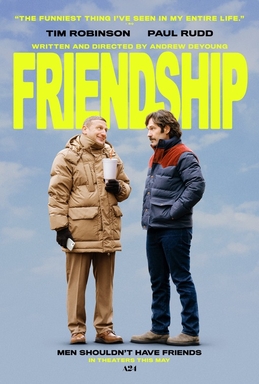
Friendship, with Tim Robinson, was great fun; if you enjoy the over-the-top characters and situations in his sketch comedy, you’ll find plenty of laughs in this tale of a misfit who can’t seem to act normally. The movie reminded me of The Cable Guy, the equally hilarious story of a man who wants so badly to be friends with a customer that he stalks him, committing crimes in the hopes of forging a connection.

This story was a bit more dramatic than that, as Robinson’s character, Craig, desperately craves the approval of his new neighbor, Austin (Paul Rudd), an incredibly cool dude and local weatherman who at first takes an interest in Craig, before finding out how unhinged he is. When Craig acts like a lunatic at Austin’s party, Austin politely suggests they go their separate ways. But Craig, who has no other friends, and seemingly no other hobbies aside from buying clothes and obsessing over them, feels totally betrayed by this rejection. He has bought a drum kit, lost his phone, and started acting like the carefree spirit he believes Austin to be, and won’t let this bromance die without a fight.

What follows is the relentless destruction of Craig’s life—he loses everything—his wife, his job, and what little dignity he once possessed, as he pursues his lost friend, only to find that Austin isn’t who he seems. At one point, in total despair, he screams at Austin “You all accepted me way too fast! You can’t do that! You made me feel too free! People need rules!”

These lines, delivered with Robinson’s trademark, bug-eyed wildness, had me dying with laughter and encapsulated this poor man’s dilemma. He’s an awkward psychopath who holds a good job, with nice clothes, a nice house and family, but he is emotionally stunted, living through his phone, spending his days wishing he could fit in and be a normal guy, something he enviously watches his colleagues and coworkers do with seemingly effortless ease. For work he creates an addictive app, when not making up ad campaigns for local politicians. His wife, who has recently beaten cancer, cannot stand him, nor can his teenage son.

If there was a flaw in the movie, I thought it was in this home life. It seemed beyond belief that Craig would have married so highly above himself and had such a good job. But then again, most sitcoms have this same exact setup: an oaf with a beautiful wife and family who barely tolerate him. And there are lots of weirdos walking among us, doing all sorts of crazy things under the veneer of normality. I really enjoyed this movie, even if I am more partial to Robinson’s more light spirited anarchic stuff.

Speaking of which, I found the first episodes of his new HBO show, The Chair Company, to be totally hilarious and loved everything about it. In this one, Robinson again plays a suffering everyman, this time seeking justice against an office furniture business after enduring a hysterically funny mishap in front of his entire workplace. Robinson is so good at these kinds of characters, barely holding his life together, trying to keep a lid on a brimming rage that bursts out over and over, through minor and major inconveniences. After his fall, he is determined to root out the villains who have embarrassed him, no matter the cost. The first two episodes moved him down this dark path in a painfully funny manner, and I can’t wait to see just how outrageous it gets over the course of the story.

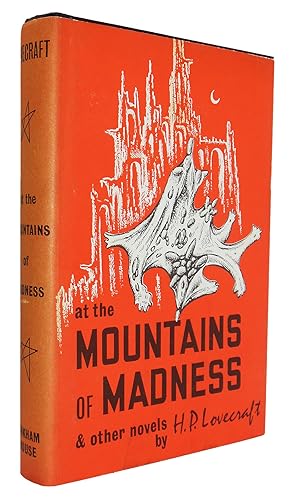
At the Mountains of Madness by H.P. Lovecraft (1936)

“It is absolutely necessary, for the peace and safety of mankind, that some of earth’s dark, dead corners and unplumbed depths be let alone; lest sleeping abnormalities wake to resurgent life, and blasphemously surviving nightmares squirm and splash out of their black lairs to newer and wider conquests.”

Lovecraft is another of those giants of horror who could fill this list all on his own, but I had to pick just one story, and this is one I really enjoy. A group of ill-fated scientists from Miskatonic University make the terrible mistake of going to Antarctica where they find evidence of a race of beings far older than anything known to humans before, beyond a range of mountains larger than any that have ever been recorded. They explore buildings left behind by this civilization, which have been devised through ‘non-Euclidean geometry,’ and find hieroglyphs that help them learn about Elder-things and shoggoths, monsters that populated the place and whom they have foolishly awakened. They escape, but not before losing several members of the party. The novella serves as a warning to others who might want to return to study the antarctic.

Lovecraft has of course been highly influential and much has been written about him and his work. “Who Goes There?”, John Campbell’s horror tale set in the arctic with a group of explorers, immediately comes to mind, as do the films based upon it, including the 1951 version “The Thing From Another World,” as well as John Carpenter’s excellent “The Thing” from 1982.

I think it’s best to learn about Lovecraft straight from the source. There are many entry points for his mythos, but I think this is a great place to start. You could also read the Call of Cthulhu, The Case of Charles Dexter Ward, Dagon, or any number of others. The Library of America has a wonderful collection of his tales that I highly recommend.

So there you have it. Thirty-one tales of gothic terror and wonder over the month of October. I think it’s a pretty good list of some of the gems I’ve read over the years; I chose them in no particular order as the month went by, but I stand by each of them as tales that are either unique, or influential, or just plain scary enough to keep you up at night. Perhaps I’ll choose another 31 next October. For now, I hope you’ve enjoyed perusing this list, and that you’ve been inspired to read something you haven’t before. If you have your own favorites, or if you like what you’ve read, be sure to let me know in the comments.

Happy Halloween!

Something Wicked This Way Comes…

I was quiet the past few days due to a campout, which was a bracing seasonal treat. It was a gorgeous weekend, the foliage was on full display, we heard owls at night as we enjoyed the fire, saw turkeys and deer and other small critters. It’s great to reconnect with nature when you’re able.

Today I’ll offer three short reviews of seasonal stories, to keep this October project going.

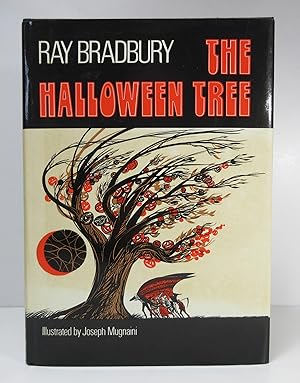
The Halloween Tree by Ray Bradbury (1972)

“Tom Skelton shivered. Anyone could see that the wind was a special wind this night, and the darkness took on a special feel because it was All Hallows’ Eve. Everything seemed cut from soft black velvet or gold or orange velvet. Smoke panted up out of a thousand chimneys like the plumes of funeral parades. From kitchen windows drifted two pumpkin smells: gourds being cut, pies being baked.”

This is a wonderful treat, a book that can be savored and read aloud to kids as the date draws near. I love doing that with my own children, and it holds up so well to repeated readings. It’s the story of a group of friends who go out trick or treating only to find that one of their pals, Pipkin, is extremely ill. To save him, they must accompany the mysterious Mr. Moundshroud on a journey across the world and many different cultures, learning about various rituals of death and the spirit world. This really is the perfect Halloween book for tweens and dreamers of all ages. In 1993, it was made into an animated special starring the great Leonard Nimoy as Moundshroud.

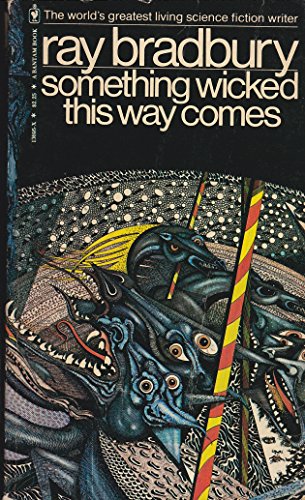
Something Wicked This Way Comes by Ray Bradbury (1962)

“And if it’s around October twentieth and everything smoky-smelling and the sky orange and ash gray at twilight, it seems Halloween will never come in a fall of broomsticks and a soft flap of bedsheets around corners.”

Bradbury was so prolific and wrote so many fine tales that it is hard to narrow it down to his best. In fact, you could have a list of 31 Bradbury stories for the season. But this one is a personal favorite of mine, bringing together all of Bradbury’s great themes in one place, in an extremely satisfying story of two friends, Jim Nightshade and Will Holloway, and the strange carnival that comes to Green Town one Halloween. I’ve written essays on this book and have read it a number of times, and to me it just gets better as the years go by. I love this story, and I think anyone who enjoys this season will love it, too. Probably my favorite book on this list, and that is saying something. Bradbury was heavily involved with the feature film from 1983, which is also a lot of fun.

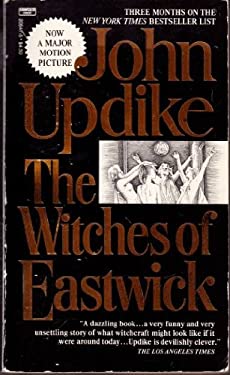
The Witches of Eastwick by John Updike (1984)

“Not until midlife did she truly believe that she had a right to exist, that the forces of nature had created her not as an afterthought and companion—a bent rib, as the infamous Malleus Maleficarum had it—but as the mainstay of the continuing Creation, as the daughter of a daughter and a woman whose daughters in turn would bear daughters.”

John Updike needs no introduction from me or anyone else. I was intrigued by the idea of this book about modern day witches living in Rhode Island, since I knew Updike from his Rabbit books, which I thoroughly enjoyed. I’ve yet to read a better saga about an American everyman in crisis, and find Updike’s prose to be really wonderful. This book is a total departure from that sort of novel, though his poetic command of language makes the book a joy to read. Told from the witches’ point of view, this is a fun, feminist update to these kinds of legends. If you are looking for a great literary read, this book’s for you. It was made into a successful film in 1987, with an all-star cast, directed by George Miller. Updike wrote a sequel in 2008 called The Widows of Eastwick.

Mort by Terry Pratchett, 1987

“There should be a word for that brief period just after waking when the mind is full of warm pink nothing. You lie there entirely empty of thought, except for a growing suspicion that heading towards you, like a sockful of damp sand in a nocturnal alleyway, are all the recollections you’d really rather do without, and which amount to the fact that the only mitigating factor in your horrible future is the certainty that it will be quite short.”

Today’s post is brief, as I’m heading out for the weekend, but I wanted to keep adding to my Halloween list of capsule reviews. I’ve been doing short reviews of some pretty heavy and disturbing horror fiction this month, and I thought I’d lighten things up and add the great Terry Pratchett to this reader’s guide to Halloween. There are a great many places you can start with the wonderful Discworld series, but Mort is as good as any of them. The fourth in the saga, published in 1987, this is the first in his ‘Death’ sequence. Mort is Death’s apprentice and he’s pretty unsuited for the job. He falls in love with death’s daughter, believe it or not, which leads to plenty of magic, slapstick and other hijinks as always in Ank-Morpork. If you like this kind of humor, it doesn’t get much better than Pratchett, and this book will give you lots of laughs, which we can all use right about now.

Jeff Shaara in Poughkeepsie

Yesterday my son and I were lucky to see Jeff Shaara, the historian and novelist, speak on his book Rise to Rebellion, the first of his two novels of the American Revolution. The books are terrific reads centered around some of the main players in the revolution, including Franklin, Adams, Washington, Jefferson, and others. Like his father, Michael, who wrote the Pulitzer winning classic The Killer Angels about Gettysburg (and which Jeff continued in two gripping books to complete a civil war trilogy), Jeff does a lot of research for his books and uses painstaking historical details to tell the story through the point of view of these characters. It truly makes history come alive in a way that general readers as well as history buffs will savor. My son, who is a well-read thirteen-year-old, loves Shaara’s books as well, and has read a number of them, including one on World War II and his most recent book on the Cuban missile crisis. Shaara also said that his newest book, due next May, is told from the point of view of Lincoln, starting in 1861 and ending in 1863; I’m sure my son and I will be picking up that one as well.

After a lively talk in which Shaara went over some of the details of these historical figures, there were some great questions from the audience about his writing process, and his thoughts on various historical events. He pointed out that while he understood why no one really writes much in popular fiction about someone like Robert E Lee anymore, he felt that it is a mistake to simply ignore or try to erase such historical figures. In a book like Gods and Generals, he showed Lee as the flawed man he was, and Shaara does a great service with work like this. It’s unhelpful to simply view Lee as an evil traitor, or on the other hand, as a noble son of the South. Instead, Shaara paints a picture of an imperfect man who, while acting gallantly in the eyes of the south, committed treason in the eyes of the North. He certainly made some choices that led down a destructive path, for a cause that was indeed evil. Yet it helps to put these actions in the context of the events through which Lee lived, to better understand what happened. But these days, most of us in this country don’t want nuance.

Shaara was also asked his opinion of the current state of the United States, since this event was part of the celebrations that are taking place as part of the 250th anniversary of the signing of the Declaration of Independence. He said what many in the auditorium were feeling, that we are in a very dark time, and that he feared what the future may hold.

If you enjoy history, or even if you don’t, you ought to read some of his books. You can start anywhere, but since we’re at that 250th anniversary, I’d suggest starting with Rise to Rebellion and the Boston massacre. It’s a great book, and a timely way to learn some things about our history that you may not know. It may even inspire you to do some things to help make sure this republic of ours survives through these perilous times for more anniversaries.

Thanks to the Poughkeepsie Public library for hosting this event. This was our second time seeing Mr. Shaara—he is usually at Gettysburg on every anniversary of the battle, and we saw him there last year on a family trip.

In Dark New England Days by Sarah Orne Jewett (1890)

Sarah Orne Jewett is a Maine writer known for tales like The Country of Pointed Firs, A White Heron, and numerous short stories and poems that bring the region to life. One of the really interesting things about reading her books is that not only do you get a sense of what Maine was like in the late 1800s, you also get to hear the way people spoke, the diction and accent that they had. If you’re traveling in Maine you will still hear an accent that differs from other regions of the country, and even other areas in New England and the northeast. As time goes on and people are more apt to move around, these kinds of accents are being lost, but you can still hear it when you travel off the beaten path.

“In Dark New England Days” is a gothic story with a deep sense of doom and foreboding from the beginning. We are introduced to the sad case of the three Knowles sisters, ‘Closed-mouth old maids’ who spent their lives taking care of their cruel old father who has now died of a stroke. Mercifully, from the sounds of the story, as one character declares: “The old Cap’n kept ’em child’n long as he lived, an’ then they was too old to l’arn different.” His body is on display in their home–quite macabre by today’s standards, but more commonplace when the story was written. Even so, it is enough to give you the creeps from the opening lines of the story.

On the evening he dies, the sisters, Betsy, Hannah, and Susan, pull out an old chest belonging to their dead father, who had been a seafaring man, and learn that he’d been hoarding gold his whole life, though they lived in abject poverty. They are ecstatic with their new wealth and for the first time in many years they seem to have hope. Yet even as they stare at their gold: “He stopped to listen, came nearer, stopped again, and then crept close to the old house. He stepped upon the banking, next the window with the warped shutter; there was a knot-hole in it high above the women’s heads, towards the top. As they leaned over the chest, an eager eye watched them.”

The next morning, the money is gone: “The sisters had been rich for one night; in the morning they waked to find themselves poor with a bitter pang of poverty of which they had never dreamed.” They blame a neighbor with whom their father had a feud: Enoch Holt, and take him to court. He escapes without a guilty verdict, but not before Hannah Knowles stands before the court and declares: “Curse your right hand, then!” cried Hannah Knowles, growing tall and thin like a white flame drawing upward. “Curse your right hand, yours and all your folks’ that follow you! May I live to see the day!”

It is a chilling scene, and an awful declaration. The misery with which the sisters lived under their tyrant of a father is only made worse by the cruelty of the theft. But as in any good gothic tale, there are some fates worse than death, some things worse even than a sad, lonely life of poverty. I don’t wish to give away the ending, so I highly recommend reading this story and some others by Jewett.

Today we are not without plenty of so-called horror movies, gore-fests and plenty of over-the-top films and television to give us superficial scares. In my view, stories like this one do the job in a much more convincing, chilling fashion. The tale sets you up and gets its hooks in and doesn’t let go.

Interview With the Vampire by Anne Rice (1976)

“God kills, and so shall we; indiscriminately He takes the richest and the poorest, and so shall we; for no creatures under God are as we are, none so like Him as ourselves, dark angels not confined to the stinking limits of hell but wandering His earth and all its kingdoms.”

Anne Rice’s achievement in this book, among other things, was to bring vampires into a more modern context. It’s also such a well-written book that even people who don’t normally care for horror will find themselves up late turning the pages of this tale. The story of Louis and Lestat is well known by genre fans by now, but in 1976, it was something new and different. What would it be like if a vampire were stalking modern day America? How would such a creature survive? They’re immortal, after all, so what would a vampire’s life trajectory look like? How would it navigate society without causing alarm?

Rice set out to answer these and many other questions about her antihero, and readers responded to the tune of eight million copies sold; Rice has sold over 100 million copies of her other works, including the rest of the Vampire Chronicles, which this book spawned.

I really enjoyed the way this one got into the details of vampire life and the day-to-day troubles of such creatures. For example, when unable to find human prey, they’ll kill whatever small animals are at hand, including rats. Gross, and also not something I would have considered.  But what really made this book work for me was the relationship between Louis and Lestat. Since vampires live forever, they eventually have disagreements with one another and fall out, which makes perfect sense. In a way they are tragic figures, though they’re predators. Doomed to live forever and have no one truly know them, they form intense bonds with each other, but eventually things go wrong. Immortality in this world is more like a curse.

Interview was made into a successful movie, and more recently, a television show, as well as comic adaptations. Rice went on to write many more books in her Vampire Chronicles until her death in 2021.

Coheed and Cambria

I’m an old RUSH fan super excited by their recent reunion announcement, and so I’m the perfect audience for a band like Coheed and Cambria. A friend of mine has been raving about them for years, but it was only a couple of months ago that I finally took the plunge and started listening. I’ve bought two albums and will eventually get them all. It is so cool to see a progressive band like this doing so well.

I have very limited time, and so I usually stick to my favorite bands from earlier eras, (Jethro Tull, RUSH, YES, Led Zeppelin, The Who, ELP, King Crimson, Dylan and Tom Petty and The Kinks and so on) with a few newer ones sprinkled in here and there. Sometime around the birth of my children, and having the demands of family and my job, I kind of lost the ability to know much about new music, but these guys are so good. The epic science fiction story of The Amory Wars, (for the uninitiated, every album is set in this universe) the amazing riffs and energy of these albums, it’s fantastic. I feel like there should be some kind of rare band act passed by congress to protect these guys. They’re so great. I’m glad younger people have a modern day Rush they can follow. My kids are already singing along in the minivan.

I’ve read a couple of the omnibus comics and am getting into the story a bit, as well. I love how the comic books enhance the whole experience; it’s incredibly ambitious and also such a cool thing for fans to get into. As a teen, one of my favorite things to do was to get a new album by RUSH or some other progressive rock band and spend hours listening, reading the lyrics, looking at the artwork, all of that. I still do that when Jethro Tull or some other favorite band of mine releases a new album, or re-re-releases old ones with dozens of unearthed tracks. It’s more than just listening to songs; it’s an entire experience, and Coheed and Cambria is carrying on this glorious tradition.

I may not have been able to get Rush tickets, but I’ll be sure and try to see these guys the next time they’re touring near me.

A Good Man is Hard to Find by Flannery O’Connor (1953)

“You can do one thing or you can do another, kill a man or take a tire off his car, because sooner or later you’re going to forget what it was you done and just be punished for it.”

One of the most anthologized and well-regarded short stories of the last century, A Good Man is Hard to Find, like some of the other stories on this list, deserves its towering reputation. O’Connor was a master of the short story, and this tale is one of the most shocking gothic stories I’ve ever read. I can still recall the palpable dread I felt as I first read it many years ago in a college class on the short story.

This tale involves a family that is out for a drive when unspeakable violence occurs, but there is plenty of foreshadowing, with the grandmother mentioning the ‘loss of values’ in the modern world; she also points out a graveyard filled with slaves from a bygone era. She remembers that there was a plantation in the area, and convinces her son, Bailey, to take a turn onto a deserted road, where the family has a sudden accident, flipping their car, and are met by the “Misfit,” a terrifying killer.

This tale is suffused with the south, and with notions of God and the possibilities of salvation and grace. The grandmother attempts to placate the Misfit, who clearly means the family harm, saying he is one of her ‘babies,’ and touches his shoulder. But there’s no salvation here for anyone, it seems.

I think it is best to read something like this, with such a well-known reputation, with an open mind. It’s better not to seek out or think too much about any of the criticism of it at first, just read it. It will probably leave you feeling desolate, as some of the very best horror stories tend to do.

Flannery O’Connor wrote two novels and thirty-one short stories and is considered one of the great American writers of the 20th century. Sadly, she was ill with Lupus and died at just 39. Who knows what she may have achieved had she lived longer; as it is, she left behind an amazing legacy.

Frankenstein by Mary Shelley (1818)

‘Hateful day when I received life!’ I exclaimed in agony. ‘Accursed creator! Why did you form a monster so hideous that even you turned from me in disgust? God, in pity, made man beautiful and alluring, after his own image; but my form is a filthy type of yours, more horrid even from the very resemblance. Satan had his companions, fellow-devils, to admire and encourage him; but I am solitary and abhorred.’

The first ever horror and science fiction novel, first published in 1818, when Mary Shelley was just twenty years old, Frankenstein has a reputation that has been as long lasting as it is deserved. A beautifully written tale that began as a legendary writing contest between Shelley, her husband Percy, Byron, Dr. John Polidori, and others who were spending a summer together in Geneva, Frankenstein bears little resemblance to the monster most of us recognize from the many film adaptations that we’ve seen through the decades.

The monster is philosophical and brilliant, almost superhuman, and the real villains are those in the story who judge him by his ghastly appearance. There are as many interpretations of the work as there are film adaptations: a warning against humans playing God, the irresponsible Victor whose thirst for knowledge leads to catastrophe, the humans who judge the creature by how hideous he is. Several chapters in the book deal with a family of poor, blind people who treat Frankenstein with care and respect because they cannot see him. It’s written in a beautifully poetic style, was immediately successful, and still finds new and enthusiastic readers today.

There are a few different versions of the book, which Shelley revised in 1831, but most scholars prefer the earlier edition. Shelley had a very difficult early life, losing her famous mother when she was just a few weeks old. Her father, also a well-known intellectual, remarried a woman with whom Mary had a very difficult relationship. Under these circumstances it seems a miracle she was able to write such a classic. Her husband, the famous Romantic poet, also caused a scandal when he left his wife for Mary, and had numerous affairs.

I could write a lengthy essay about this book and its influence and various interpretations, but I’m by no means an expert on her; countless scholars have already done that better than I could, and the purpose of my blog this month is to offer a few thoughts on some of my favorite horror novels. This is an essential one that everyone ought to read. It’s one of the great novels in literary history, a book that will help you understand where the genre came from.