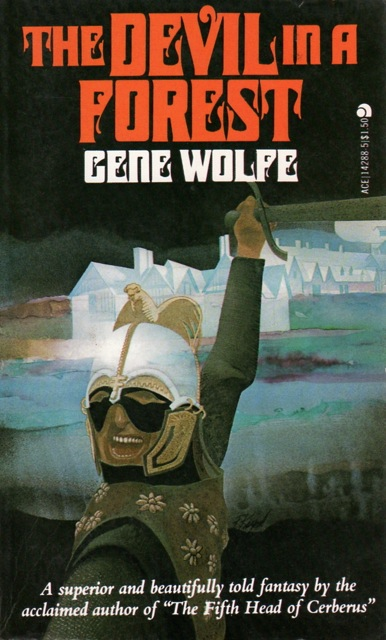
Gene Wolfe is one of my favorite writers, and this is a wonderful book of his that I found some years after reading his epic Book of the New Sun, an amazing series that I want to reread soon. Unlike that dense, lengthy work, this is a shorter novel of mystery, adventure and myth, but like Wolfe’s other novels, it is beautifully written, tightly plotted and great fun to read. I just re-read it over the holidays, after hearing the carol, ‘Good King Wenceslas,’ which reminded me of the book. Wolfe explains his writing inspiration for this novel in the epilogue:
“Shortly before Christmas one year, Gene Wolfe was singing the carol ‘Good King Wenceslas’ and was struck by the king’s questions to his page: “Yonder peasant, who is he? Where, and what his dwelling?” And by the page’s answer: “Sire, he lives a good league hence, Underneath the mountain, Close against the forest fence, By St. Agnes’ fountain.”
Wolfe recalls, “I found myself wondering who, indeed, was that nameless medieval peasant from whom most of us are, in one way or another, descended.”
The Devil in a Forest is Wolfe’s story surrounding this peasant, whose little village becomes involved in a struggle between a nameless evil and the forces of good. There is a dangerous highwayman, a mysterious murder, and strange powers that converge upon this village and create havoc for Mark, the protagonist. The attention to detail in Mark’s day to day life, and that of his fellow villagers, is quite well done and made for some interesting reading. Mark’s trials and his battle for survival are suspenseful, keeping you guessing right until the end. I enjoyed this one very much—it is so different from some of Wolfe’s other books, but his concept and the execution are excellent. I don’t want to spoil the fun for those who may be interested in reading this one, but I recommend it to anyone who has enjoyed Wolfe’s more well-known books. Fantasy writing doesn’t get much better.
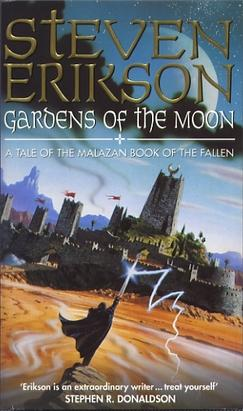
I recently read the first of Steven Erikson’s Malazan Book of the Fallen series, Gardens of the Moon. I had a fun time with this book, and enjoyed the epic scope of it. This is a long and dense series, and this first installment is a huge doorstop of a novel, with a cast of dozens of mages, wizards, soldiers, fighters, assassins and those caught up in the war enveloping the Malazan empire and the city of Darujistan. There are plenty of plot twists, political intrigue, and enough magic and battles to satisfy any fan of epic fantasy. If you like reading writers like George RR Martin, Tad Williams, Robert Jordan, and Brandon Sanderson, I think you’ll definitely enjoy this book. An added benefit is that this series is already completed, though the ten novels in it may seem daunting. Gardens of the Moon was first published back in 1999, and though I’d seen his books in the store and the library, I’d never read Erikson before. I’ve already picked up the second of this series and will continue with it after finishing some of the other books I’m currently reading. Highly recommended for fans of epic fantasy.
There are a lot of fantasy series out there, but in my view, Tad Williams’ Osten Ard novels are some of the very best. I was a huge fan of his epic Memory, Sorrow, and Thorn trilogy back when it came out; I was in high school when the first volume arrived, and I was hungry for more fantasy adventures after reading Tolkien. I found Williams to be great in his own right, very different, much darker. I loved the series and read some of his other books over the years.
A few years ago, when I learned he was going to write a sequel series set in Osten Ard, I was overjoyed. The Last King of Osten Ard has been a fun and engaging trip for me, and for many of us who love epic fantasy. These four volumes exceeded my expectations. There were also two shorter, superb prequel novels for the series that I highly recommend.
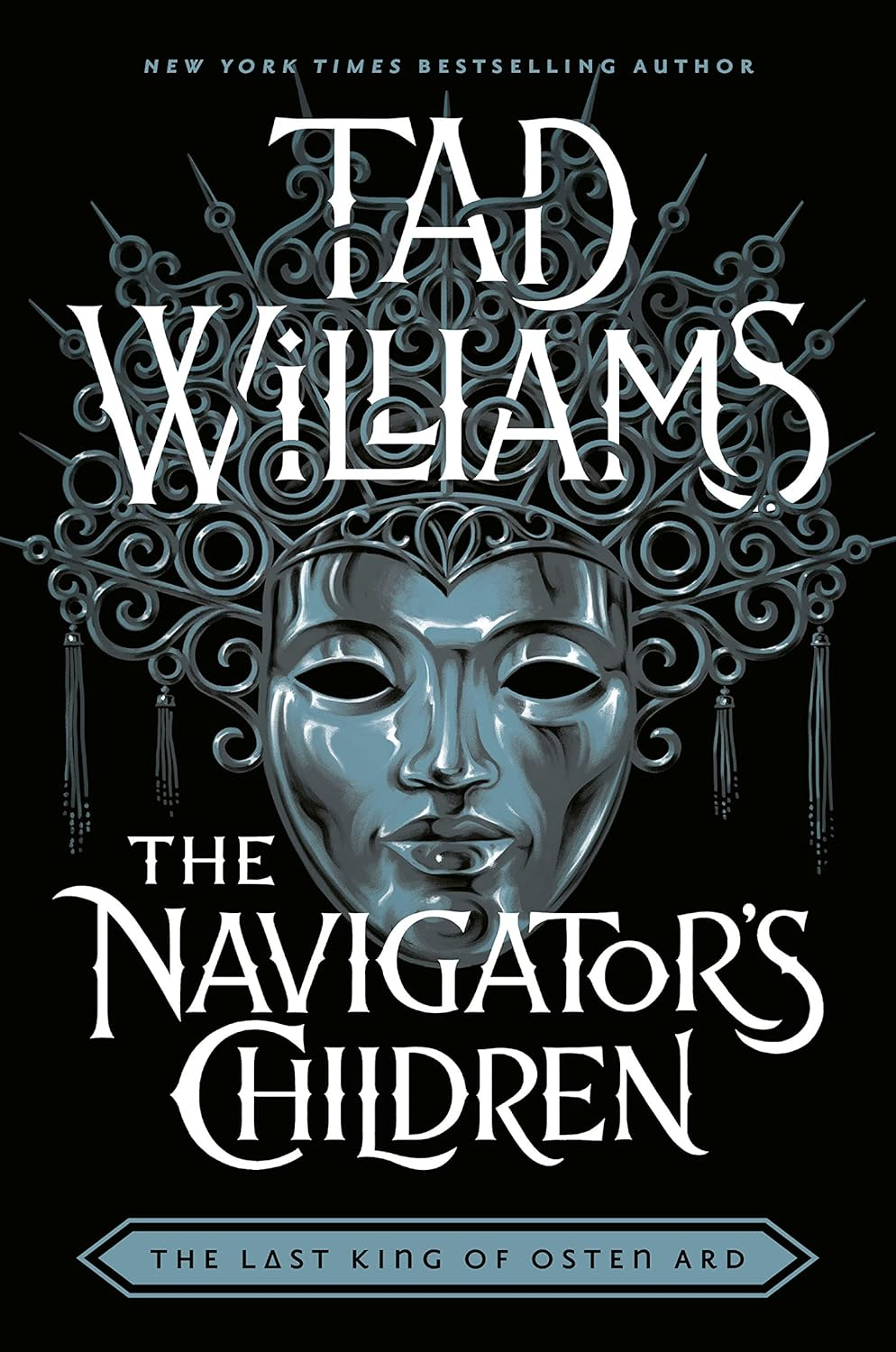
I finally read The Navigator’s Children over the holidays–it deftly ties the series up in a satisfying conclusion. There is a war to be fought, backstabbing villains, heroic deeds, and endless intrigue. There are also no easy answers or morality here. I really am in awe of how Williams finished this series, after so many years away from these characters. The story is dense, the world is staggeringly vast, and it is hard sometimes to keep track of all the interweaving story lines. I think Williams deserves so much credit for doing justice to all these characters and this story. It is no easy task. Most writers struggle to write convincing prose for much simpler kinds of tales, but he has again managed to do it in a lengthy, sweeping narrative.
I was happy to adventure again with Simon, Miriamele, and their many friends. In my view, what Williams really excels at is keeping the fates of all these characters in doubt right until the very end. They face such impossible odds that you think there must be no way out, again and again. I don’t wish to spoil anything for those of you who haven’t yet read the books, but I want to encourage those of you who have enjoyed books like Game of Thrones, Lord of the Rings, or other epic fantasy, to read these as well. If you’ve not read the original trilogy, start there, with The Dragonbone Chair. It may be an investment of time, but it’s well worth it; if you love epic fantasy novels, and haven’t read these, you are missing out. I was sad when it all ended, but pleased to see that Williams has a new Osten Ard book planned for later this year, which I will happily devour.
One observation about marketing from me, a guy who is an avid reader but who is not a businessperson or bookseller: I think bookstores could have made a better effort to promote this excellent novel. Maybe it’s just me, but my local Barnes and Noble didn’t have it when it came out, which I found shocking. I would think there would have been a major effort to promote it, with its own table, quotes from admiring authors like George RR Martin, and so on. I guess people who know and like Williams’ work were going to buy it, but it was surprising to me that there wasn’t more publicity. My local bookstore also didn’t have the latest Philip Pullman novel when I was last there, which seems very odd. Perhaps those of us who read these kinds of novels are getting older, but in my opinion it’s a missed opportunity on the part of booksellers when they don’t make a bigger deal out of new releases from major authors.
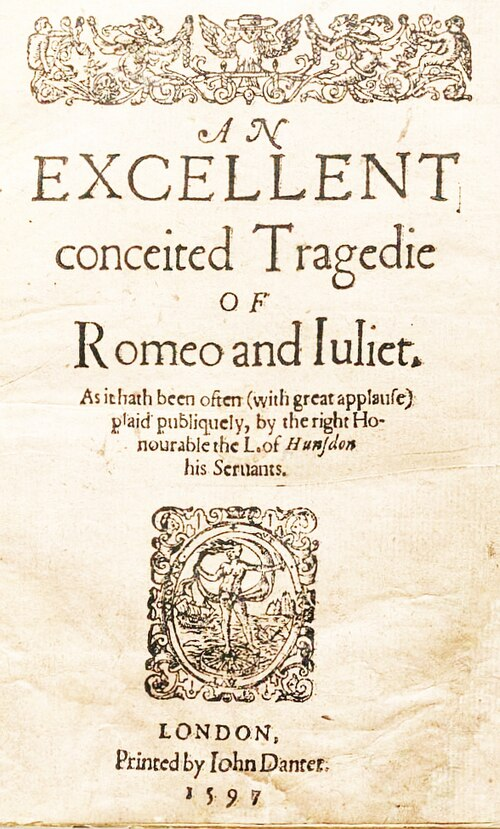
I just watched Franco Zeffirelli’s Romeo and Juliet with my thirteen year old son, and we both enjoyed it so much. I last viewed it when I was a Freshman in high school, nearly forty years ago. I recall being very moved by it, but doing my best to keep my enthusiasm for it hidden from my classmates. I still have many lines from it committed to memory thanks to my ninth grade English teacher.
In viewing it now: my goodness what an amazing production. The costumes, the sets, the locations, the cast are all superb. This has got to be one of the best film versions of a Shakespeare play ever made. One of the things I found quite arresting was the duel scene; the sweat and dirt and grit and athleticism of the cast made it feel startlingly real. The same is true of the passionate desperation with which Romeo and Juliet fall for each other. Completely reckless and irresponsible, as the young so often can be.
There’s the beauty of the language, of course–my son remarked with surprise at several points in the play, when he realized where some famous quote came from: “A plague on both your houses!” “A rose by any other name would smell as sweet.” “Parting is such sweet sorrow.” On and on it went. Only in reading and seeing these plays performed do you get a true appreciation of how magnificent they are, and how much of our culture owes a great debt to Shakespeare.
I found this tragedy terribly sad as a fourteen year old, so upsetting that I didn’t much want to watch it or read it again. I have read it a few times since then over the years, but now that I have children of my own, the story was far more wrenching to me. When you’re young I don’t think you really know just how inexperienced and innocent you are. The passage of time and a different perspective have made this play much greater in my eyes.
I’ve been reading Aldous Huxley’s Perennial Philosophy, which I have found to be a gem of a book. It’s an overview of different mystical and religious traditions through history, in which Huxley takes short passages from various religious texts, selected by theme, and offers short commentaries on each. In this way he shows many of the similarities that bind them together. I highly recommend it, no matter what your beliefs are. For agnostics or atheists, it is still a perceptive book from which you can learn much about religion and its motivations. For the religious, it will show how much you share in common with believers of different faiths.
I came across the following passage as I was reading and felt it was incredibly prescient, given the constant barrage of bad information with which most of us are constantly deluged today.
“Agitation over happenings which we are powerless to modify, either because they have not yet occurred, or else are occurring at an inaccessible distance from us, achieves nothing beyond the inoculation of here and now with the remote or anticipated evil that is the object of our distress. Listening four or five times a day to newscasters and commentators, reading the morning papers and all the weeklies and monthlies nowadays, this is described as ‘taking an intelligent interest in politics.’ St. John of the Cross would have called it indulgence in idle curiosity and the cultivation of disquietude for disquietude’s sake.”
Starting Octber 1, I wrote short reviews and thoughts about 31 different Gothic tales that I have enjoyed through the years. I did this in no particular order, choosing a new one every day from my bookshelf. My reading is skewed heavily toward things published decades ago; the most recent one here is Roger Zelazny’s A Night in the Lonesome October, from 1993, with the oldest being Anne’s Radcliffe’s The Mysteries of Udolpho from 1794. Thirteen of these were written before 1900. The breakdown, when I looked at it, went like this:
The entire list, with links, is below, for anyone interested. My reading habits in general skew this way, as well. For whatever reason I am not usually in the habit of reading contemporary things or bestsellers, with some exceptions, which you can see on the list. I recall many years ago a creative writing professor damning me with faint praise by saying my writing style was ‘old fashioned,’ which I took as a badge of honor.
This was a fun project, and I may do a more limited one of holiday tales in December.
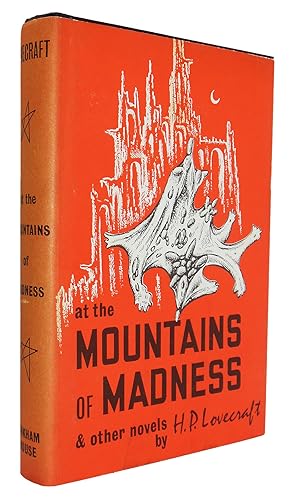
“It is absolutely necessary, for the peace and safety of mankind, that some of earth’s dark, dead corners and unplumbed depths be let alone; lest sleeping abnormalities wake to resurgent life, and blasphemously surviving nightmares squirm and splash out of their black lairs to newer and wider conquests.”
Lovecraft is another of those giants of horror who could fill this list all on his own, but I had to pick just one story, and this is one I really enjoy. A group of ill-fated scientists from Miskatonic University make the terrible mistake of going to Antarctica where they find evidence of a race of beings far older than anything known to humans before, beyond a range of mountains larger than any that have ever been recorded. They explore buildings left behind by this civilization, which have been devised through ‘non-Euclidean geometry,’ and find hieroglyphs that help them learn about Elder-things and shoggoths, monsters that populated the place and whom they have foolishly awakened. They escape, but not before losing several members of the party. The novella serves as a warning to others who might want to return to study the antarctic.
Lovecraft has of course been highly influential and much has been written about him and his work. “Who Goes There?”, John Campbell’s horror tale set in the arctic with a group of explorers, immediately comes to mind, as do the films based upon it, including the 1951 version “The Thing From Another World,” as well as John Carpenter’s excellent “The Thing” from 1982.
I think it’s best to learn about Lovecraft straight from the source. There are many entry points for his mythos, but I think this is a great place to start. You could also read the Call of Cthulhu, The Case of Charles Dexter Ward, Dagon, or any number of others. The Library of America has a wonderful collection of his tales that I highly recommend.
So there you have it. Thirty-one tales of gothic terror and wonder over the month of October. I think it’s a pretty good list of some of the gems I’ve read over the years; I chose them in no particular order as the month went by, but I stand by each of them as tales that are either unique, or influential, or just plain scary enough to keep you up at night. Perhaps I’ll choose another 31 next October. For now, I hope you’ve enjoyed perusing this list, and that you’ve been inspired to read something you haven’t before. If you have your own favorites, or if you like what you’ve read, be sure to let me know in the comments.
Today, I’m again doing some brief thoughts on a few horror stories I’ve enjoyed over the years and which deserved inclusion on this reader’s guide to Halloween. You could probably pick 31 stories by Poe to read this season, but here are two of my very favorites, as well as two highly influential gothic novels.
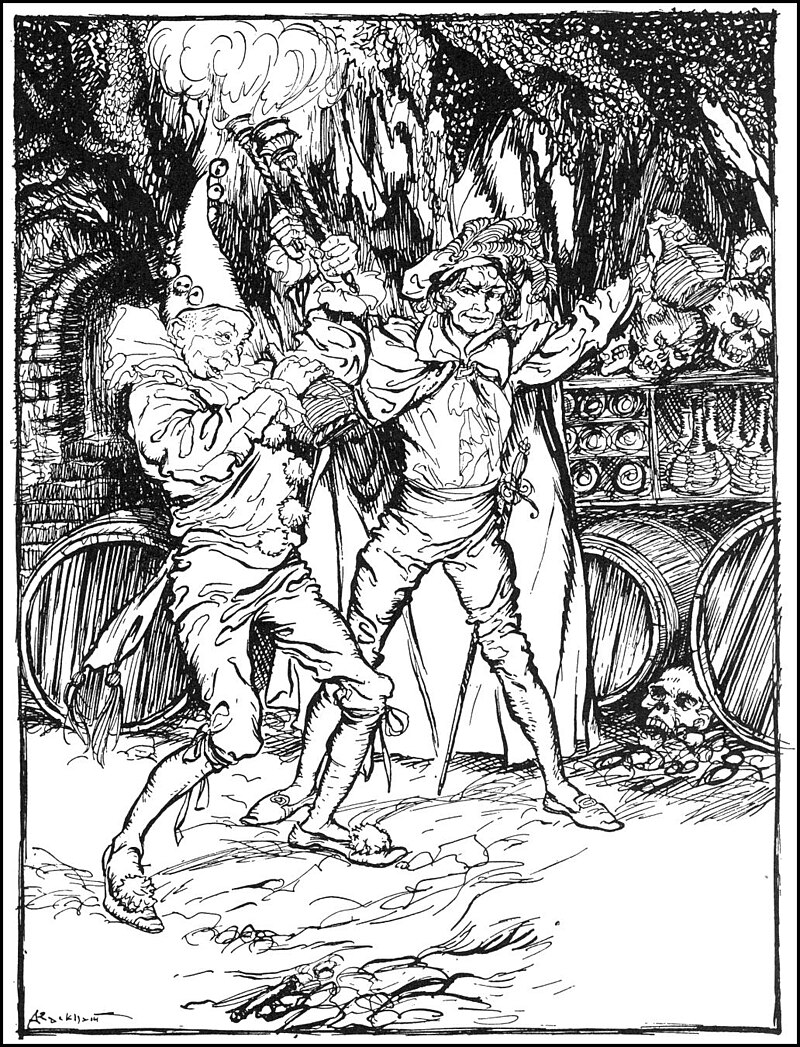
The Cask of Amontillado by Edgar Allan Poe (1846)
1935 Illustration by Arthur Rackham
“The thousand injuries of Fortunato I had borne as I best could, but when he ventured upon insult, I vowed revenge. You, who so well know the nature of my soul, will not suppose, however, that I gave utterance to a threat. At length I would be avenged; this was a point definitely settled—but the very definitiveness with which it was resolved, precluded the idea of risk. I must not only punish, but punish with impunity. A wrong is unredressed when retribution overtakes its redresser. It is equally unredressed when the avenger fails to make himself felt as such to him who has done the wrong.”
One of the most widely read and anthologized stories of Mr. Poe, who was perhaps the greatest writer of Gothic tales, the Cask of Amontillado has long been a favorite of mine, as I’m sure it has for many others. The first time I read it, I couldn’t quite believe what I was reading. This was supposed to be old, boring literature, and here we were amid one of the most horrible things my young brain had ever contemplated. For the first time, I realized that these old tales were perhaps better than whatever slasher stuff was at my local multiplex.
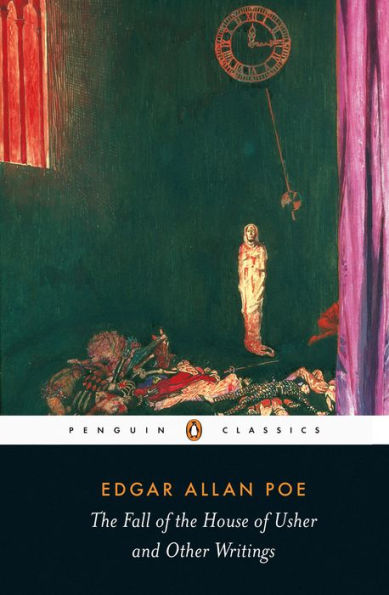
The Fall of the House of Usher by Edgar Allan Poe (1839)
“DURING the whole of a dull, dark, and soundless day in the autumn of the year, when the clouds hung oppressively low in the heavens, I had been passing alone, on horseback, through a singularly dreary tract of country; and at length found myself, as the shades of the evening drew on, within view of the melancholy House of Usher.”
This tale gave me the chills when I first read it as a lad, and it still has that effect now. It gets weirder and weirder as it progresses; a bizarre, supernatural and disturbing story of a reclusive man, his ghostlike sister, and their creepy ancestral home. One of the greatest horror tales ever written.
I also highly recommend a trip to the Poe Cottage in the Bronx, where he lived for a time. It’s such a neat piece of local history–a lot of places want to claim Poe as their own, but he did live in New York for the last few years of his life, with his ailing wife and her mother, and the small museum there is well worth a visit for New Yorkers.
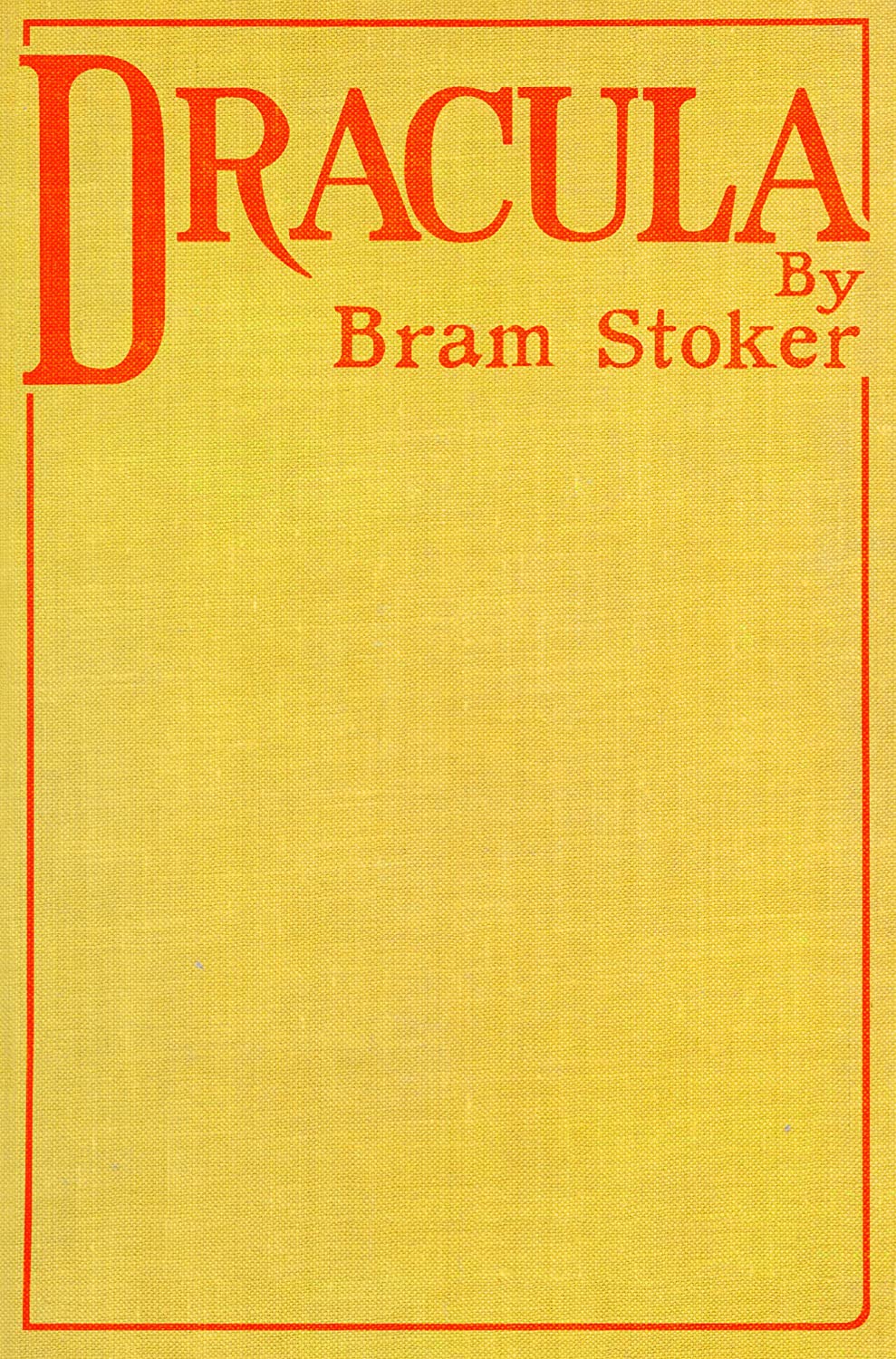
Dracula by Bram Stoker (1897)
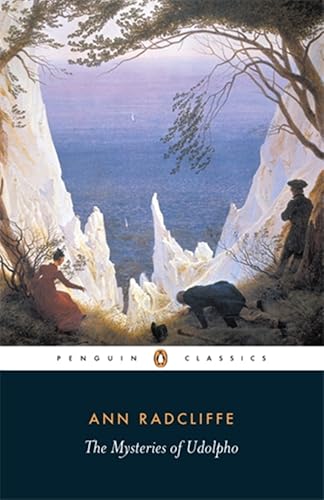
The Mysteries of Udolpho by Anne Radcliffe (1794)
“A well-informed mind is the best security against the contagion of folly and vice. The vacant mind is ever on the watch for relief, and ready to plunge into error, to escape from the languor of idleness. Store it with ideas, teach it the pleasure of thinking; and the temptations of the world without, will be counteracted by the gratifications derived from the world within.” ― The Mysteries of Udolpho by Anne Radcliffe
“How blessed are some people, whose lives have no fears, no dreads; to whom sleep is a blessing that comes nightly, and brings nothing but sweet dreams.” Dracula by Bram Stoker
No list of Halloween reading would be complete without Dracula, one of the first novels of its kind. An epistolary novel that moves much slower than most of the film versions with which people may be more familiar, it inspired many dozens of similar books. Stoker borrowed heavily from folklore to write this tale, which many critics have noted bore similarities to Anne Radcliffe’s The Mysteries of Udolpho, which is also well worth reading. Those interested in literary history and gothic tales should read both of these. Udolpho was published in 1794 and is considered by many to be the first gothic novel. The tragic story of a young woman’s misfortunes and strange occurrences at a castle where she lives, Udolpho has been praised by literary critics who have written on how this groundbreaking work influenced many later writers, including Poe, Stoker, Henry James, and Jane Austen, to name just a few.
I was quiet the past few days due to a campout, which was a bracing seasonal treat. It was a gorgeous weekend, the foliage was on full display, we heard owls at night as we enjoyed the fire, saw turkeys and deer and other small critters. It’s great to reconnect with nature when you’re able.
Today I’ll offer three short reviews of seasonal stories, to keep this October project going.
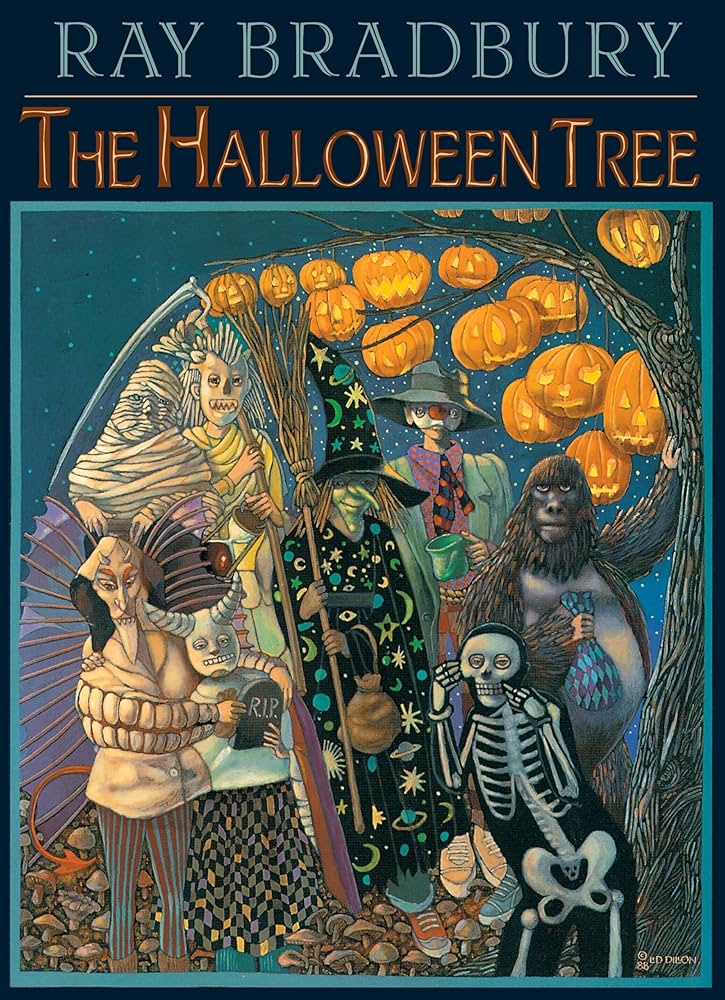
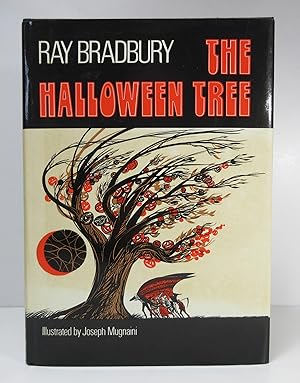
The Halloween Tree by Ray Bradbury (1972)
“Tom Skelton shivered. Anyone could see that the wind was a special wind this night, and the darkness took on a special feel because it was All Hallows’ Eve. Everything seemed cut from soft black velvet or gold or orange velvet. Smoke panted up out of a thousand chimneys like the plumes of funeral parades. From kitchen windows drifted two pumpkin smells: gourds being cut, pies being baked.”
This is a wonderful treat, a book that can be savored and read aloud to kids as the date draws near. I love doing that with my own children, and it holds up so well to repeated readings. It’s the story of a group of friends who go out trick or treating only to find that one of their pals, Pipkin, is extremely ill. To save him, they must accompany the mysterious Mr. Moundshroud on a journey across the world and many different cultures, learning about various rituals of death and the spirit world. This really is the perfect Halloween book for tweens and dreamers of all ages. In 1993, it was made into an animated special starring the great Leonard Nimoy as Moundshroud.
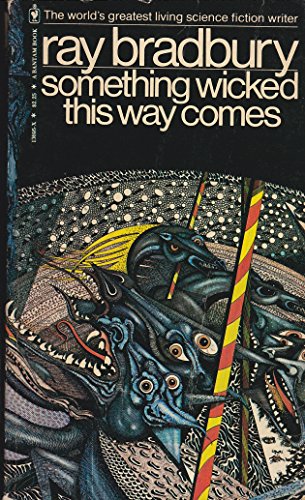
Something Wicked This Way Comes by Ray Bradbury (1962)
“And if it’s around October twentieth and everything smoky-smelling and the sky orange and ash gray at twilight, it seems Halloween will never come in a fall of broomsticks and a soft flap of bedsheets around corners.”
Bradbury was so prolific and wrote so many fine tales that it is hard to narrow it down to his best. In fact, you could have a list of 31 Bradbury stories for the season. But this one is a personal favorite of mine, bringing together all of Bradbury’s great themes in one place, in an extremely satisfying story of two friends, Jim Nightshade and Will Holloway, and the strange carnival that comes to Green Town one Halloween. I’ve written essays on this book and have read it a number of times, and to me it just gets better as the years go by. I love this story, and I think anyone who enjoys this season will love it, too. Probably my favorite book on this list, and that is saying something. Bradbury was heavily involved with the feature film from 1983, which is also a lot of fun.
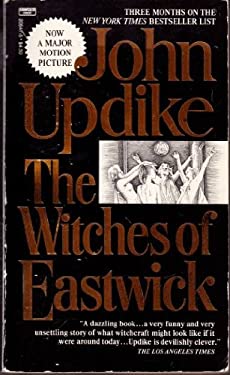
The Witches of Eastwick by John Updike (1984)
“Not until midlife did she truly believe that she had a right to exist, that the forces of nature had created her not as an afterthought and companion—a bent rib, as the infamous Malleus Maleficarum had it—but as the mainstay of the continuing Creation, as the daughter of a daughter and a woman whose daughters in turn would bear daughters.”
John Updike needs no introduction from me or anyone else. I was intrigued by the idea of this book about modern day witches living in Rhode Island, since I knew Updike from his Rabbit books, which I thoroughly enjoyed. I’ve yet to read a better saga about an American everyman in crisis, and find Updike’s prose to be really wonderful. This book is a total departure from that sort of novel, though his poetic command of language makes the book a joy to read. Told from the witches’ point of view, this is a fun, feminist update to these kinds of legends. If you are looking for a great literary read, this book’s for you. It was made into a successful film in 1987, with an all-star cast, directed by George Miller. Updike wrote a sequel in 2008 called The Widows of Eastwick.
“There should be a word for that brief period just after waking when the mind is full of warm pink nothing. You lie there entirely empty of thought, except for a growing suspicion that heading towards you, like a sockful of damp sand in a nocturnal alleyway, are all the recollections you’d really rather do without, and which amount to the fact that the only mitigating factor in your horrible future is the certainty that it will be quite short.”
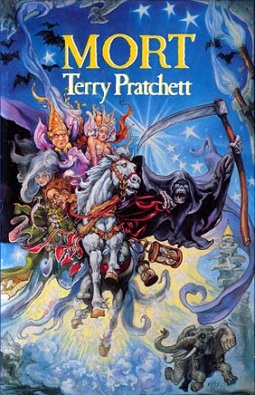
Today’s post is brief, as I’m heading out for the weekend, but I wanted to keep adding to my Halloween list of capsule reviews. I’ve been doing short reviews of some pretty heavy and disturbing horror fiction this month, and I thought I’d lighten things up and add the great Terry Pratchett to this reader’s guide to Halloween. There are a great many places you can start with the wonderful Discworld series, but Mort is as good as any of them. The fourth in the saga, published in 1987, this is the first in his ‘Death’ sequence. Mort is Death’s apprentice and he’s pretty unsuited for the job. He falls in love with death’s daughter, believe it or not, which leads to plenty of magic, slapstick and other hijinks as always in Ank-Morpork. If you like this kind of humor, it doesn’t get much better than Pratchett, and this book will give you lots of laughs, which we can all use right about now.


 Christopher Tuthill