Fevre Dream by George RR Martin (1982)

George RR Martin is known for his groundbreaking fantasy novels, but back in 1982 he wrote this gem of a vampire book, about a down on his luck steamship captain, Abner Marsh, who makes a bargain with an odd man, Joshua York: he gets to have his dream ship, financed completely by the mysterious stranger, but he must transport the man, his friends, and their cargo, no questions asked. As you might imagine, this arrangement does not go as planned. It’s a fun read with plenty of adventure and scares. If you enjoyed the Song of Ice and Fire novels, I think you’ll love this book. There are some interesting characters, weird plot twists, great writing, and of course, vampires.

According to Martin, his book sales around this time were poor, and contributed to his decision to become a TV writer. For years afterward, he worked on things like The Twilight Zone and Beauty and the Beast, until he wrote A Game of Thrones in 1996, which marked his return to novels. I’ve enjoyed everything he wrote. Armageddon Rag is another excellent read, this one about a cursed rock band. His short stories, science fiction novels, and Wild Cards series are also worth checking out. I only hope we get Winds of Winter sometime soon.

Adaptations

If you’d told me when I was twelve that we’d have endless new sci fi/superhero/fantasy movies and shows every single week, I would’ve been ecstatic. But alas, since I’m fifty and no longer twelve, I’m totally disinterested in most of it. Partly this is because I’m no longer a child, but it’s also because I enjoy new and different stories, and none of these gigantic intellectual properties do that. They just make the same exact stories over and over.

A long time ago, in a galaxy far, far away, George Lucas created something special that felt fresh. Comic books did that also, and some still do. Tolkien created a genre that has been well mined for generations. Other writers have done and continue to do this, and some films do as well. But most of the large properties simply make the same thing with slightly different characters or timelines. It obviously sells and many people love it. It doesn’t interest me, though– new and interesting stories do. But these famous, valuable names are like real estate snatched up by greedy developers.

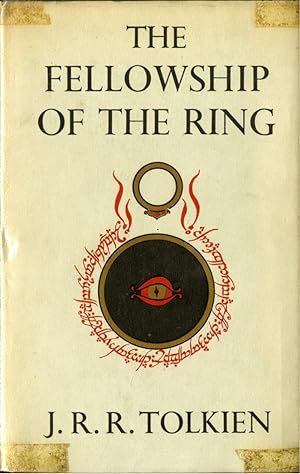
At times, older fans can get prickly about newer things. I’ve felt that way as well, mainly because the experience of reading an amazing novel can never be matched by any movie, no matter how well done. As George RR Martin recently commented, very rarely does a great book get a truly worthy interpretation, but when it happens it’s quite amazing. Dune managed it, in my opinion, and Jackson’s Lord of the Rings did, as well. But more often they just leave you cold.

Don’t adapt this, son. Don’t even try.

Most of these newer films are not made for middle aged guys, so I just accept that it isn’t for me, and go back to the books. But I admit, and as Martin said, I find the arrogance of some of these adaptations hard to believe. Luckily I will always have my bookshelves.

Wild Cards

For most of my life I’ve read copious amounts of fantasy and science fiction. I recall the Wild Cards series coming out in the late 80s; an acquaintance of mine sang the book’s praises, but the idea of comic book characters was something that at the time, as a 16 year old, I felt I was outgrowing. Maybe I was self-conscious reading Batman and Superman and the X-Men as an older teen, and advertising that I still loved those characters seemed unwise. Though of course, I read them at home, away from my peers.

During the recent holiday break, I was looking for something light to read, and picked up the first volume of Wild Cards, that series I had shunned in my young, foolish days. If George RR Martin edited it, it must be good, I reasoned. I’ve been wanting to read Winds of Winter for some years now, but alas, it seems I’ll have to wait for that. I have read almost everything else George published, so I gave it a try.

How I wish I could go back 30+ years and tell sixteen year old me to read Wild Cards. I was the perfect demographic for it back then. I guess I still am. What a fun, crazy ride I had with these stories. I didn’t love all of them, but there were enough good ones to keep me interested, and the ones I didn’t like as much still had some cool elements.

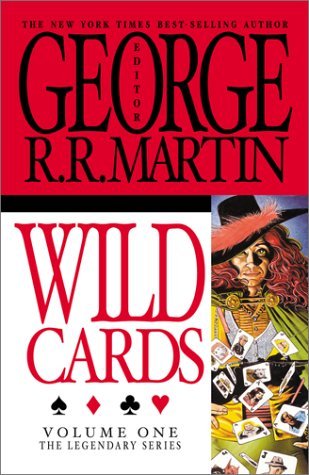
Wild Cards, for those of you unfamiliar with this now-32-volume series, is a shared world alternate universe filled with superheroes, in which, at the end of World War II, an alien virus outbreak turns a large segment of humanity into mutants. It kills some of them outright, horribly disfigures others (known as Jokers) and turns some into superhumans (aces). It’s a funny, neat idea, full of noirish and comic elements, enough to keep an adult comic book reader happy during these long winter nights. I particularly enjoyed Roger Zelazny’s entry, as well as Martin’s. I don’t want to spoil the stories, they are too fun. If you enjoy comic books, but want something a little darker and more adult themed, give these books a try.

I’d never read something like this collection before. I loved the idea of a shared world in which lots of writers try their hand in storytelling in the same setting. I also really enjoyed the way these comics were written with adults in mind. I’d never seen this before in fiction, except perhaps when I read the novelization of the 1989 Batman movie as a teen. These stories reminded me of Frank Miller’s work with Batman, and Alan Moore’s many legendary tales of Swamp Thing, Watchmen, and others. I don’t regularly read comic books these days, but this first volume in the Wild Cards series made me want to revisit my favorites, and maybe read some more in the Wild Cards series.

The Wikipedia entry for this series says that Martin and his friends started the series after playing a GURPS style RPG based on superheroes, which makes perfect sense. The detailed backstories in each tale in this volume are a perfect fit with an RPG campaign of this style. Probably most people who have played in a campaign thought of turning it into a book (what a great idea!), but leave it to uncle George to actually pull it off. I was also reminded of the wonderful Dragonlance books, which were similarly based on a D and D campaign. I may also have to try Thieves World, which is a series I never read, but which was also a shared world.

There are so many books, and never enough time for me to read all my favorites, but I’m glad I gave this series a try. Winter is the perfect time to stay inside and curl up with a book. You’ll have fun with Wild Cards, I think. I just hope Winds of Winter comes out soon.

The Dying of the Light

I recently finished George RR Martin’s 1977 Science fiction novel, The Dying of the Light; I saw him speak last October and among other things, he was talking about his earlier career, so I was eager to track this one down. In the 70s, Martin wrote this novel and other stories in his “Thousand Worlds” science fiction setting. Since I’ve enjoyed so many of his other books, I wanted to give this one a try.

The novel is set on “Worlorn,” a dying planet that has recently hosted a worldwide festival. Dirk T’Larien, the hero of this tale, journeys to Worlorn after receiving a ‘whisperjewel,’ a token of love, from his former girlfriend Gwen, for whom he’s been lovesick. He arrives hoping to be reconciled, but instead is met with a strange set of circumstances and a love quadrangle that goes south very quickly.

Martin did a credible job in this novel of creating some alien cultures that are difficult to wrap one’s mind around. Gwen is now involved with a man named Jaan Vikary, who is from a brutal culture called Kavalar, in which women are treated as property. Another Kavalar man shares her in this revolting arrangement, and there is a lot of discussion of the harsh conditions that caused the Kavalar to become so regressive. They are descended from humans, but have taken human culture in a strange direction after centuries of living through plagues and nearly dying out. As a Star Trek fan, they reminded me a bit of Klingons, holding honor above all else and demanding combat when insulted.

Dirk is puzzled that Gwen, who seems surprised to see him, has no interest in rekindling their relationship; Dirk had figured that the whisperjewel was a cry for help from her desperate situation. Eventually, he learns that someone else sent it to him, to lure him to Worlorn. He is drawn into a conflict between Gwen’s lover and other Kavalar on the planet who want them dead. There are some fun action scenes throughout, and I think that fans of Martin’s other work will be pleased with this novel from earlier in his career.

For me, the setting of this book was really interesting. A dying world that hosts an armageddon-type festival and is then abandoned as it dies is a neat idea. Martin has a lot of interesting history of the Kavalar through the book, and at times it feels like this could be a sourcebook for a science fiction RPG. There are plenty of twists and turns in the plot, as in Martin’s more famous works. He would later masterfully develop these kinds of plot elements in A Song of Ice and Fire, and it’s really fascinating to see this early career effort from him. It’s got a lot of DNA that would turn up in Game of Thrones and is an enjoyable science fiction adventure, provided you don’t mind some grimness. If you’re a Martin fan, that is probably not an issue for you.

This was a fun book. I really enjoyed Martin’s other early works too. Armageddon Rag is a great read about a cursed rock band, and his vampire book, Fevre Dream, is another one that any Martin fan will enjoy. I’m working my way through his collection of short stories, and also have his novel with Lisa Tuttle, Windhaven, in my to be read pile.

George RR Martin

Last night was such a fun event, one I’m still thinking about the next day: George RR Martin and Neil Gaiman in conversation, at Symphony Space. There are few authors who can sell out a concert hall, but George and Neil are two of them.

It was neat hearing them talk about science fiction and fantasy royalty. Gaiman and Martin knew each other through a mutual admiration and friendship with Roger Zelazny, and Neil said they struck up a friendship when Zelazny passed away in 1995. Martin gave high praise to Zelazny’s writing, which made me want to read more of his books.

Martin spoke much about his life and career. There were some really interesting moments in what he said about how much he struggled to succeed as a writer. He sold his first professional story in the early seventies, but said that even after some sustained success and many writing awards, it was difficult to write full time. He eventually quit a teaching job to do so, but said that at a certain point he had a hard time selling anything, which is why he went to Hollywood in the mid-eighties. He had successes there, but also frustrations with how difficult it was to get anything made, and the way studios would want to change his stories and adaptations.

In 1996, Game of Thrones was released and though it was successful, it was not until the third book in that series, A Clash of Kings, that he made the bestseller list. On a book tour supporting the novel, Martin said he would sign for around ten or so people at various Barnes and Noble bookstores. He hilariously recalled a story of when he arrived at a bookstore packed with fans, only to find out they were there for another signing, that of Clifford the Big Red dog. Later, as the series became a sensation and then was adapted by HBO, hundreds and even thousands started showing up to see him read and sign.

It’s hard to believe that a writer of Martin’s gifts toiled for so many years, at times unable to pay his bills, but his career arc is a good reminder of just how difficult it is to make it as a writer. We all know and love Game of Thrones now, but he put in decades of work before achieving such immense popularity.

Gaiman had some great stories, as well, the best of which was how he at one point pitched an idea to George for the Wild Card series George edits, but was rejected. The story was about a Dream king which, of course, became Sandman.

There was a lot of other fun talk between the two about history, and historical fiction, and Martin’s interest in writing in many different genres. I left feeling so lucky to have seen the two of them together. Fantasy rock stars. It doesn’t get much better. If you have the chance to see him, I highly recommend it. This video from earlier in the week, on Colbert, is also brilliant. Colbert is so well read and is such a good interviewer.