Fail Better

Many years ago, when I was taking a graduate creative writing workshop, a well-known novelist instructor of mine commented that my story, set on a college campus, did not compare well with similar books by Philip Roth, Jane Smiley, Richard Russo, and other exemplars of the genre. She was correct. My story was in no way up to that lofty standard. But perhaps, since I was an earnest young student, she might have been kinder, instead of comparing me to some of the most famous writers of the day. This particular instructor had a reputation of being this way with everyone. In fact, most creative writing professors I encountered had this same reputation, causing me to stop taking such workshops after awhile. Even so, I took these sorts of criticisms personally. I should not have done that, but I think most young writers do.

I recently saw the obituary for this person and thought it was sad. She may have been a terrible teacher, but maybe she was a good person. Then I thought that her passing really didn’t rate up there with the deaths of the true, all-time literary greats, if that’s what we are to measure lives by.

I’ve been writing and submitting for decades now. I’ve had some modest success. To be blunt, in my experience, most of the writers and creative writing professors I’ve met have been ungenerous, competitive, petty, and small minded. If and when you meet a mentor or friend in the field, you should consider this very lucky indeed. It’s everyone for themselves.

The creative writing workshop at the MFA level was a particularly odd experience. The idea, I was told again and again, was to ‘respect the work,’ yet in my classes there was little respect or support given by instructors or other students, all of whom were usually desperate to impress the professor, a person who had met with some sort of literary success at some point in their career.

What no class or instructor can do is give you the drive to write better stories. This motivation has to come from within. And in my experience, creative writing programs do almost nothing to help you navigate getting an agent or making any commercial sales, mostly because the professors have no idea how to accomplish this.

So, you write stories because you want to do it–you enjoy it and it brings you satisfaction. For most of us, we may meet with some success, or maybe not, but that becomes almost beside the point. If you meet a generous writer who wants to help you along in writing endeavors, be thankful. To quote E.B. White at the end of Charlotte’s Web: “It is not often that someone comes along who is a true friend and a good writer. Charlotte was both.”
Promotional Fees May Apply

Given the direction MLB and the Mets have been heading, I will not give them a cent this year, and will pay less attention than I have for many years. I recently posted about my disgust: I’m sick of the greed and the ownership and the corruption of the sport. But I’m writing tonight’s post after receiving an email from the Mets that I found totally bewildering.

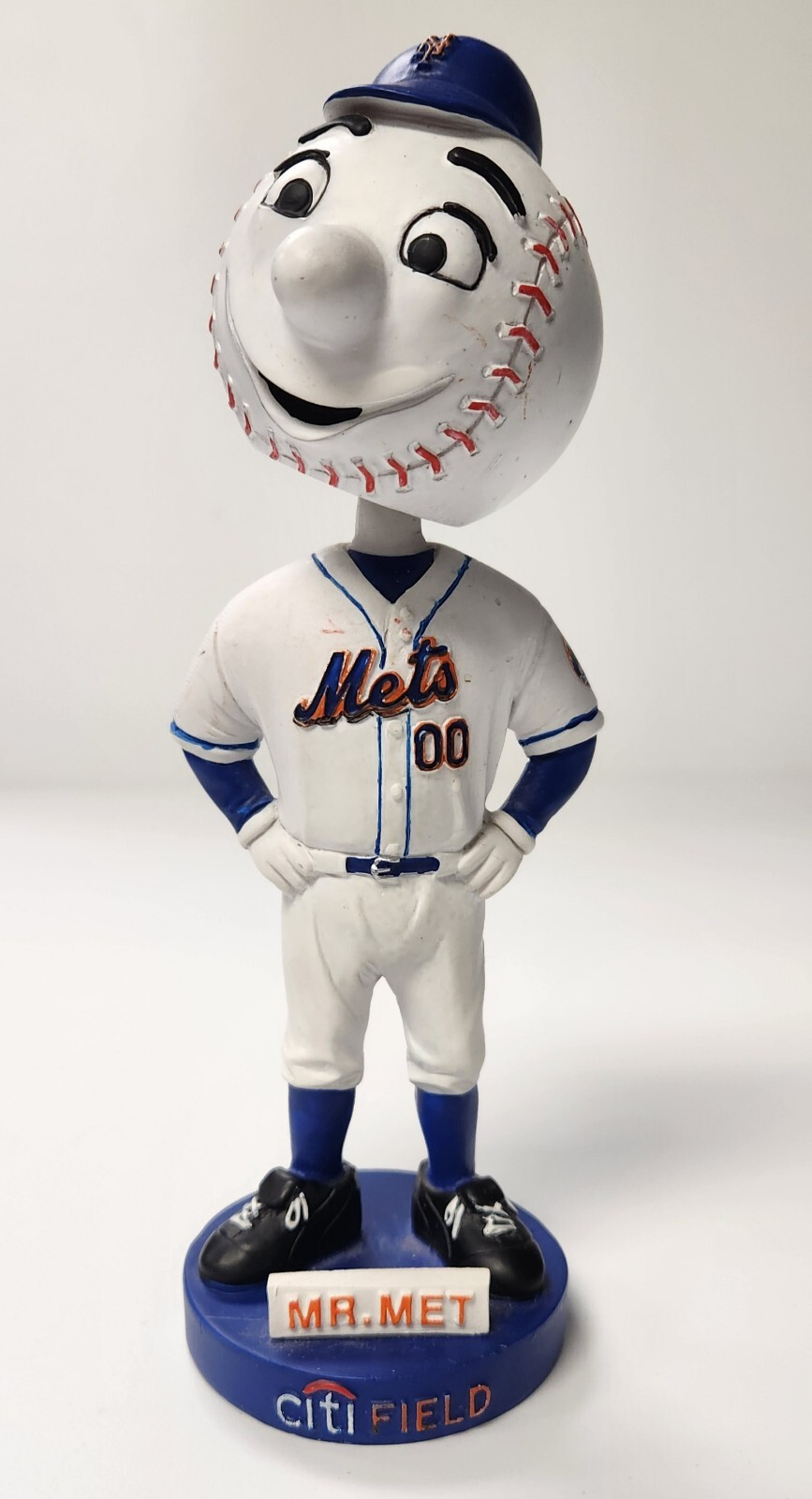
Son, if you have to ask how much this crappy thing costs, you cannot afford it…

It was typical promotional stuff about bobbleheads and other giveaways. For decades, teams have given out small promotions on certain days as a sort of inducement/thank you for coming. So you’d receive a poster or t-shirt or hat or flag or bobblehead or whatever. Just some little gewgaw you could keep and put on your shelf or file away with your memorabilia.

The weird part was that the Mets wrote that you needed a special extra ticket, beyond the price of admission, to get the bobblehead. That seemed crazy to me–these things are cheap junk, after all–but what I found out when I clicked the link was even crazier. That extra ticket costs–get this–$120. So you pay for an outrageously expensive ticket just for the right to buy another ticket to get the tacky tchotchke.

Incredible. As PT Barnum once supposedly said, there’s a sucker born every minute. Or as Waylon Smithers remarked of a 100% surcharge on tickets tacked on by Mr. Burns: “Well, it’s a policy that ensures a healthy mix of the rich and the ignorant, sir.”

A $120 bobblehead. And I thought the price of mlb tv was absurd.

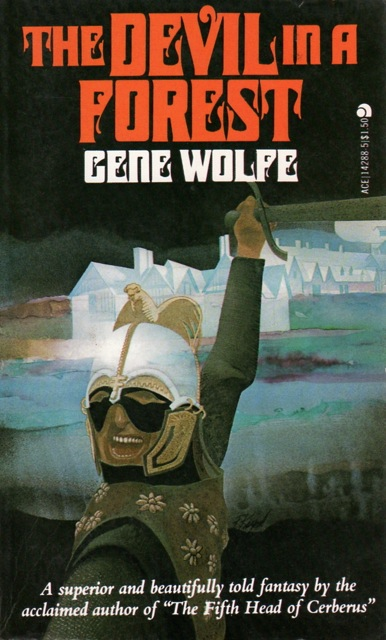
The Devil in a Forest by Gene Wolfe (1976)

Gene Wolfe is one of my favorite writers, and this is a wonderful book of his that I found some years after reading his epic Book of the New Sun, an amazing series that I want to reread soon. Unlike that dense, lengthy work, this is a shorter novel of mystery, adventure and myth, but like Wolfe’s other novels, it is  beautifully written, tightly plotted and great fun to read. I just re-read it over the holidays, after hearing the carol, ‘Good King Wenceslas,’ which reminded me of the book. Wolfe explains his writing inspiration for this novel in the epilogue:

“Shortly before Christmas one year, Gene Wolfe was singing the carol ‘Good King Wenceslas’ and was struck by the king’s questions to his page: “Yonder peasant, who is he? Where, and what his dwelling?” And by the page’s answer: “Sire, he lives a good league hence, Underneath the mountain, Close against the forest fence, By St. Agnes’ fountain.”

Wolfe recalls, “I found myself wondering who, indeed, was that nameless medieval peasant from whom most of us are, in one way or another, descended.”

The Devil in a Forest is Wolfe’s story surrounding this peasant, whose little village becomes involved in a struggle between a nameless evil and the forces of good. There is a dangerous highwayman, a mysterious murder, and strange powers that converge upon this village and create havoc for Mark, the protagonist. The attention to detail in Mark’s day to day life, and that of his fellow villagers, is quite well done and made for some interesting reading. Mark’s trials and his battle for survival are suspenseful, keeping you guessing right until the end. I enjoyed this one very much—it is so different from some of Wolfe’s other books, but his concept and the execution are excellent. I don’t want to spoil the fun for those who may be interested in reading this one, but I recommend it to anyone who has enjoyed Wolfe’s more well-known books. Fantasy writing doesn’t get much better.

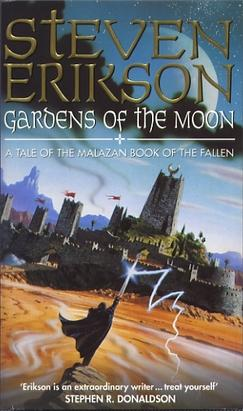
Gardens of the Moon by Steven Erikson (1999)

I recently read the first of Steven Erikson’s Malazan Book of the Fallen series, Gardens of the Moon. I had a fun time with this book, and enjoyed the epic scope of it. This is a long and dense series, and this first installment is a huge doorstop of a novel, with a cast of dozens of mages, wizards, soldiers, fighters, assassins and those caught up in the war enveloping the Malazan empire and the city of Darujistan. There are plenty of plot twists, political intrigue, and enough magic and battles to satisfy any fan of epic fantasy. If you like reading writers like George RR Martin, Tad Williams, Robert Jordan, and Brandon Sanderson, I think you’ll definitely enjoy this book. An added benefit is that this series is already completed, though the ten novels in it may seem daunting. Gardens of the Moon was first published back in 1999, and though I’d seen his books in the store and the library, I’d never read Erikson before. I’ve already picked up the second of this series and will continue with it after finishing some of the other books I’m currently reading. Highly recommended for fans of epic fantasy.