It Used to be a Game

“Loyalty to any one sports team is pretty hard to justify. Because the players are always changing, the team could move to another city…you’re actually rooting for the clothes, when you get right down to it. You’re standing and cheering and yelling for your clothes to beat the clothes from another city. Fans will be so in love with a player, but if he goes to another team, they’ll boo him. This is the same human being in a different shirt, they hate him now! Boo! Different shirt!” –Jerry Seinfeld
I have irrationally followed several New York area sports teams for my entire life. My father enjoyed watching these teams (Mets, mostly, but also the Giants, Islanders, and Knicks), so that meant I watched it. In the days when every household had a single TV, you either watched the news or sports or whatever else your parents had on, or you found something else to do.

For nearly fifty years, I have followed these teams in good and bad years. Mostly bad, though the Mets won it all in ’86, the Giants have won it four times, and when I was very young the Islanders had their dynasty. It’s fun to debate the failures and successes of these teams with friends and family, not to mention the pure enjoyment we get when we watch athletes performing at a high level.

Since I was a boy back in the 1980s, there have always been rumblings that all was not right with these sports. There were occasional strikes, which my father held a dim view of. He earned barely enough to keep us afloat and was uninterested in hearing about millionaire players and their grievances against management, though as a union man he sided with the players.

There were corrupt owners moving their teams in the middle of the night to some new city. Luckily, New York is big enough that this didn’t apply to me, though perhaps we would have been better off if they’d abandoned us. My dad still recalled with bitterness the Dodgers leaving for LA but embraced the Mets when they arrived. He wasn’t a bettor, but legend has it that at his wedding he and his groomsmen stopped by the bar to find out the score of the Met game on June 2, 1962.

Like most, my sports interest is completely tied into these kinds of family stories. I spent countless hours watching these things with my dad and the rest of my family. It was always a special day when he brought home tickets so we could see a game in person. He’s been gone for more than a decade, but whenever I watch the Mets or any other sporting event, I think of him.

I stopped following sports for a bit in college and shortly thereafter. The baseball and hockey strikes of the early 90s disgusted me, and I lost all interest. But by the late 90s I was cheering for these teams once again. After my children were born, I had less time to watch such things, but I made sure to bring them to see the good guys in person once in a while. Today, in 2025, such excursions to see the big league teams are nonexistent for us, since prices are astronomical.

There have been some very disturbing events in every major sport over the past decade or so. Aside from strikes and lockouts, there have been plenty of allegations of game fixing in every major sport. The tarnish of the 2017 world series has still not worn off for me, nor has the scandal involving baseball’s biggest star who, he and MLB claim, was scammed by his interpreter, who stole millions from him to bet on games. No one bothered to look too hard into that one. As Pete Rose said at the time, what he didn’t realize back when he was banned for life in the 1980s was that he’d just needed an interpreter to take the fall. Baseball is big business, after all, run by billionaires who don’t want their authority, or their integrity, to be challenged. Having the biggest star on the planet banned would be bad for business. There are stadiums to build at taxpayer expense, after all.

This offseason, two pitchers have been banned and may go to jail for fixing games. The story is that they merely threw certain pitches badly to win small bets. Could be true. Might also be much more widespread than baseball admits. We know that at least two guys did this. How many more are out there? And how can a sport that did absolutely nothing to an entire team that was found to have cheated their way to a championship convince us that they are willing or able to police the cheating in their sport?

A generation ago, there was a lot of hand wringing over steroids, but the game fixing issue seems far worse to me. In my view, MLB cannot even ensure the integrity of their own game. It’s a dismal situation. Virtually every team has an agreement with a sports gambling company, a mind-boggling arrangement that was correctly shunned in past years. But now every ad for a baseball broadcast is urging you to bet on your favorite team. Not really a way to inspire confidence that we’re watching something legitimate. Perhaps MLB ought to become a league like the Savannah Bananas have, a humorous spectacle complete with players dancing and doing flips in the field.

And then there is Seinfeld’s quote, which I found enormously funny when he delivered it, but as time goes by it seems less so. He was joking, but not really. This week a fan favorite who Met fans watched grow up was sent packing to Texas, in the name of something called ‘run prevention,’ which normal humans used to call pitching and defense.

My children barely care about any of this, since it is far too expensive for us to go to any games or to even subscribe to the channels on which these games appear. My oldest son, at 13, expressed disappointment, since he loved the way Brandon Nimmo was always smiling.

Once or twice a year we go to the local single a team, which charges around $8 for a bleacher seat. My family has fun for an afternoon, and I  can pretend for a few hours that it is still just a game.
Friendship and The Chair Company

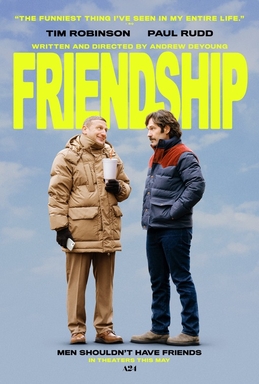
Friendship, with Tim Robinson, was great fun; if you enjoy the over-the-top characters and situations in his sketch comedy, you’ll find plenty of laughs in this tale of a misfit who can’t seem to act normally. The movie reminded me of The Cable Guy, the equally hilarious story of a man who wants so badly to be friends with a customer that he stalks him, committing crimes in the hopes of forging a connection.

This story was a bit more dramatic than that, as Robinson’s character, Craig, desperately craves the approval of his new neighbor, Austin (Paul Rudd), an incredibly cool dude and local weatherman who at first takes an interest in Craig, before finding out how unhinged he is. When Craig acts like a lunatic at Austin’s party, Austin politely suggests they go their separate ways. But Craig, who has no other friends, and seemingly no other hobbies aside from buying clothes and obsessing over them, feels totally betrayed by this rejection. He has bought a drum kit, lost his phone, and started acting like the carefree spirit he believes Austin to be, and won’t let this bromance die without a fight.

What follows is the relentless destruction of Craig’s life—he loses everything—his wife, his job, and what little dignity he once possessed, as he pursues his lost friend, only to find that Austin isn’t who he seems. At one point, in total despair, he screams at Austin “You all accepted me way too fast! You can’t do that! You made me feel too free! People need rules!”

These lines, delivered with Robinson’s trademark, bug-eyed wildness, had me dying with laughter and encapsulated this poor man’s dilemma. He’s an awkward psychopath who holds a good job, with nice clothes, a nice house and family, but he is emotionally stunted, living through his phone, spending his days wishing he could fit in and be a normal guy, something he enviously watches his colleagues and coworkers do with seemingly effortless ease. For work he creates an addictive app, when not making up ad campaigns for local politicians. His wife, who has recently beaten cancer, cannot stand him, nor can his teenage son.

If there was a flaw in the movie, I thought it was in this home life. It seemed beyond belief that Craig would have married so highly above himself and had such a good job. But then again, most sitcoms have this same exact setup: an oaf with a beautiful wife and family who barely tolerate him. And there are lots of weirdos walking among us, doing all sorts of crazy things under the veneer of normality. I really enjoyed this movie, even if I am more partial to Robinson’s more light spirited anarchic stuff.

Speaking of which, I found the first episodes of his new HBO show, The Chair Company, to be totally hilarious and loved everything about it. In this one, Robinson again plays a suffering everyman, this time seeking justice against an office furniture business after enduring a hysterically funny mishap in front of his entire workplace. Robinson is so good at these kinds of characters, barely holding his life together, trying to keep a lid on a brimming rage that bursts out over and over, through minor and major inconveniences. After his fall, he is determined to root out the villains who have embarrassed him, no matter the cost. The first two episodes moved him down this dark path in a painfully funny manner, and I can’t wait to see just how outrageous it gets over the course of the story.

Halloween Reading List

Starting Octber 1, I wrote short reviews and thoughts about 31 different Gothic tales that I have enjoyed through the years. I did this in no particular order, choosing a new one every day from my bookshelf. My reading is skewed heavily toward things published decades ago; the most recent one here is Roger Zelazny’s A Night in the Lonesome October, from 1993, with the oldest being Anne’s Radcliffe’s The Mysteries of Udolpho from 1794. Thirteen of these were written before 1900. The breakdown, when I looked at it, went like this:

1700s: 1 1800s: 12 (1890s: 5, 1810s, 2, 1830s, 2 1840s 1 1860s 2) 1930s: 1 1940s: 1 1950s: 4

1960s: 2 1970s: 4 1980s: 5 1990s: 1

The entire list, with links, is below, for anyone interested. My reading habits in general skew this way, as well. For whatever reason I am not usually in the habit of reading contemporary things or bestsellers, with some exceptions, which you can see on the list. I recall many years ago a creative writing professor damning me with faint praise by saying my writing style was ‘old fashioned,’ which I took as a badge of honor.

This was a fun project, and I may do a more limited one of holiday tales in December.

  1. The October Country by Ray Bradbury, 1955
  2. Young Goodman Brown by Nathaniel Hawthorne, 1835
  3. The Sketch-book of Geoffrey Crayon by Washington Irving, 1819
  4. A Night in the Lonesome October by Roger Zelazny, 1993
  5. The Case Against Satan by Ray Russell, 1962
  6. The Exorcist by William Peter Blatty, 1971
  7. The Haunting of Hill House by Shirley Jackson, 1959
  8. Fevre Dream by George RR Martin, 1982
  9. The Body by Stephen King, 1982
  10. I Am Legend by Richard Matheson, 1954
  11. Frankenstein by Mary Shelley, 1818
  12. The Turn of the Screw by Henry James, 1898
  13. The Yellow Wallpaper by Charlotte Perkins Gilman, 1892
  14. A Good Man is Hard to Find by Flannery O’Connor, 1953
  15. Interview With the Vampire by Anne Rice, 1976
  16. In Dark New England Days by Sarah Orne Jewett, 1890
  17. Ma’ame Pelagie by Kate Chopin, 1894
  18. The Moonstone Mass by Harriet Prescott Spofford, 1868
  19. The Phantom Coach by Amelia Edwards, 1864
  20. The Refugee by Jane Rice, 1943
  21. Ghost Story by Peter Straub, 1979
  22. Mort by Terry Pratchett, 1987
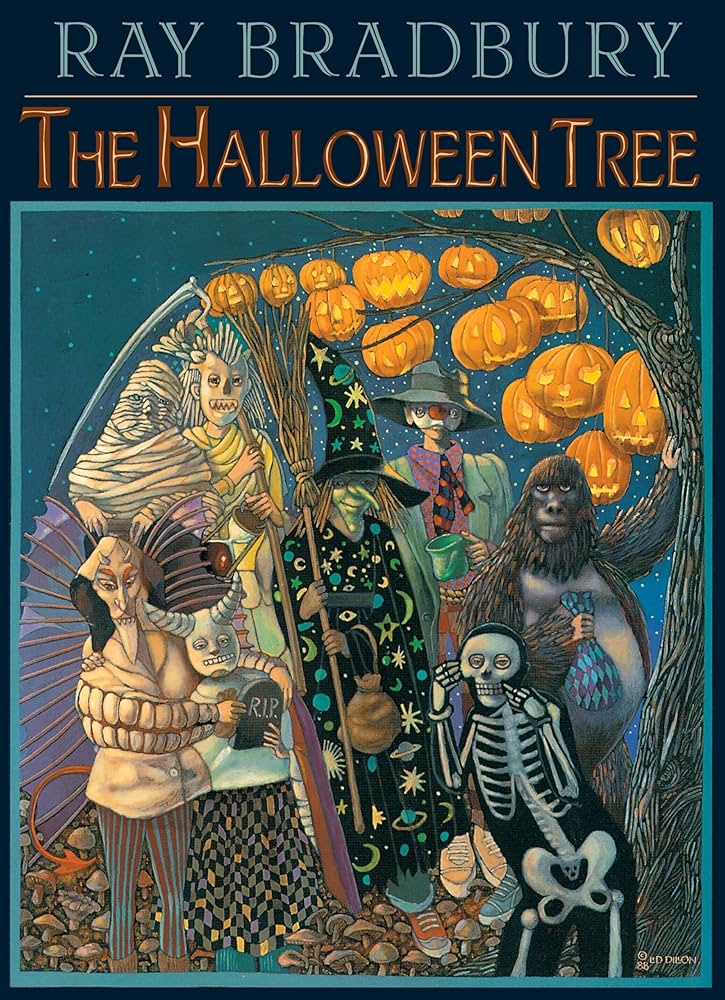
  23. The Halloween Tree by Ray Bradbury, 1972
  24. Something Wicked This Way Comes, by Ray Bradbury, 1962
  25. The Witches of Eastwick by John Updike, 1984
  26. The Fall of the House of Usher by Edgar Allan Poe, 1839
  27. The Cask of Amontillado by Poe, 1846
  28. Dracula by Bram Stoker, 1897
  29. The Mysteries of Udolpho by Anne Radcliffe, 1794
  30. The Stress of Her Regard by Tim Powers, 1989
  31. At the Mountains of Madness by H.P. Lovecraft, 1936