At the Mountains of Madness by H.P. Lovecraft (1936)

“It is absolutely necessary, for the peace and safety of mankind, that some of earth’s dark, dead corners and unplumbed depths be let alone; lest sleeping abnormalities wake to resurgent life, and blasphemously surviving nightmares squirm and splash out of their black lairs to newer and wider conquests.”
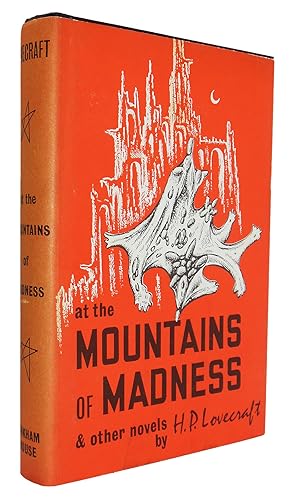
Lovecraft is another of those giants of horror who could fill this list all on his own, but I had to pick just one story, and this is one I really enjoy. A group of ill-fated scientists from Miskatonic University make the terrible mistake of going to Antarctica where they find evidence of a race of beings far older than anything known to humans before, beyond a range of mountains larger than any that have ever been recorded. They explore buildings left behind by this civilization, which have been devised through ‘non-Euclidean geometry,’ and find hieroglyphs that help them learn about Elder-things and shoggoths, monsters that populated the place and whom they have foolishly awakened. They escape, but not before losing several members of the party. The novella serves as a warning to others who might want to return to study the antarctic.

Lovecraft has of course been highly influential and much has been written about him and his work. “Who Goes There?”, John Campbell’s horror tale set in the arctic with a group of explorers, immediately comes to mind, as do the films based upon it, including the 1951 version “The Thing From Another World,” as well as John Carpenter’s excellent “The Thing” from 1982.

I think it’s best to learn about Lovecraft straight from the source. There are many entry points for his mythos, but I think this is a great place to start. You could also read the Call of Cthulhu, The Case of Charles Dexter Ward, Dagon, or any number of others. The Library of America has a wonderful collection of his tales that I highly recommend.

So there you have it. Thirty-one tales of gothic terror and wonder over the month of October. I think it’s a pretty good list of some of the gems I’ve read over the years; I chose them in no particular order as the month went by, but I stand by each of them as tales that are either unique, or influential, or just plain scary enough to keep you up at night. Perhaps I’ll choose another 31 next October. For now, I hope you’ve enjoyed perusing this list, and that you’ve been inspired to read something you haven’t before. If you have your own favorites, or if you like what you’ve read, be sure to let me know in the comments.

Happy Halloween!
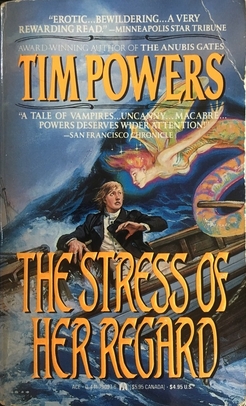
The Stress of Her Regard by Tim Powers (1989)

“Crawford felt drops of sweat run down his ribs under his shirt as he slowly forced the muscles of his neck to tilt his head up; he saw the upper slope, bristling with trees that obstructed a view of the road, and then he saw the outer branches of the tree he was braced against, and finally he gathered his tattered courage and looked straight up.

And it took all of his self-control not to recoil or scream, and he was distantly resentful that he couldn’t just die in this instant.”

Tim Powers has had a long and illustrious career writing historical fantasy, and he ought to be a household name. You can read any of his books and be transported to a different world, but for this time of year I think Stress of Her Regard is a great place to begin. It’s a wonderful tale about Michael Crawford, who accidentally finds himself the object of a nephilim, a sort of succubi that he has unwittingly courted. His bride to be is found dead, and he’s the main suspect. He travels around Europe trying to rid himself of the creature, and meets up with Shelley, Byron, Keats, Dr. Polidori, and others, all of whom are trying to avoid these strange, dangerous creatures. It’s great fun to read and gets my highest recommendation-for those who love literary history and fantasy, it doesn’t get much better than this. I’d also recommend Powers’ other books, which are all terrific. I particularly enjoyed On Stranger Tides, a pirate story, and his Last Call series. He’s one of the best fantasy writers we have, and he’s still going, with his latest book due out this fall.

The Cask of Amontillado

Today, I’m again doing some brief thoughts on a few horror stories I’ve enjoyed over the years and which deserved inclusion on this reader’s guide to Halloween. You could probably pick 31 stories by Poe to read this season, but here are two of my very favorites, as well as two highly influential gothic novels.

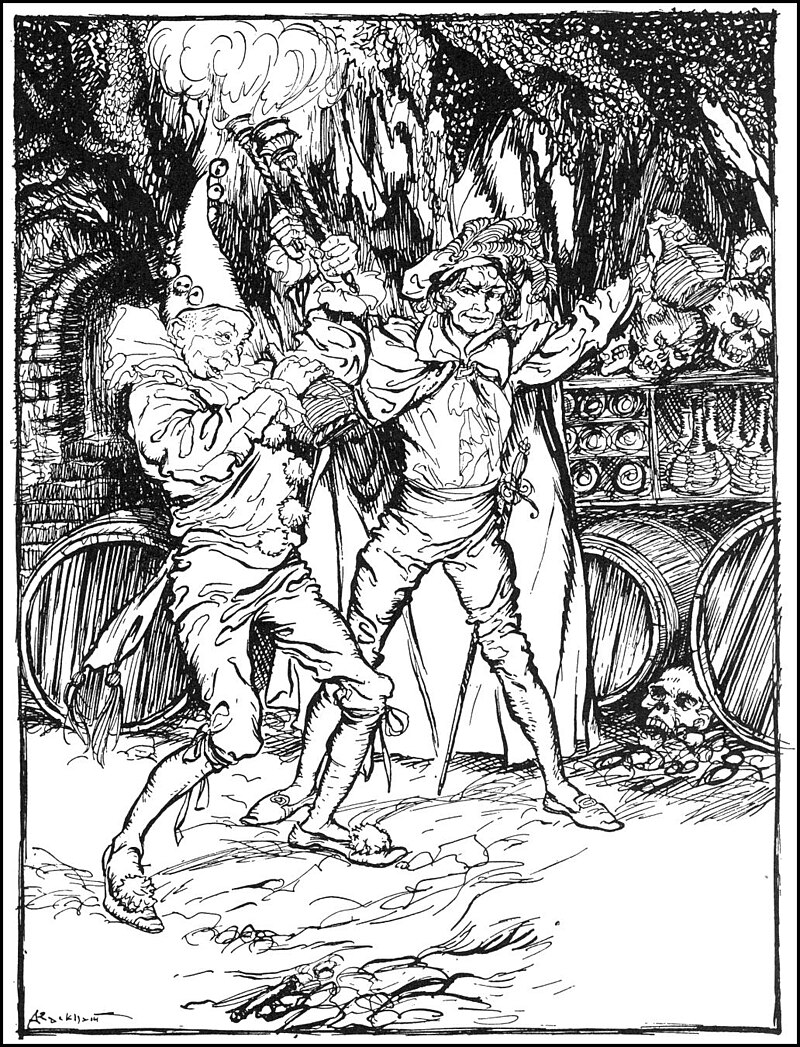
The Cask of Amontillado by Edgar Allan Poe (1846)

1935 Illustration by Arthur Rackham

“The thousand injuries of Fortunato I had borne as I best could, but when he ventured upon insult, I vowed revenge. You, who so well know the nature of my soul, will not suppose, however, that I gave utterance to a threat. At length I would be avenged; this was a point definitely settled—but the very definitiveness with which it was resolved, precluded the idea of risk. I must not only punish, but punish with impunity. A wrong is unredressed when retribution overtakes its redresser. It is equally unredressed when the avenger fails to make himself felt as such to him who has done the wrong.”

One of the most widely read and anthologized stories of Mr. Poe, who was perhaps the greatest writer of Gothic tales, the Cask of Amontillado has long been a favorite of mine, as I’m sure it has for many others. The first time I read it, I couldn’t quite believe what I was reading. This was supposed to be old, boring literature, and here we were amid one of the most horrible things my young brain had ever contemplated. For the first time, I realized that these old tales were perhaps better than whatever slasher stuff was at my local multiplex.

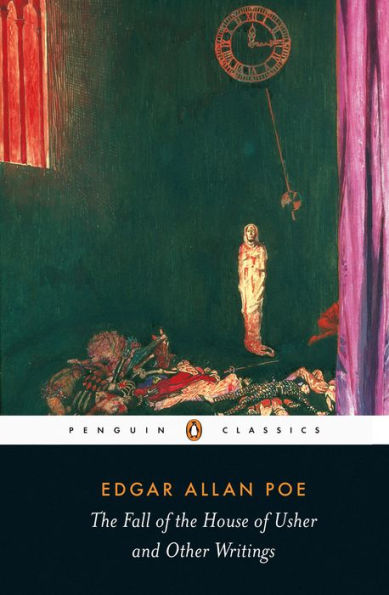
The Fall of the House of Usher by Edgar Allan Poe (1839)

“DURING the whole of a dull, dark, and soundless day in the autumn of the year, when the clouds hung oppressively low in the heavens, I had been passing alone, on horseback, through a singularly dreary tract of country; and at length found myself, as the shades of the evening drew on, within view of the melancholy House of Usher.”

This tale gave me the chills when I first read it as a lad, and it still has that effect now. It gets weirder and weirder as it progresses; a bizarre, supernatural and disturbing story of a reclusive man, his ghostlike sister, and their creepy ancestral home. One of the greatest horror tales ever written.

I also highly recommend a trip to the Poe Cottage in the Bronx, where he lived for a time. It’s such a neat piece of local history–a lot of places want to claim Poe as their own, but he did live in New York for the last few years of his life, with his ailing wife and her mother, and the small museum there is well worth a visit for New Yorkers.

Dracula by Bram Stoker (1897)

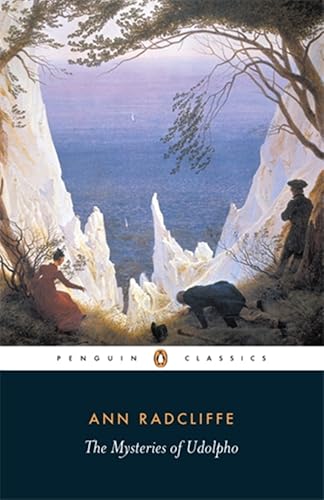
The Mysteries of Udolpho by Anne Radcliffe (1794)

“A well-informed mind is the best security against the contagion of folly and vice. The vacant mind is ever on the watch for relief, and ready to plunge into error, to escape from the languor of idleness. Store it with ideas, teach it the pleasure of thinking; and the temptations of the world without, will be counteracted by the gratifications derived from the world within.”
― The Mysteries of Udolpho by Anne Radcliffe

“How blessed are some people, whose lives have no fears, no dreads; to whom sleep is a blessing that comes nightly, and brings nothing but sweet dreams.” Dracula by Bram Stoker

No list of Halloween reading would be complete without Dracula, one of the first novels of its kind. An epistolary novel that moves much slower than most of the film versions with which people may be more familiar, it inspired many dozens of similar books. Stoker borrowed heavily from folklore to write this tale, which many critics have noted bore similarities to Anne Radcliffe’s The Mysteries of Udolpho, which is also well worth reading. Those interested in literary history and gothic tales should read both of these. Udolpho was published in 1794 and is considered by many to be the first gothic novel. The tragic story of a young woman’s misfortunes and strange occurrences at a castle where she lives, Udolpho has been praised by literary critics who have written on how this groundbreaking work influenced many later writers, including Poe, Stoker, Henry James, and Jane Austen, to name just a few.

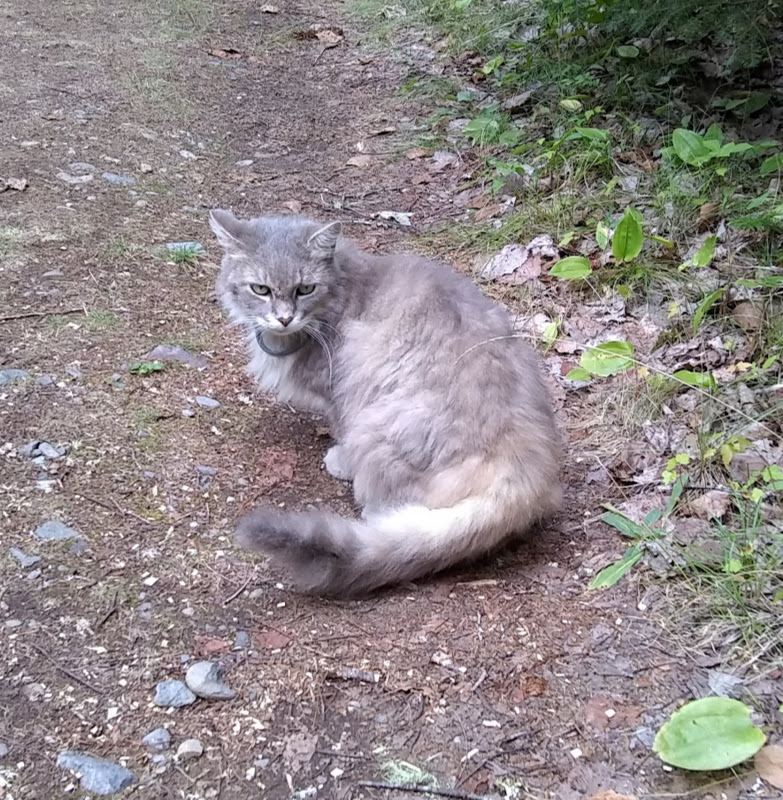
Mookie

Mouser, keeper of the hearth

Mighty warrior, terror of birds, snakes, squirrels,

Eyeing the insolent groundhog with fury.

Purring loudly to wake your ancestral lions,

Filled with pride, yet thankfully

Kindhearted toward babies, even when they pulled your tail.

Thanks for sleeping at the edge of the bed for nearly twenty years.

Happy hunting.

“Mookie” 2007-2025

Beloved friend, fierce hunter, always in our hearts.

Something Wicked This Way Comes…

I was quiet the past few days due to a campout, which was a bracing seasonal treat. It was a gorgeous weekend, the foliage was on full display, we heard owls at night as we enjoyed the fire, saw turkeys and deer and other small critters. It’s great to reconnect with nature when you’re able.

Today I’ll offer three short reviews of seasonal stories, to keep this October project going.

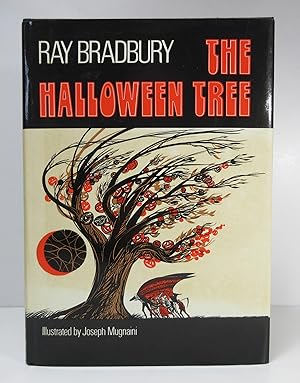
The Halloween Tree by Ray Bradbury (1972)

“Tom Skelton shivered. Anyone could see that the wind was a special wind this night, and the darkness took on a special feel because it was All Hallows’ Eve. Everything seemed cut from soft black velvet or gold or orange velvet. Smoke panted up out of a thousand chimneys like the plumes of funeral parades. From kitchen windows drifted two pumpkin smells: gourds being cut, pies being baked.”

This is a wonderful treat, a book that can be savored and read aloud to kids as the date draws near. I love doing that with my own children, and it holds up so well to repeated readings. It’s the story of a group of friends who go out trick or treating only to find that one of their pals, Pipkin, is extremely ill. To save him, they must accompany the mysterious Mr. Moundshroud on a journey across the world and many different cultures, learning about various rituals of death and the spirit world. This really is the perfect Halloween book for tweens and dreamers of all ages. In 1993, it was made into an animated special starring the great Leonard Nimoy as Moundshroud.

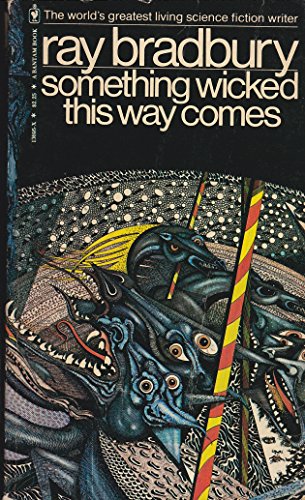
Something Wicked This Way Comes by Ray Bradbury (1962)

“And if it’s around October twentieth and everything smoky-smelling and the sky orange and ash gray at twilight, it seems Halloween will never come in a fall of broomsticks and a soft flap of bedsheets around corners.”

Bradbury was so prolific and wrote so many fine tales that it is hard to narrow it down to his best. In fact, you could have a list of 31 Bradbury stories for the season. But this one is a personal favorite of mine, bringing together all of Bradbury’s great themes in one place, in an extremely satisfying story of two friends, Jim Nightshade and Will Holloway, and the strange carnival that comes to Green Town one Halloween. I’ve written essays on this book and have read it a number of times, and to me it just gets better as the years go by. I love this story, and I think anyone who enjoys this season will love it, too. Probably my favorite book on this list, and that is saying something. Bradbury was heavily involved with the feature film from 1983, which is also a lot of fun.

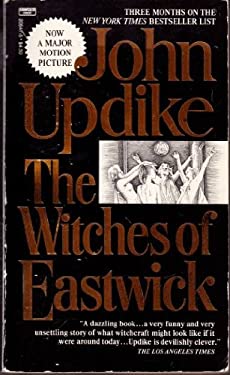
The Witches of Eastwick by John Updike (1984)

“Not until midlife did she truly believe that she had a right to exist, that the forces of nature had created her not as an afterthought and companion—a bent rib, as the infamous Malleus Maleficarum had it—but as the mainstay of the continuing Creation, as the daughter of a daughter and a woman whose daughters in turn would bear daughters.”

John Updike needs no introduction from me or anyone else. I was intrigued by the idea of this book about modern day witches living in Rhode Island, since I knew Updike from his Rabbit books, which I thoroughly enjoyed. I’ve yet to read a better saga about an American everyman in crisis, and find Updike’s prose to be really wonderful. This book is a total departure from that sort of novel, though his poetic command of language makes the book a joy to read. Told from the witches’ point of view, this is a fun, feminist update to these kinds of legends. If you are looking for a great literary read, this book’s for you. It was made into a successful film in 1987, with an all-star cast, directed by George Miller. Updike wrote a sequel in 2008 called The Widows of Eastwick.

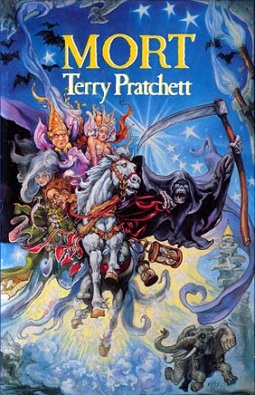
Mort by Terry Pratchett, 1987

“There should be a word for that brief period just after waking when the mind is full of warm pink nothing. You lie there entirely empty of thought, except for a growing suspicion that heading towards you, like a sockful of damp sand in a nocturnal alleyway, are all the recollections you’d really rather do without, and which amount to the fact that the only mitigating factor in your horrible future is the certainty that it will be quite short.”

Today’s post is brief, as I’m heading out for the weekend, but I wanted to keep adding to my Halloween list of capsule reviews. I’ve been doing short reviews of some pretty heavy and disturbing horror fiction this month, and I thought I’d lighten things up and add the great Terry Pratchett to this reader’s guide to Halloween. There are a great many places you can start with the wonderful Discworld series, but Mort is as good as any of them. The fourth in the saga, published in 1987, this is the first in his ‘Death’ sequence. Mort is Death’s apprentice and he’s pretty unsuited for the job. He falls in love with death’s daughter, believe it or not, which leads to plenty of magic, slapstick and other hijinks as always in Ank-Morpork. If you like this kind of humor, it doesn’t get much better than Pratchett, and this book will give you lots of laughs, which we can all use right about now.

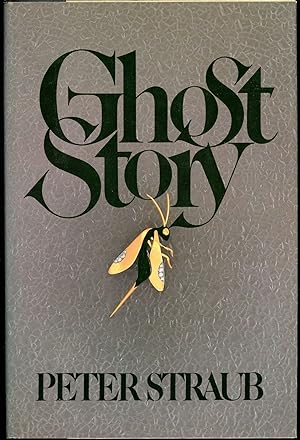
Ghost Story by Peter Straub (1979)

Ghost Story was a great success for Peter Straub when it was published in 1979, and it’s easy to see why. The novel has all kinds of unsettling stories within, enough to keep any reader up late at night. It’s written in the form of ghost stories told by four old men who suffer from terrible nightmares. Their stories from their own youth seem frighteningly believable and really captured my interest as I read. Since the men are elderly, we are reaching back in time many years, learning of strange happenings in rural upstate New York. I happen to live up here, and I felt Straub did a great job in that vein, carrying on the tradition of Washington Irving. The ghost tales become increasingly elaborate, with supernatural events in the present time overwhelming the characters.

I really enjoyed reading this book, which received high praise from Stephen King and others. (King would also collaborate with Straub on two different novels, The Talisman and Black House.) Straub wrote many successful novels and in addition to editing the Library of America’s Fantastic Tales set, which I’ve raved about a few times, he also edited their excellent H.P. Lovecraft volume. He was one of the greats of horror fiction, and this is a perfect starting point for his work.

The Refugee by Jane Rice (1943)

Jane Rice wrote many science fiction and horror tales during the Golden Age of science fiction; The Refugee is one of them, first published in Unknown Worlds, a magazine edited by the legendary John Campbell, in October 1943.

Unknown Worlds, October 1943

This story has a real pulp feel to it—the heroine, Milli, is in some meager circumstances in wartime France, dreaming of better days, when a naked young man appears in her garden. She is intrigued by him, and befriends him when he reappears the next day, even after we learn that a mysterious and brutal murder of a neighbor has happened the night before. Sounds like a bad idea, but Milli is undeterred. The young man eyes her hungrily and Milli finds him quite appealing, leading to some sensual dialogue and imagery. Milli leads him inside and they have an encounter that is not what you might expect; the twist ending is comical and left me wanting to read more by Rice.

This is another one that I found in American Fantastic, the Library of America collection. Editor Peter Straub really outdid himself with this two volume set, it belongs in the library of every horror/fantasy reader. He brings together a real treasury of gothic tales, some quite well known, and others that deserve a wide audience.

The Phantom Coach, by Amelia Edwards (1864)

In the grand tradition of Victorian Christmas ghost stories, Amelia Edward’s The Phantom Coach first appeared in The December, 1864 issue of Charles Dickens’ literary journal, All the Year Round. Amazingly, the preceding link is to that full issue (the cover image is below), which I intend to read. Much of the run of this journal is freely available online, thanks to the Hathi Trust, the Internet Archive, and other sources.

The narrator of this tale of the damned is a man named Murray who is traveling across the Scottish moors when a snowstorm hits; afraid he won’t make it back home, he hails a passing stranger and asks for shelter. The man, Jacob, is the servant at a nearby house, but warns Murray that his master will not want him to stay. Jacob reluctantly allows Murray to follow him back to the residence.

The master of the house is at first irritated by Murray’s presence and tells him he has lived in this secluded place for twenty-three years, with no visitors at all for the past four. But the man is eager for news of the outside world—they have a fireside chat during which the old man tells him:

“The world grows hourly more and more sceptical of all that lies beyond its own narrow radius; and our men of science foster the fatal tendency. They condemn as fable all that resists experiment. They reject as false all that cannot be brought to the test of the laboratory or the dissecting-room. Against what superstition have they waged so long and obstinate a war, as against the belief in apparitions? And yet what superstition has maintained its hold upon the minds of men so long and so firmly?”

The man further says that he himself believed in the supernatural, and as a man of science, his career was ruined for it. He speaks with eloquence about various philosophers and scientists, leaving Murray in awe at the breadth of his knowledge; Murray says that he “wandered from topic to topic, from speculation to speculation, like an inspired dreamer.”

When the storm ends, Murray wishes to make his way home, though it is late at night—it’s decided he’ll join the mail coach, which will be passing through a few miles away. Jacob leads him to the stop, and now the story gets macabre. He mentions that a mail coach had crashed over an embankment, killing all aboard, nine years before.

It’s at times like this in most ghost stories when I, and most readers, want to tell the protagonist to find some other way home. Of course, Murray doesn’t. He gets on the coach when it arrives, at first relieved to be out of the cold, until he realizes the awful truth of the matter.

This is a very fun, atmospheric horror tale, and I can see why it has been anthologized so often. You are set up beautifully by the desolate moor, the irritable servant, finally the old man telling tales of the supernatural in a parlor teeming with hundreds of books and scholarly apparatus of every conceivable kind. Incidentally, I want a room just like this, complete with a fireplace and ghost stories and a glass of sherry. If anyone out there reading this wants to help me achieve this, I’d be grateful.

 I came across my copy of this tale in a Dover thrift edition of ghost stories. I’ve loved those Dover editions since I was a young man—for just a few dollars you get some first-rate stories. My college instructors used to kindly assign these editions to their poor students, and I’ve kept with the tradition.  

Amelia Edwards was a woman of many talents: in addition to writing many novels and short stories, she was also a journalist, illustrator, and Egyptologist. Like most of the authors on this list, you can learn more about her life in her Dictionary of Literary Biography entry, though you will need a login to access it.

The Moonstone Mass by Harriet Prescott Spofford (1868)

Harriet Prescott Spofford was a prolific writer of short stories—this gothic tale, The Moonstone Mass, predates HP Lovecraft’s tales of madness in the arctic by a good half century or more, but would feel right at home in one of his books. The narrator is told by his uncle that he will receive a large inheritance if he seeks the Northwest passage, and he decides to try, on a ship called the Albatross, a bad idea if I ever heard one. He must delay his marriage to Eleanor, his beloved, but apparently considers this worth the risk.

Once on his voyage, things start to get weird. After an uneventful summer, the ship becomes encased in ice, and eventually the narrator leaves it with a team of dogs to try and find some passage to the west where the stranded crew might escape to safety. Instead, he finds himself in a world of cosmic horrors. He loses all track of time, his dogs die of fear as they are surrounded by cold light. He seems to either hallucinate or have a strange otherworldly experience:

“These enormous days and nights, swinging in their arc six months long, were the pendulum that dealt time in another measure than that dealt by the sunlight of lower zones; they told the time of what interminable years, the years of what vast generations far beyond the span that covered the age of the primeval men of Scripture— they measured time on this gigantic and enduring scale for what wonderful and mighty beings, old as the everlasting hills, as destitute as they of mortal sympathy, cold and inscrutable, handling the two-edged javelins of frost and magnetism, and served by all the unknown polar agencies. I fancied that I saw their far-reaching cohorts, marshaling and maneuvering at times in the field of an horizon that was boundless, the glitter of their spears and casques, the sheen of their white banners; and again, sitting in fearful circle with their phantasmagoria they shut and hemmed me in and watched me writhe like a worm before them.”

Amidst this, he sees a brilliant moonstone, “a thing so real, so genuine, my breath became suspended; my heart ceased to beat; my brain, that had been a lump of ice, seemed to move in its skull.” He is on a moving ice floe and attempts to climb toward the mass but is caught in an avalanche. When he recovers, he is back in an arctic fishing village. The Albatross is never found. No one believes his story, least of all his uncle. Eleanor believes him, but wishes to hear nothing about it, yet the narrator ends his tale saying he will someday recover the precious stone.

This reminded me of Lovercraft in several ways, not least because it is set in the arctic, and the narrator is up against unknowable, ancient beings that seem to bend space and time. The narrator also seems intent on his own destruction even in the face of all this—he’s drawn by the lure of this talisman. This is an interesting tale since it predates Lovecraft, and polar exploration, by decades. It’s an excellent precursor to Lovecraft, who is much better known to horror readers, and a fine story.

I’d not encountered Spofford’s work before reading this tale, but I’ll be sure to fix that. It was included in the Library of America’s wonderful collection, American Fantastic Tales. I’ve taken a few stories on this list from that excellent two volume set, which I give my highest recommendation.