
One of my fondest, most primal memories of childhood is being up late in the summertime, reading a good book, while everyone else in our busy house was asleep. There were so many novels I enjoyed back then, and I read indiscriminately, for the pure joy of being lost in a fantastic new world.
There were many great series for young people back in the early 1980s, and I read many of them. The Hardy Boys, The Black Stallion, Matt Christopher’s sports stories, Encyclopedia Brown the boy detective, Danny Dunn, a boy wonder who created all kinds of machines with his pals, and on and on. There were some great works of literature too, like Madeline L’Engle’s A Wind in the Door, Mark Twain’s Tom Sawyer Detective, Ray Bradbury and The Martian Chronicles, and others. Today I can see how much more sophisticated these last three are, but as a young boy I didn’t care about their literary merit, I just wanted to read.

To read as a nine year old meant getting lost in another world that seemed so real I became irritated when my mundane surroundings intruded. It meant an escape into magic and mystery and wonder, into past eras that seemed completely real, as if I were suddenly in a time machine, transported to colonial era America, or King Arthur’s Court. Perhaps I’d go to a distant strange planet, or an isolated pacific island, or any other a million different times and places. There was nothing so wonderful in the world as being lost in those pages, many millions of miles away from wherever I was and whatever was happening around me in my little corner of the world.
I’m now fifty, and very occasionally this magnificent feeling will come over me again when I’m reading a truly great, original book. It seems to happen less and less these days; perhaps that is a failure of imagination on my part, or perhaps it just happens with age. After you’ve read so many books, they cannot all have that glorious impact, and many of them will seem merely adequate. I’ll say that in the past few months, Ron Chernow’s Hamilton was a biography that transported me to the early days of America in a way that was quite breathtaking; I don’t normally read a lot of history, but he is such a fine writer, telling the story of the founder in such an empathetic way, that I was swept up in the drama of it and couldn’t wait to read more.
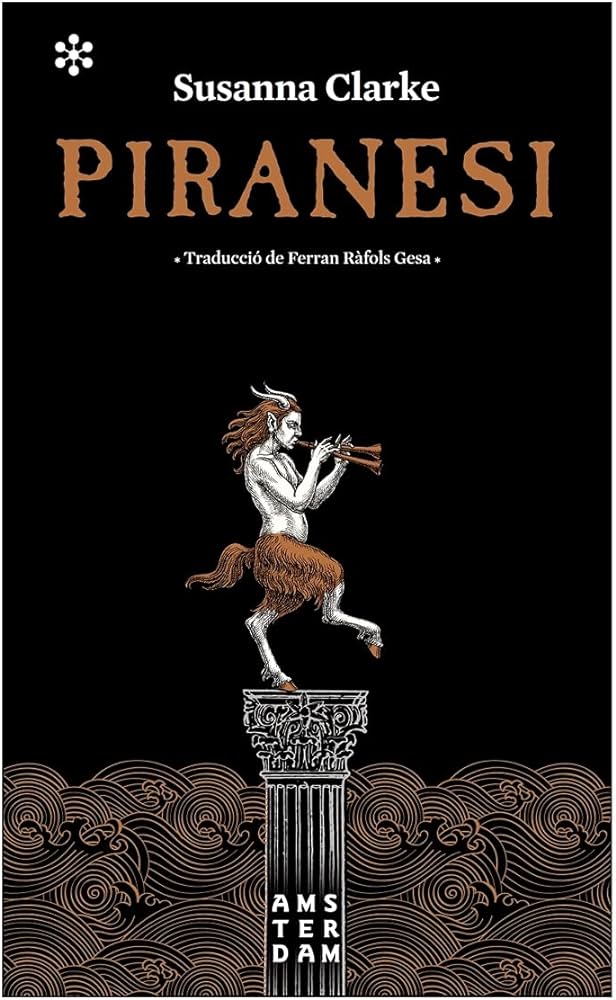
Novels are a different matter, and as I’ve read so many of them, it has become harder for me to find ones I truly love, that affect my outlook so dramatically, that can transport me in that same primal way. Susanna Clarke’s writing does that for me, and I recall a well-spent winter evening not long ago, when I was up through the night, finding revelations on every page of her incredible book, Piranesi, which I finished in one sitting. I can’t recommend her work highly enough, and I was ecstatic to learn she has a new novel arriving this fall.
In this hyper-connected age, it is increasingly difficult to shut out the outside world and enter the fortress of mystery and imagination that is a great reading experience. I read whenever I can, as much as I can, but with the demands of a job and a family it’s not always easy. I’ll stay up late at night when I’m not too tired, or read when I have downtime on the train or before the rest of my family is up. I guard my reading time jealously, just like when I was a boy, and get frustrated sometimes when there isn’t enough time or quiet for me to read every novel or work of history or criticism on my shelves. My collection is wide and varied–I have books on a great many topics, because I am never sure which one I will need at any given moment. This is one of the great things about being a librarian, as well: if I don’t have it on my shelves at home, I can almost certainly find what I need in the library.
I enjoy movies, though I’m not exactly a movie critic. I have found that films, television and video games don’t transport me the way a good book does. Maybe some people find the same elation and deep mystery watching things or playing video games, but it doesn’t happen for me. I can enjoy such media, but it won’t impact me in the same way, and while I don’t know for certain, I suspect that the effort required of a careful, thoughtful reader will always make the reward of reading that much greater. To me, it’s a bit like the difference between hiking to the top of a mountain and taking in the view, as opposed to having someone drive you up there on a paved road. (The same can be said for writing vs. AI-assisted writing, but that is the topic for some other post.)
One of the essential things about reading is the way it can change your perceptions, your outlook, your knowledge of the world, and perhaps even knowledge of yourself. The greatest works help us do this and will enrich your life in ways like nothing else. For me, reading a great book is one of the last bulwarks I have in guarding my mind from a ceaseless stream of meaningless junk that increasingly defines modern life.
The other night my young daughter, who is brilliant and perfect, happened upon the Twilight Zone episode, “Time Enough at Last,” with the great Burgess Meredith. I hesitated to show it to her, but she was eager to see it and I relented. At the end, she was in tears for Henry Bemis, the tortured man who lives through an atomic war only to be left utterly alone, despondent, bereft of all hope, sans spectacles. “I hate this,” she said. “He was finally able to read and now he can’t.” I felt like an awful father for having shown her the episode. We talked a bit about the message of the show but she was inconsolable, much like I was decades ago when I first saw it.

In these waning days of summer, I admit I feel some pressure to read what I haven’t from my list so far, but my task shall be Herculean. I have a copy of Thomas Pynchon’s Against the Day, which I have never read and will likely not get to before the end of August. I have works by Saul Bellow, Robert Caro, Don DeLillo, Tim Powers, Toni Morrison, Barbara Tuchman, Octavia Butler, and too many others to list sitting on my shelves, waiting to be opened, calling to me, but time is running out. I’ll get to a few of them, and the rest will likely need to wait for winter break, or next summer, when I will have time enough at last.
 Christopher Tuthill