The Last King of Osten Ard

Those of you waiting for Winds of Winter ought to read Tad Williams, if you haven’t already; George RR Martin has credited Williams’ landmark Memory, Sorrow and Thorn trilogy of the 80s and 90s with inspiring him to write A Song of Ice and Fire. I read Williams’ original series years ago and enjoyed it, and have been having a grand time reading The Last King of Osten Ard, Williams’ revisiting of the series, begun with 2017’s The Witchwood Crown.

The Last King of Osten Ard is in every way the equal of Williams’ earlier work. When these kinds of stories get revisited, there is often the worry that the newer installments will not do the originals justice (I’m thinking of you, Star Wars and Star Trek), and fans like me often end up wishing the creators would leave such series alone. But I needn’t have worried about Osten Ard, which has always been in good hands—in some ways I think the new series surpasses the earlier one.

I spent the past several days reading both Brothers of the Wind, a prequel novel, set thousands of years before the events of the Osten Ard books, as well as Into the Narrowdark, the third of the Last King series. Williams has crafted a wonderful tale in both of these works. I found Brothers to be breathtaking in its emotional impact, and a truly unique twist on fantasy fiction. It’s the tale of two Sithi brothers: Ineluki, who would become the Storm King, and Hakatri, his less volatile older sibling. The two of them go on a doomed quest to slay a dragon after Ineluki swears an ill fated oath. The story is told from the point of view of Pamon Kes, the servant of Hakatri, who is setting the tale down years after the fateful events that would shape Osten Ard for centuries to come. This vantage point is brilliantly done, as Kes is constantly questioning his worth, feeling that as a Changeling devoted to the prince Hakatri, his entire worth comes from his ability to serve his master. But as he tells the story, he’s awakened to new possibilities for his own life, as well as the reality that his master is not as perfect as he may have thought.

The story of these two ill-fated brothers is masterfully told. Readers of Memory, Sorrow and Thorn will know that Ineluki will end up being the mad Storm King, a spirit who nearly destroys humanity in the original Osten Ard books. Here, he is a lonely, tragic figure, consumed by anger and his own sense of honor, headstrong, brave, and sympathetic. There’s a sense of tragic fate here, as in the best mythological and fantasy stories. Ineluki’s brother, Hakatri does his best to reign him in and try to save him from his half mad quest. I found this to be an gripping story, and was so impressed with the way Williams makes his readers feel great sympathy for two of the biggest villains of his world.

In reading the new Williams series, I’m reminded of the way Ursula LeGuin revisited Earthsea. In coming back to it, she, like Williams, told a more complex tale, one that turned readers’ expectations upside down. Depending on how a story is told, or how history is written, villains can even become heroes, and there is a lot of exploration of that theme here. For example, the Sithi, who were allies of the Erkynlanders in the first war against the Norns, are in these novels mostly indifferent to the plight of their one time allies, having felt mistreated after the end of that conflict. The Norns, meanwhile, have multiplied and want to avenge what they see as the destruction of their ancestral homelands by the humans—events elaborated on a lot in the prequel novel, in which the Sithi know that the humans will eventually outnumber them and take their lands.

There is still plenty of the stuff that fantasy fans know and love so well: double-dealing, perilous and hopeless quests, epic battles, large scale combat, romance, magic and sorcery—you name it, and Tad Williams has mastered it. (I don’t want to spoil any of the plot or the fun, so I’ll just warn you: beware of kallypooks.) But underneath it all is a nagging sense that things are not going to turn out as you might have expected or hoped. That even villains may have some grievances and grudges worth hearing out, and that not all heroes are beyond reproach. The larger question of who has wronged who in colonizing Osten Ard is the complex underpinning of this  whole series, in my opinion. The Norns, led by their sorcerer Queen, Uttuk’ku, seem at first to be evil aggressors, but when you consider what their people have lost, you can understand where their anger comes from. Each chapter is told from the points of view of different characters, which lets you have a lot more sympathy for some of the antagonists.

If these morally grey areas sound somewhat familiar, remember that Williams was doing this in the 80s, as well, with his first series, which inspired great books like A Game of Thrones. Williams has left quite a legacy with these books, and readers who enjoy fantasy are lucky to have him. I read both of these in a week, just couldn’t put them down. Wonderful stuff. Read them, you’ll be enriched for it.

Glenn Jochum, East End Songwriter

Glenn Jochum is a musician of many talents from the East End of Long Island. In describing his music, I would hesitate to call it ‘folk,’ but he definitely has elements of folk rock, a genre which he clearly loves and plays superbly, in his music. I’m not sure if I’d call him a troubadour, but he is, surely, and one of the best ones I’ve seen performing in many years of attending shows. I think what stands out the most in listening to his music is his sense of joy and humor, which shines through in an infectious way, leaving the listener full of good cheer, which is about the highest compliment you can pay a musician, in my view. When he isn’t singing joyfully, he makes you think, asking some tough questions about the world and our place in it. But one thing he is not, is boring. Buy one of his CDs and you won’t regret it. You’ll be going on a musical journey that is well worth the trip. The East End has its own homegrown Steve Goodman, and you really must listen to him.

Living on the Edge of Time is a fine, polished and enormously fun album. “Like Attila the Hun, I can’t have my fun, unless I have something left to conquer,” Jochum croons on the roots-rock opener to this album, a line that is enough to make even the most serious political observer burst out laughing. The song was recorded in the aftermath of Trump’s disturbing victory in 2016. Most of us were too shell shocked to make sense of it, but Jochum has some grim fun with the idea. The band sounds like they are having as much fun as he is, laying a groove out of the ashes.

Hypocrite Blues is another standout track from this record. “I just don’t want to walk this world alone/Well, I hate them holy rollers, oh I hate them to the bone,” he sings, crying out in the voice of all people of conscience who can’t stand preachers of any kind. Please, take my advice and listen to this song instead of going to church. It’ll do more good for you, and you’ll be sure to feel better than you would listening to a preacher.

The title track on this one is a bit more introspective, an excellent way to cap off the fun you’ll have with this album. It’s slightly downbeat: “Do you feel the rustle that runs through the trees? Creatures and torment on the edge of time,” he sings. It’s a poetic image, restless and thoughtful. “Running out of Room,” which rounds out this collection, is another memorable political tune which reminded me of the best Grateful Dead songs, political and space-rock at the same time. “Mathemeticians, politcians, are you looking at the moon? Colonizing, subsidizing, we are running out of room,” he sings. It might not be a comforting thought, but Jochum delivers it with a style that will make you glad to hear the message.

I give this album a wholehearted five stars. If you have a chance to see Glenn Jochum and his band, do it. You’ll feel better for it, refreshed, the way music is supposed to make you feel.

My Little Town is another wonderful album of roots rock tunes. Played with Steve Leighton, this is a great collection of songs that remind me of Delbert McClinton or Joe Ely. These guys may be from the East End, but they would not sound out of place in a honky tonk saloon. On “Sunrise Sunrise,” Jochum sings in a confident blues growl: “Maybe she won’t come back to me/I’ll go and see her best friend Marie,” a time tested way for a blues singer to shake the blues, as you undoubtedly will when you buy this record.

The title song is another fine, memorable tune, an ode to his hometown. “Pure as the driven snow, cotton candy, saddle shoes and picture shows,” he sings, evoking the best kind of nostalgia for one’s hometown. No matter where you are from, hopefully you can relate to this; the luckiest among us can. And even if you can’t, these are universal truths about the past, seen through the lens of a man who has great affection for his roots. All of our towns should be viewed with such kindness: “You’re the keeper of history, the one thing left that’s free.” It’s a lucky town that can call this songwriter their own.

You should not miss this album. If you want blues rock with heart, you can’t go wrong with Glenn Jochum and his band.

If you’re feeling romantic, “Anything for You” is a collection of Jochum’s songs dealing with cupid’s arrow. As on his other albums, this is a really fun mix of blues licks, funny and at times unexpected lyrics, memorable melodies, and all around fine songcraft. As I listened, I was reminded of seeing Willie Nelson, who remarked at a show that I attended as a young man that love songs and songs of heartbreak were always successful “because none of us are with our first choice,” a hilarious observation that succinctly explains the popularity of such songs through the centuries. Jochum’s contribution to this genre are a mix of songs of praise, to songs of sadly broken promises. “Hang on to your pride,” is good advice for any lover; “Let laughter be your guide,” Jochum wisely sings. This might be his philosophy in his songs, and if so, it’s a good, worthy one.

A wise man once said that writing about music is like dancing about architecture, so I think I’ll end here. Give these albums a listen. Like I said, he’s our own homegrown songwriter; you won’t be disappointed.

https://www.glennjochum.com/#/

Time Bandits

One of the fun things about being a parent is showing your children things you enjoyed as a child. We read lots of different books and comics and watch movies together; most of the movies and TV my children watch is contemporary, but a good chunk of it consists of gems I enjoyed growing up. They mostly choose their own books but we read some of the cream of the crop together, as well.

Last night, we watched the 1981 classic, Time Bandits, Terry Gilliam’s family adventure film. I hadn’t seen this in decades, and wow, I was surprised how well it holds up. What a wonderful film. I recall watching the movie as a child, and the memories I have of it include John Cleese hilariously playing Robin Hood, Michael Palin as a lovelorn wimp, some great adventure scenes, witty, sharp dialogue, and a whole lot of fun. It’s a wonderful story of time traveling thieves, equipped with a magical map stolen from the Supreme Being. But seeing it as an adult made me view it differently–though all these wonderful comic elements are there, it’s a tale of a lonely child, the kind who is often seen in Roald Dahl novels.

The hero of this story is a young boy named Kevin, who is sympathetic from the opening scenes of the film. His parents are more interested in watching television and buying new gadgets than they are in their poor, lonely son, who escapes to his room to read and play with toy soldiers, only to be screamed at by his dad for making too much noise.

What dad doesn’t know is that the racket up in Kevin’s room was made by a knight on horseback who crashes through a wall, leaping over Kevin. But Kevin wonders if it were a dream, since the room quickly goes back to normal.

But Kevin does escape his mundane world when the Time Bandits break through the next night. By turns hilarious, greedy, selfish, and kind, Kevin’s diminutive companions are completely inept at what they do. They’re using the map to travel through space and time, only to steal valuables from guys like Napoleon and Agamemnon. Each time they make a leap through time, they fall from the sky and crash in a heap atop one another, sometimes smashing into innocent bystanders. It’s a hilarious and painful entrance every time. Yet all they do with this incredible ability to time travel is petty thieving. At one point, Kevin, having been taken from Agamemnon’s court, where he was to be the king’s heir, is despondent at this state of affairs, telling the leader of the Bandits, Randall, that the bandits have this amazing artifact, with which they can do anything, yet they choose to just go around stealing things. Kevin says, wistfully, of Agamemnon, “Money wasn’t important to him,” to which Randall replies, “He didn’t have anything to spend it on, did he?”

It’s a telling moment in the film; the young boy has perceived that even his new swashbuckling friends are barely better than his parents. They have the key to the universe, and what they want to use it for is to become rich.

Kevin does influence his group of pals, so that at the end they rescue him from Evil, who wants the map for himself. They risk themselves to save him, and it’s heartwarming to see Kevin’s kindness rub off on them.

But then God shows up, and everyone must leave, once Evil is destroyed. Kevin is in despair at this. He points out that God let dozens of people die, just to prove a point with his map and the Time Bandits. “Why does there have to be evil?” Kevin asks. “I think it’s something to do with free will,” the Supreme Being replies.

And Kevin is sent home. He awakens to his house burning down, and is saved by a fireman. His parents could not care less about his brush with death, and bicker on the lawn about their lost toaster, ignoring their son totally. They touch pieces of evil that Kevin has returned with, and immediately explode. Agamemnon, now a fireman, smiles at Kevin as he drives away in the fire truck. The movie ends with Kevin alone.

My son was on the verge of tears at this. I thought maybe he was upset at the dead parents, but that didn’t make sense, since Kevin’s parents were cruel and mean and shallow. No, my son explained that Kevin had had so much fun with his bandit pals, and now they were gone and the boy was alone.

Not exactly a comforting ending, but I guess Terry Gilliam’s movies are not there to comfort you.

This film is told with such good humor and wit and rapid fire jokes that it’s hard to take this too seriously as an adult, but my son was right. Maybe the best adults can do is save you and protect you, then wink and nod and send you on your way. The best strangers you meet will do that. And a lot of them, including God, are worth very little unless a kind-hearted child tells them they ought to behave.

Poughkeepsie Book Festival

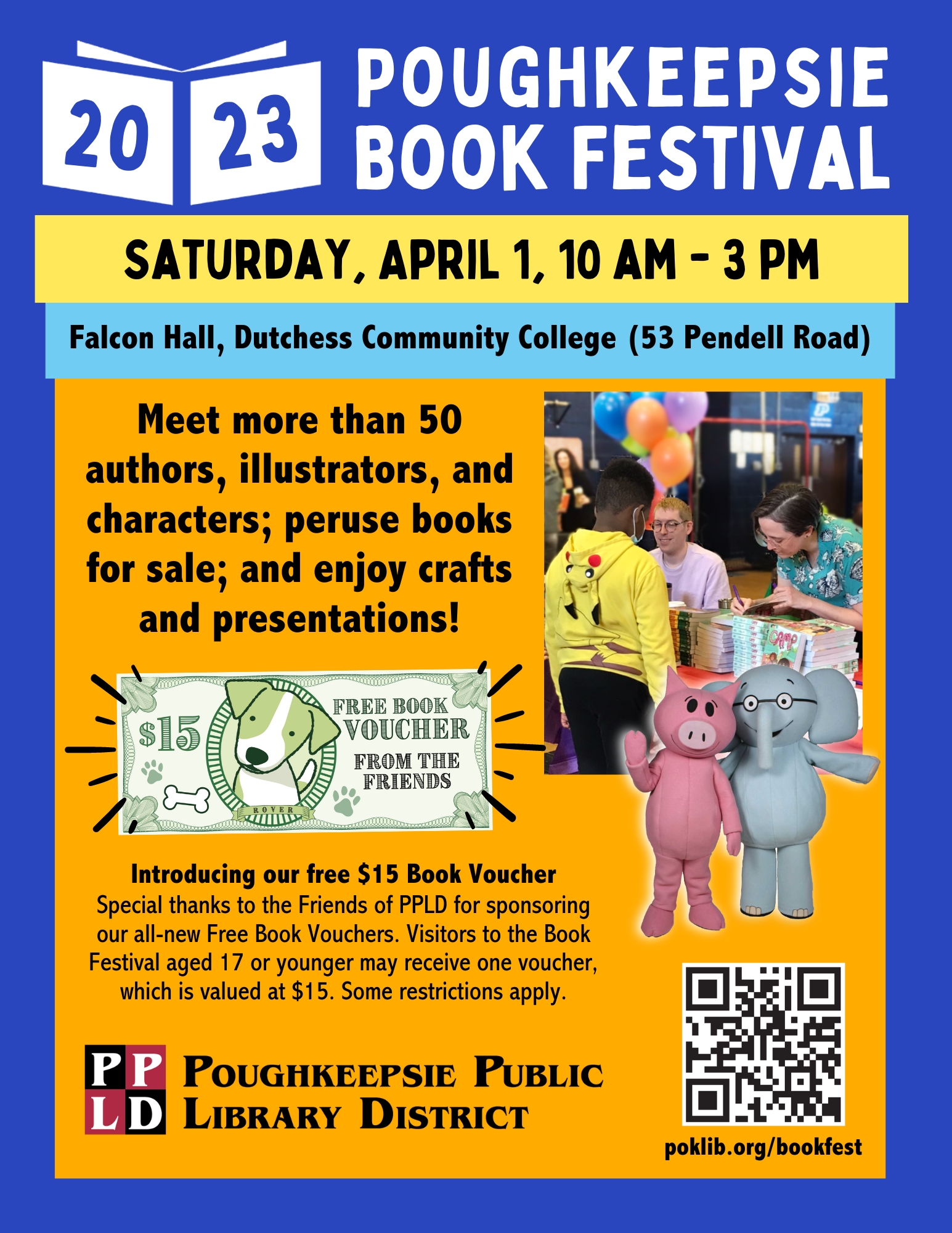
For those of you who are in the New York or Hudson Valley area, I will be at the Poughkeepsie Book Festival on Saturday, April 1, with copies of The Osprey Man. There will be lots of writers and illustrators there and it promises to be a great event. It’s kid friendly, and there will even be costumed book characters and crafts for the whole family. Hope to see you there!

Chat tech

I tried out the chat thing but was so bored by the unimpressive, poorly written result that I almost fell asleep. You’re gonna need to up your game, chatbot. I find the obsession with this whole thing comical. Almost as weird as when people try to tell me the new marvel movie or zombie apocalypse show is Ingmar Bergman level stuff.

“I find this chatbot deeply unsettling,” said the easily unsettled person.

Ah, well, I’m sure next month there will be some new technology that everyone will be obsessed with, and simultaneously an expert in.

Speaking of terrible tech, I’ve made an effort to get off twitter and the rest of my social media accounts this year. Lately I use them mainly to promote my writing, and these posts automatically get sent there. But in the time I’ve not spent scrolling things and avoiding the news since the start of this year, I’ve read eight books. That’s a book a week, which is what I used to do before this kind of junk started to gain too much of my attention a few years ago.

I have a finite amount of time left in this world, and I’ve already given more than enough of my attention to all this stuff. There are so many great books to read, and never enough time.